How to Build a Salad That Actually Fills You Up
A filling salad needs more than lettuce: add protein, a fiber-rich grain or bean, a little healthy fat and some crunch. Here's the formula, with add-in ideas.
On this page
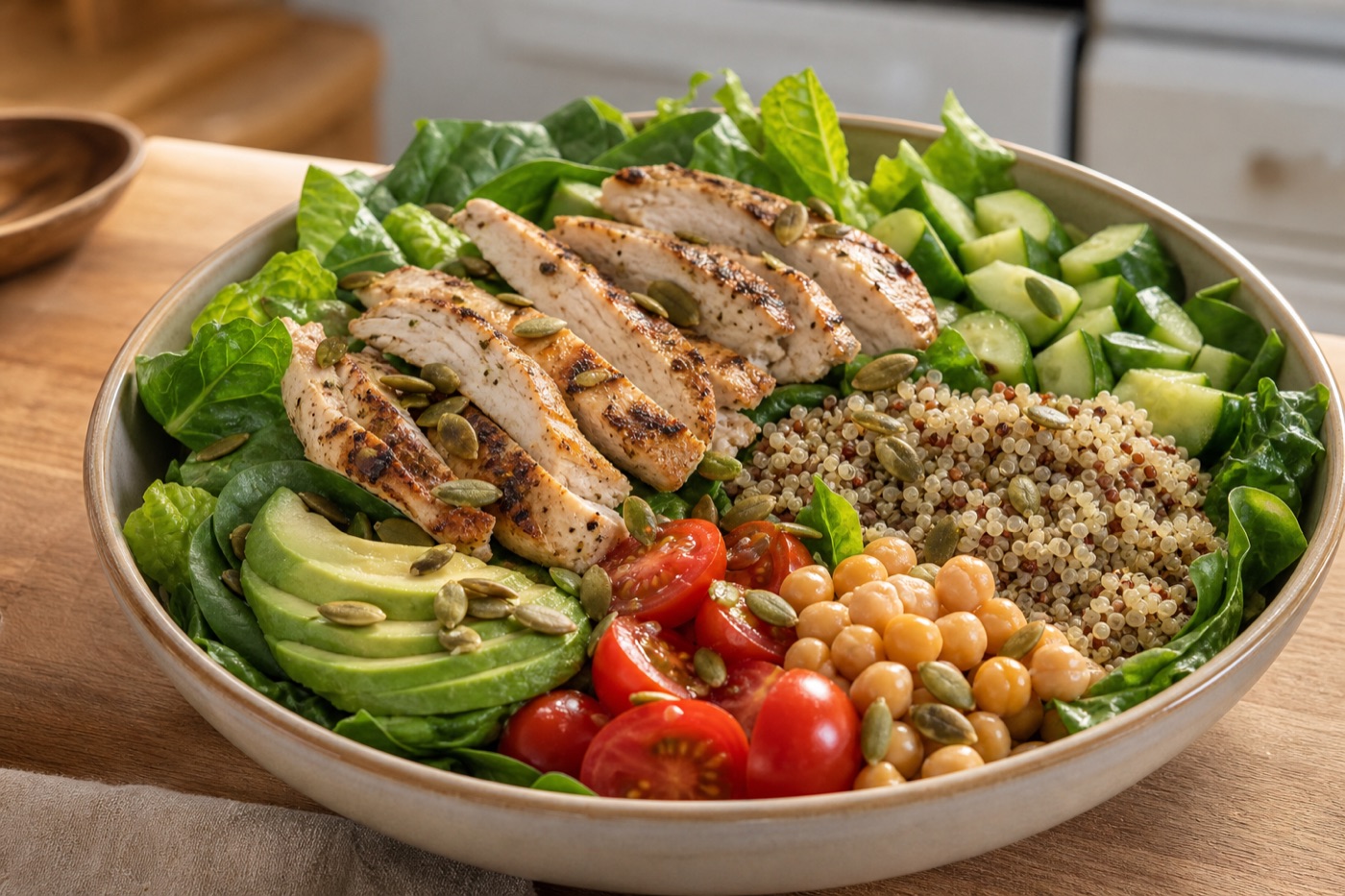
A salad fills you up when it’s built like a meal: a generous base of greens and vegetables, a solid portion of protein, a fiber-rich starch such as beans, whole grains or roasted potatoes, and a little fat from dressing, nuts, seeds, avocado or cheese. Lettuce and a few cucumber slices are mostly water and won’t carry you very far. Get all four pieces into the bowl and you’re far more likely to reach dinner without raiding the snack drawer.
Why some salads leave you hungry
Leafy greens and raw vegetables add volume, crunch and nutrients, but very few calories and almost no protein. A salad made only of those is closer to a side dish. Protein, fiber and a bit of fat slow digestion and make a meal feel substantial. The opposite problem exists too: a bowl buried under fried chicken, bacon and creamy dressing can be heavier than it looks. The goal is the middle ground.
The formula, step by step
- Start with a base of 2 to 3 cups of greens. Romaine, spinach, mixed greens, arugula, shredded cabbage or kale all work. Massage kale with a little dressing to soften it. MyPlate counts 2 cups of raw leafy greens as 1 cup of vegetables.
- Add at least a cup of color and crunch. Tomatoes, cucumbers, bell peppers, carrots, radishes, red onion, roasted beets, broccoli or snap peas.
- Add protein. About 3 to 4 ounces of chicken, fish or tofu, two eggs, or ½ to ¾ cup of beans or lentils.
- Add a fiber-rich starch, about ½ cup. Quinoa, farro, brown rice, roasted sweet potato, corn or whole-grain croutons.
- Add a little fat. Avocado, nuts, seeds, olives or a modest amount of cheese. Fat also helps your body absorb the fat-soluble vitamins and carotenoids in the vegetables.
- Dress it with 1 to 2 tablespoons, then toss well so a little coats everything.
Add-ins at a glance
Approximate values based on USDA FoodData Central:
| Add-in | Portion | Roughly provides |
|---|---|---|
| Grilled chicken breast | 3 oz | about 140 calories, 25 g protein |
| Canned light tuna, drained | 3 oz | about 80–100 calories, 17–22 g protein |
| Hard-boiled egg | 1 large | about 75 calories, 6 g protein |
| Chickpeas | ½ cup | about 135 calories, 7 g protein, 6 g fiber |
| Lentils, cooked | ½ cup | about 115 calories, 9 g protein, 8 g fiber |
| Quinoa, cooked | ½ cup | about 110 calories, 4 g protein, 2–3 g fiber |
| Roasted sweet potato | ½ cup | about 90 calories, 3 g fiber |
| Avocado | ⅓ medium | about 80 calories, 3 g fiber |
| Feta cheese | 1 oz | about 75 calories, 4 g protein |
| Pumpkin seeds | 2 tbsp | about 85–90 calories, 4–5 g protein |
| Vinaigrette | 2 tbsp | roughly 100–150 calories |
| Creamy dressing | 2 tbsp | roughly 120–160 calories |
Dressing without drowning
A classic vinaigrette uses about 3 parts oil to 1 part vinegar or citrus juice; many cooks prefer 2 to 1 for more tang. Shake it in a jar with a spoonful of mustard to help it emulsify, plus garlic, herbs, black pepper and a pinch of salt. A tiny bit of honey softens sharp vinegar.
Toss the salad with the dressing in a large bowl instead of pouring it on top. You’ll use less and every bite will be seasoned. Dress tender greens just before eating so they don’t go limp.
Salads you can make ahead
Packing salads for the week works best with the jar or layered-container method:
- Dressing on the bottom
- Sturdy vegetables next, such as carrots, peppers, cucumbers and onions
- Then grains and beans
- Then protein
- Greens on top, kept away from the dressing until you shake or toss
Most of these hold well for a few days in the fridge. Cooked chicken and fish are best eaten within 3 to 4 days, and sturdy greens like kale and cabbage outlast delicate lettuce. Our ideas for healthy lunches for work include more make-ahead options.
Greens and food safety
Rinse whole heads of lettuce and loose greens under cool running water just before you use them, and dry them well. Soap and special produce washes aren’t needed. Bagged greens labeled “ready to eat,” “washed” or “triple washed” can be used straight from the bag without another rinse. Keep greens refrigerated at 40°F or below, and toss any leaves that turn slimy.
A week of combinations
- Mediterranean: romaine, cucumber, tomato, red onion, chickpeas, farro, olives, feta and a lemon vinaigrette
- Southwest: shredded cabbage and romaine, black beans, corn, peppers, brown rice, avocado and a lime-cumin dressing
- Harvest: kale, roasted sweet potato, lentils, apple slices, pumpkin seeds and a cider vinaigrette
- Niçoise-style: greens, green beans, boiled potatoes, tuna, hard-boiled egg and a mustard dressing
- Peanut slaw: shredded cabbage and carrots, edamame, cooked chicken or tofu, scallions and a peanut-lime dressing
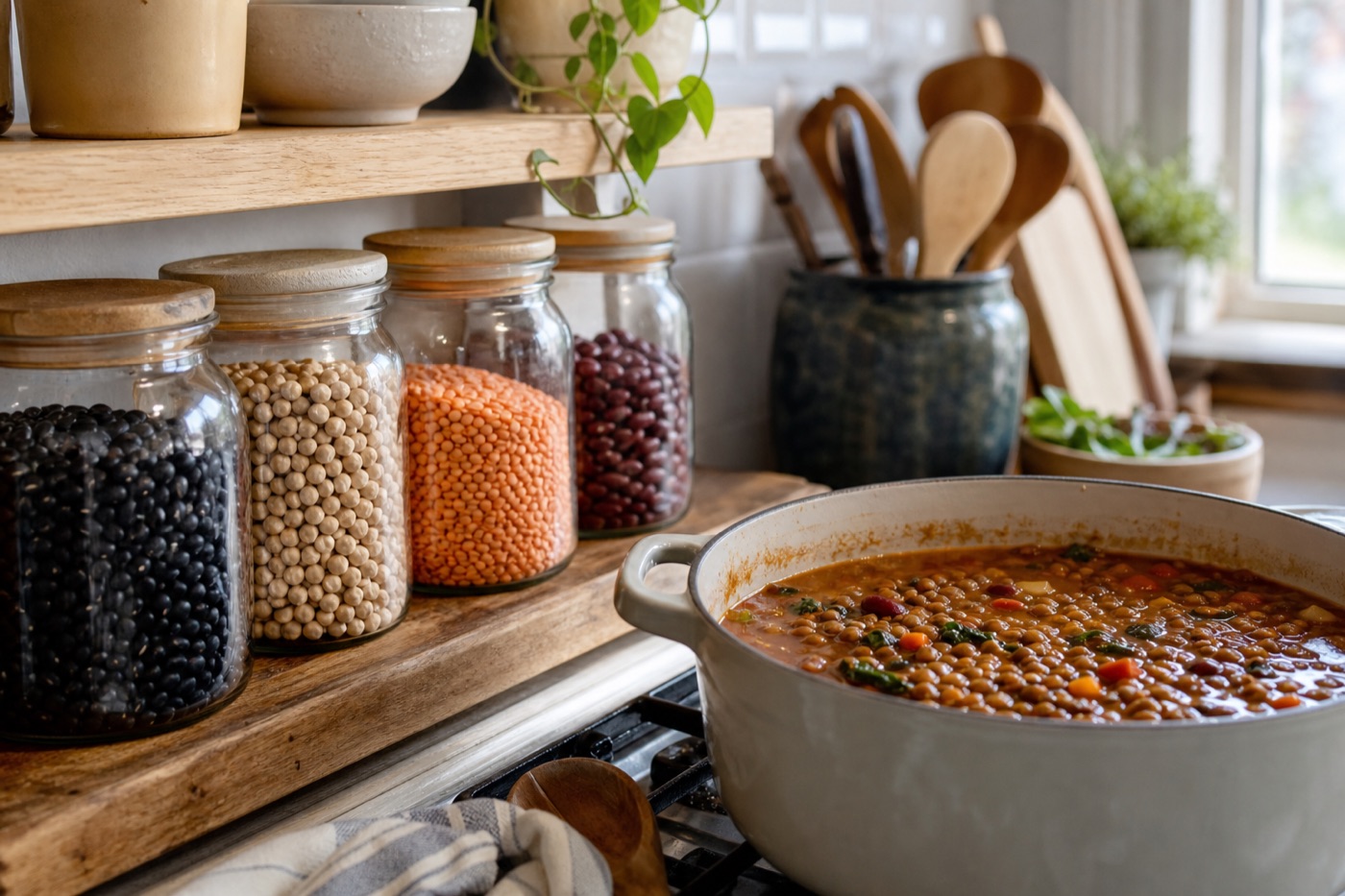
For more ideas built on pulses, see our beginner’s guide to beans and lentils.
Build it like a meal
Greens for volume, a real portion of protein, a scoop of beans or grains, a little fat, and just enough dressing to coat. Hit those marks and your salad will hold you until the next meal instead of sending you to the vending machine at 3 p.m.
Common questions
How much protein should a meal salad have?
There's no official per-meal figure, but a palm-sized portion of chicken or fish, two eggs, or about ½ to ¾ cup of beans or lentils gives a salad real staying power. Combining two smaller sources, such as eggs and chickpeas, works well too.
Are salads always the lower-calorie choice?
Not always. Fried toppings, candied nuts, lots of cheese and generous pours of creamy dressing can add up to more than you might expect. That's fine if the salad is your meal; it just helps to know what's in the bowl.
How do I keep salad greens from wilting?
Dry them thoroughly after washing, store them in a container lined with a paper towel, and keep the dressing separate until you're ready to eat. Sturdy greens such as kale and cabbage last longer than tender lettuces.
Sources
Elliot writes about foods, labels and the grocery store, from choosing a cereal to stretching a budget without giving up vegetables.