How to Choose a Healthier Bread
Choose bread with a whole grain listed first, a few grams of fiber per slice, moderate sodium and little added sugar. Here's how to check the bag in a minute.
On this page
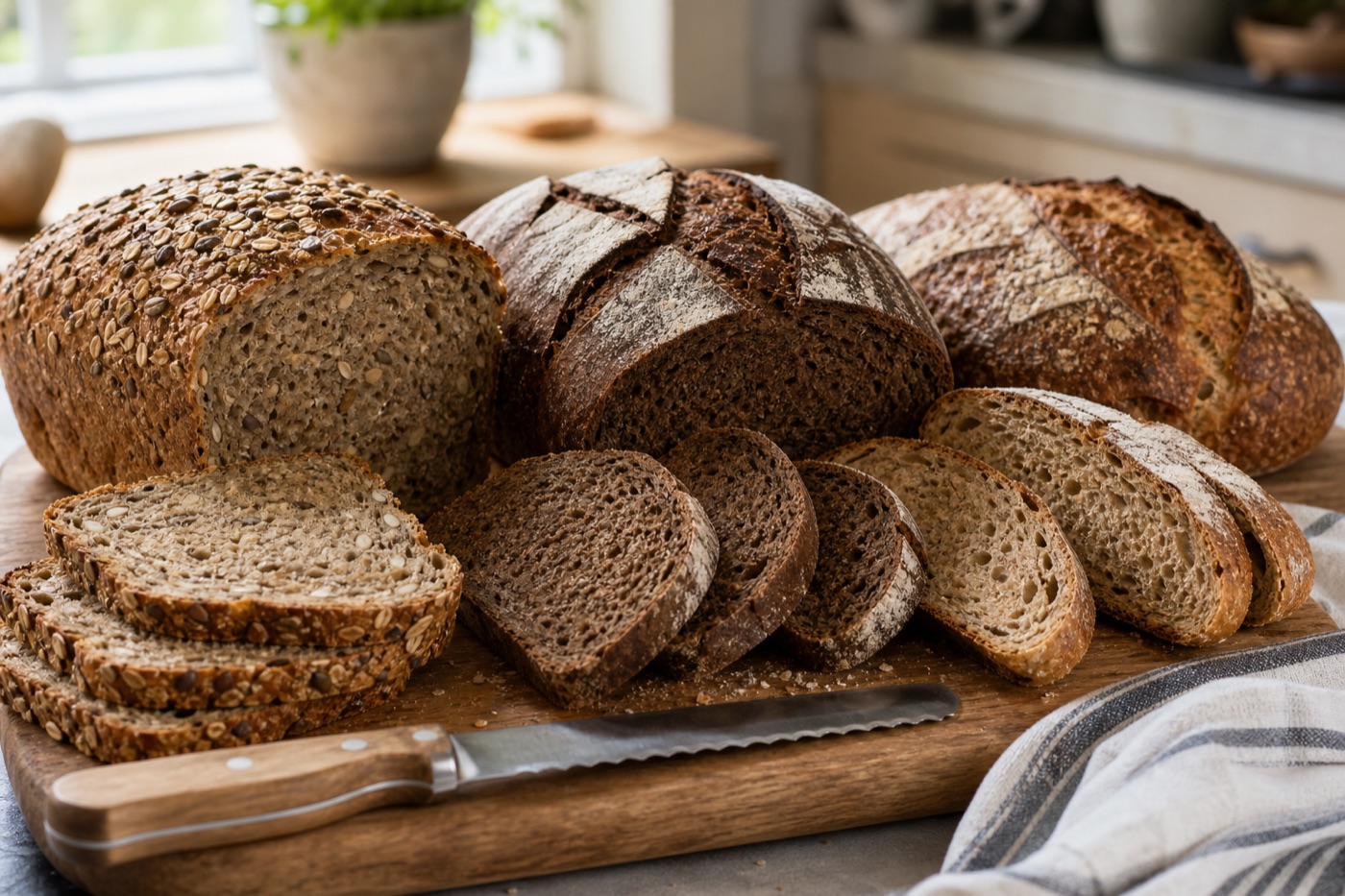
A healthier bread lists a whole grain, such as whole wheat flour, whole rye or whole oats, as its first ingredient, provides a few grams of fiber per slice, and keeps sodium and added sugar modest. Names like “wheat,” “multigrain” and “honey oat” sound wholesome but don’t guarantee any of that. A minute with the ingredient list and the Nutrition Facts panel tells you which loaf is which.
Read the first ingredient
Flip the bag over before you look at anything else. If the first ingredient begins with “whole,” you’re holding a mostly whole-grain bread. If it says “wheat flour,” “enriched wheat flour” or “unbleached enriched flour,” the main ingredient is refined, whatever the front says. Our guide to telling if a food is really whole grain explains the terms in more depth.
What the names on the bag mean
| On the bag | What it usually means |
|---|---|
| 100% whole wheat | All the flour is whole wheat. A strong choice. |
| Whole grain | Made with one or more whole grains; confirm they come first in the list. |
| Wheat bread | Often mostly refined wheat flour, sometimes darkened with molasses or caramel color. |
| Multigrain or 12-grain | Several grains, any of which may be refined. |
| White whole wheat | Whole grain made from a lighter variety of wheat, with a milder taste. |
| Sprouted grain | Made from grains that have begun to sprout; often whole grain, but check the list. |
| Sourdough | A fermentation method; the flour can be white or whole grain. |
| Rye or pumpernickel | May be mostly wheat flour with some rye; look for whole rye flour near the top. |
| Potato bread or brioche | Usually refined flour, often with extra sugar, eggs or butter. |
Numbers worth checking
Once the first ingredient passes the test, a few lines on the Nutrition Facts panel narrow things down:
- Serving size. Some breads list one slice, others two. Compare per slice so you’re not misled.
- Fiber. Whole-grain breads commonly have around 2 to 4 grams per slice, while white sandwich bread often has 1 gram or less. Higher is generally better.
- Sodium. CDC lists breads and rolls among the top sources of sodium in American diets, not because a slice is very salty but because we eat so much of it. Slices commonly fall somewhere around 100 to 200 milligrams; when two loaves are otherwise similar, choose the lower one. The tips in our guide on cutting back on salt apply here too.
- Added sugars. Many sandwich loaves have a small amount of added sugar; sweet breads, swirl breads and “honey” varieties have more.
- Slice size. Calories vary mostly with how big and dense the slice is. Thin-sliced loaves have smaller slices, which can help if you eat a lot of sandwiches.
Bagels, tortillas, wraps and rolls
Bread comes in many shapes, and size matters more than people expect. MyPlate counts a large bagel as about 4 ounce-equivalents of grains, the same as four slices of bread. Large, burrito-size flour tortillas also count as several servings.
A few pointers:
- Bagels: choose whole-wheat or smaller bagels, or eat half with a protein-rich topping.
- Wraps: “spinach” or “tomato” wraps are often mostly refined flour with a little vegetable powder for color. Look for whole wheat flour first.
- Tortillas: small corn tortillas are simple and modest in size; for flour tortillas, whole-wheat versions add fiber.
- Rolls and buns: whole-wheat hamburger buns and dinner rolls are widely available; the same first-ingredient check applies.
- Pita and naan: whole-wheat pita is common; naan is usually refined and larger than a typical slice.
If you eat gluten-free
People with celiac disease or a diagnosed sensitivity to gluten need bread without wheat, barley or rye. In the U.S., a “gluten-free” label means the food contains less than 20 parts per million of gluten. Many gluten-free breads are built on refined starches like tapioca, rice and potato and can be low in fiber. Look for ones that use whole-grain brown rice, sorghum, buckwheat, millet or certified gluten-free oats. A doctor or registered dietitian can help if you’re newly diagnosed and sorting out what to buy.
Keeping bread fresh
Breads with few or no preservatives go stale and mold faster. A few easy habits help:
- Keep the loaf you’ll finish in a few days at room temperature in a closed bag or bread box.
- Freeze the rest, sliced, and toast slices straight from the freezer.
- Skip the refrigerator for most bread; it actually speeds staling.
- If you see mold, throw out the whole loaf. USDA advises discarding moldy bread and baked goods, because mold can spread through soft, porous foods beyond what you can see.
Your one-minute bread check
Whole grain first, a few grams of fiber per slice, moderate sodium, and little added sugar. Run through those four checks once on the loaves you usually buy, find one you like, and you won’t need to think about it again until the store changes its shelves.
Common questions
Is sourdough bread healthier?
Sourdough's long fermentation gives it a tangy flavor and a chewier texture, but its nutrition depends mostly on the flour. A whole-grain sourdough brings the fiber of whole grain; a white sourdough is closer to other white breads.
Is white whole-wheat bread really whole grain?
Yes, as long as white whole wheat flour is the first ingredient. It's milled from a paler variety of wheat with a milder taste, which makes it an easy switch for people who don't love the flavor of regular whole wheat.
Is bakery bread better than packaged bread?
Either can be a good choice. Bakery loaves may have fewer preservatives and go stale sooner, while packaged loaves carry a full Nutrition Facts panel that makes comparing easier. If an in-store loaf has no label, ask what flour it's made with.
Sources
Elliot writes about foods, labels and the grocery store, from choosing a cereal to stretching a budget without giving up vegetables.