Plant Protein Foods: Getting Enough Without Meat
Beans, lentils, soy, nuts, seeds and whole grains can cover your protein needs without meat. See how much each provides and how to build meals around them.
On this page
You can get all the protein you need without meat. Beans, lentils, soy foods, nuts, seeds and some whole grains each contribute, and a day that includes a few of them at every meal usually covers an adult’s needs. The trick is to give each meal a real protein anchor instead of leaning on vegetables and starches alone.
How much protein do most adults need?
The Recommended Dietary Allowance for healthy adults is 0.8 grams of protein per kilogram of body weight, which works out to about 0.36 grams per pound. For a 150-pound person, that is roughly 54 grams a day; for someone who weighs 200 pounds, it is about 72 grams.
That number is a floor meant to prevent deficiency, not a ceiling. Older adults, people who train hard, and anyone who is pregnant or breastfeeding may benefit from more, and a doctor or registered dietitian can help you set a target that fits your health and goals.
Spread across three meals and a snack, even a higher target is manageable from plants. A breakfast with 15 grams, a lunch and dinner with 20 grams each, and a snack with 7 or 8 grams already add up to more than 60.
The plant foods that bring the most protein
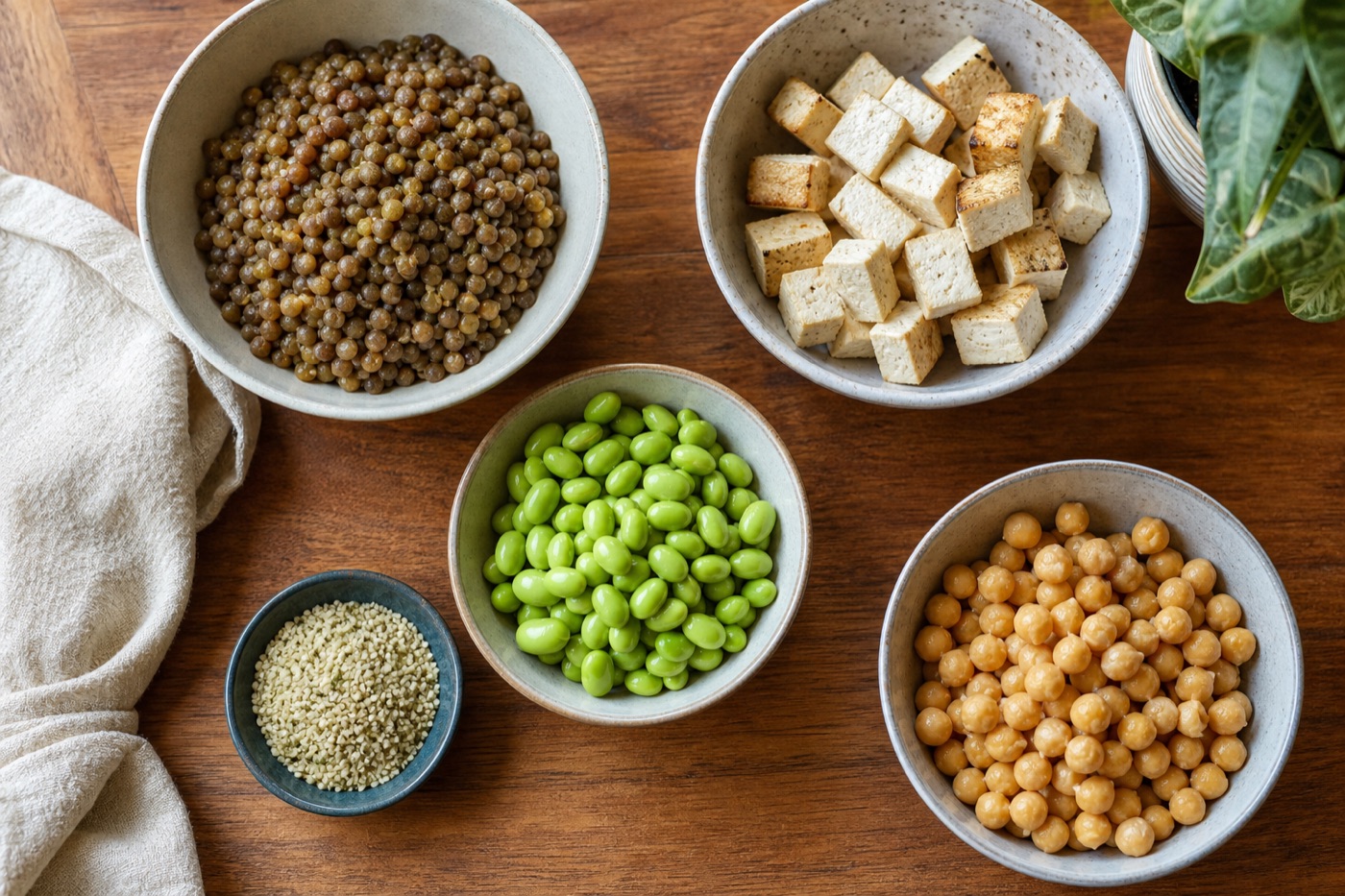
Not every plant food is a strong source. Leafy greens and most fruits contain only small amounts, so they round out a meal rather than carry it. These are the heavy lifters, with approximate values from USDA FoodData Central (packaged products vary, so check the label):
| Food | Portion | Protein (about) |
|---|---|---|
| Lentils, cooked | 1 cup | 18 g |
| Edamame, shelled, cooked | 1 cup | 18 g |
| Tempeh | 3 oz | 17 g |
| Black beans or chickpeas, cooked | 1 cup | 14–15 g |
| Tofu, soft to extra-firm | 3 oz | 7–15 g |
| Hemp seeds, hulled | 3 tbsp | 9–10 g |
| Green peas, cooked | 1 cup | 8 g |
| Quinoa, cooked | 1 cup | 8 g |
| Soy milk, unsweetened | 1 cup | 7–8 g |
| Peanut butter | 2 tbsp | 7–8 g |
| Almonds | 1 oz (about 23 nuts) | 6 g |
Seitan, made from wheat gluten, is another concentrated option, though its protein depends on the recipe. If dried legumes are new to you, our beginner’s guide to beans and lentils walks through soaking, simmering and seasoning them.
Do you have to combine proteins at each meal?
You may have heard that plant proteins must be “combined,” such as rice with beans, at the same sitting. That advice has faded. Your body keeps a running pool of amino acids, the building blocks of protein, so foods eaten hours apart still complement each other.
Legumes tend to run low in one amino acid (methionine) and grains in another (lysine), which is why the classic pairing works. Over a full day of mixed foods, it evens out on its own. Soy foods and quinoa are considered complete proteins by themselves, which makes them handy anchors when you want one simple ingredient to do the job.
Building meals around plant protein
A small habit helps: before you plan the rest of a meal, decide what its protein will be.
Breakfast
- Oatmeal cooked in soy milk, topped with a spoonful of peanut butter and hemp seeds
- Tofu scrambled with onions, peppers and spinach, with whole-grain toast
- A smoothie of soy milk, frozen berries and a tablespoon or two of nut butter
Lunch
- A grain bowl with quinoa, roasted chickpeas, cucumbers and a tahini dressing
- Lentil soup with a slice of whole-grain bread
- A hummus and vegetable wrap with a side of edamame
Dinner
- Black bean tacos with cabbage slaw and avocado
- Tempeh stir-fried with broccoli and served over brown rice
- Pasta tossed with white beans, garlic, greens and olive oil
Snacks
- A handful of almonds or dry-roasted peanuts
- Steamed edamame in the pod with a pinch of salt
- Whole-grain crackers with a bean dip
Nutrients to keep an eye on
Going meatless changes where some nutrients come from. A few deserve attention:
- Vitamin B12. Plants do not reliably provide it. The NIH Office of Dietary Supplements notes that people who eat no animal foods need fortified foods, such as some cereals, plant milks and nutritional yeast, or a supplement.
- Iron. Beans, lentils, tofu and fortified cereals contain iron, but the plant form is absorbed less efficiently. Eating it alongside vitamin C from peppers, citrus or tomatoes helps. Our guide to getting more iron from food has more pairings.
- Calcium and vitamin D. If you skip dairy, fortified soy milk and tofu made with calcium sulfate are useful sources.
- Omega-3 fats. Ground flaxseed, chia seeds and walnuts supply the plant form, called ALA.
- Zinc and iodine. Legumes, nuts and whole grains provide zinc; iodized salt is a common source of iodine.
If you follow a fully vegan diet, especially during pregnancy or while feeding young children, a registered dietitian can help you confirm these are covered.
Common snags and easy fixes
Gas and bloating. Fiber-rich legumes can cause both at first. Add them gradually over a couple of weeks, drink enough fluids, and rinse canned beans before using them.
Sodium in canned goods. Draining and rinsing canned beans lowers their sodium, and no-salt-added versions are widely available.
Feeling hungry soon after. Plant meals can be lighter than you expect. A little fat from nuts, seeds, avocado or olive oil makes them more satisfying and helps them last until the next meal.
Keeping count. If you want to see how your daily protein adds up over a week or two, our calorie tracker app rankings cover phone tools that log it for you.
The bottom line
Plant foods can meet your protein needs when every meal has a solid source: legumes, soy, nuts, seeds or a protein-rich grain. Mix them across the day, keep an eye on vitamin B12 and iron, and build up beans slowly if your digestion needs time to adjust. One meatless dinner a week is an easy place to begin.
Common questions
Is plant protein as good as animal protein?
Most plant foods carry a less complete mix of amino acids than meat, eggs or dairy, but eating a variety of them over the day fills in the gaps. Soy foods and quinoa are complete on their own.
How much protein is in a cup of beans?
A cup of cooked black beans or chickpeas has roughly 14 to 15 grams of protein, and a cup of cooked lentils has about 18 grams, according to USDA FoodData Central. Beans also bring fiber, which meat does not.
Do vegans need supplements?
Vitamin B12 is the one nutrient plant foods do not reliably supply, so people who eat no animal foods need fortified foods or a supplement. A doctor or registered dietitian can check whether vitamin D, iodine or omega-3s also need attention.
Sources
Elliot writes about foods, labels and the grocery store, from choosing a cereal to stretching a budget without giving up vegetables.