Food and Sleep: What Helps and What Hurts
Caffeine late in the day, alcohol and big or spicy meals near bedtime are the main food habits that hurt sleep. Regular meals and a light snack can help.
On this page
What you eat and drink in the hours before bed can make a real difference to how well you sleep. The biggest sleep disruptors are caffeine later in the day, alcohol, and large, rich or spicy meals close to bedtime. Regular meal times, a dinner that leaves you comfortably full, and a light snack if you’re genuinely hungry tend to support better rest.
Caffeine lasts longer than you think
Caffeine blocks a brain chemical that builds up during the day and makes you feel sleepy. Its effects can linger for many hours, so the 3 p.m. cup may still be in your system when you turn out the light, even if you drift off without trouble. Some people feel a single morning coffee well into the evening; others notice little effect at all.
According to the FDA, as much as 400 milligrams daily isn’t generally tied to dangerous effects in healthy adults, but that’s a safety ceiling, not a sleep target. Here are the agency’s typical ranges:
| What you’re drinking | Typical caffeine |
|---|---|
| A cup (8 oz) of brewed coffee | roughly 80–100 mg |
| A cup (8 oz) of black or green tea | roughly 30–50 mg |
| A can (12 oz) of cola | roughly 30–40 mg |
| A cup (8 oz) of an energy drink | anywhere from 40 to 250 mg |
| A cup (8 oz) of decaf coffee | roughly 2–15 mg |
Chocolate, some pain relievers and certain pre-workout products contain caffeine too. If sleep is a struggle, shift your final caffeinated drink to late morning or lunchtime for a week or two and notice the difference. For more detail, see our guide to how much caffeine is too much.
Alcohol: sleepy at first, restless later
A drink in the evening may make you drowsy, but alcohol tends to fragment sleep in the second half of the night. As your body processes it, sleep becomes lighter and more broken, with more awakenings and less of the restorative stages. Alcohol also relaxes throat muscles, which can make snoring and sleep apnea worse, and it can trigger reflux.
The closer to bedtime you drink and the more you have, the bigger the effect. Our article on alcohol and nutrition covers drink sizes and federal guidance.
Heavy, spicy or late meals
A large meal right before bed keeps your digestive system working when it would rather rest. High-fat foods take longer to digest, and lying down with a full stomach makes heartburn more likely. The NIDDK’s advice for people with reflux includes not lying down soon after a meal and avoiding foods and drinks that make symptoms worse. Common culprits include fatty, fried and spicy foods, chocolate, tomato-based sauces, mint, coffee and alcohol.
A practical guideline: try to finish dinner two to three hours before you go to bed, and keep late meals moderate in size.
Drinking a lot of fluid right before bed can also interrupt sleep with bathroom trips. Front-load your water earlier in the day and taper off in the evening.
What may help
Food won’t cure insomnia, but some habits make good sleep easier:
- Eat at regular times. Consistent meals help keep your body clock steady.
- Don’t go to bed starving. If you’re hungry, a small snack that pairs carbohydrate with a little protein, such as yogurt, a banana with a spoonful of peanut butter, or whole-grain cereal with milk, can help you settle.
- Eat a varied diet overall. Diets rich in vegetables, fruits, whole grains and protein foods support general health, including sleep.
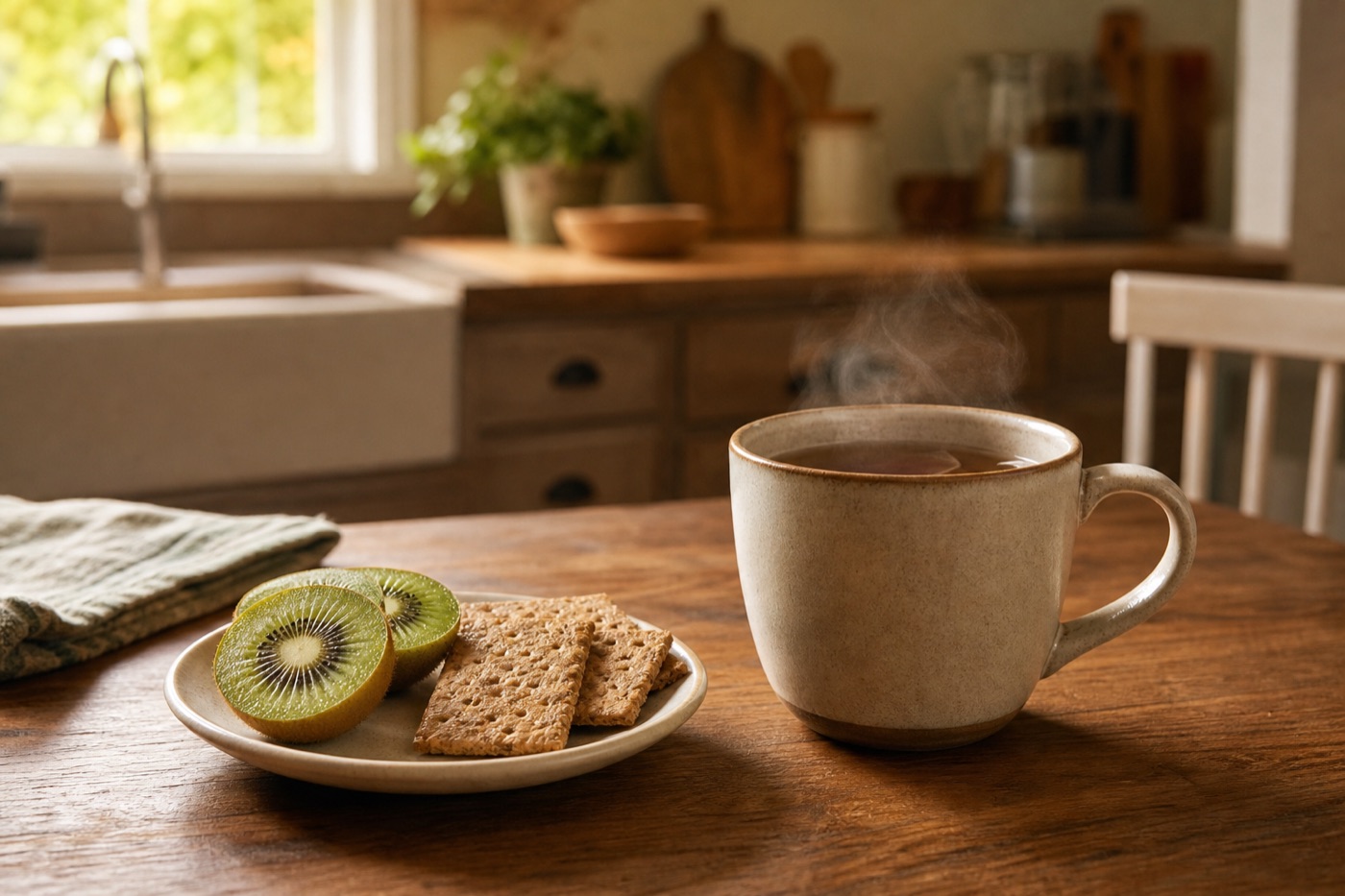
- Make a calming ritual. A warm, caffeine-free drink such as herbal tea or warm milk is a pleasant signal that the day is ending.
You’ll see plenty of claims about specific “sleep foods,” from tart cherries to kiwi to turkey. Research on individual foods is limited and often small, so focus on the bigger habits above first. Be cautious with sleep supplements and talk to your doctor or pharmacist before trying them, especially if you take other medicines.
How sleep changes eating
The relationship runs both ways. Short or poor sleep has been linked with increased appetite and stronger cravings for high-calorie foods the next day, and staying up late creates more hours in which to snack. If evenings tend to turn into extended grazing, our guide to late-night snacking explains why and what helps. Better sleep often makes healthy eating feel easier.
A simple evening timeline
Every schedule is different, but here’s one way to space things out for a 10:30 p.m. bedtime:
- By 1 or 2 p.m.: last caffeinated drink
- 6:30–7:30 p.m.: dinner, moderate in size, with vegetables, protein and a whole grain
- After dinner: water as needed, tapering off later in the evening
- 9:00–9:30 p.m.: a small snack only if you’re hungry, plus a caffeine-free warm drink if you like
- 10:30 p.m.: lights out, ideally at about the same time every night
Sleep-friendly eating in brief
Cut off caffeine by early afternoon, keep alcohol limited and away from bedtime, finish dinner a few hours before you lie down, and have a small snack only if hunger would keep you up. If you often lie awake or wake through the night, snore loudly, wake up gasping or have frequent nighttime heartburn, see your doctor; those can be signs of conditions that need treatment.
Common questions
How late can I drink coffee without affecting sleep?
There's no universal cutoff, because caffeine lingers in the body for many hours and people differ widely. Many sleep better when their last cup comes by early afternoon, so if nights are restless, that's an easy experiment to run.
Does alcohol help you sleep?
It may help you fall asleep faster, but it tends to disrupt sleep later in the night, leading to more waking and lighter, less restful sleep. It can also worsen snoring and reflux.
Is it bad to go to bed hungry?
Strong hunger can make it harder to fall asleep. A small snack, such as yogurt, a banana or whole-grain toast with a little nut butter, is fine for most people and better than lying awake.
Do specific foods like warm milk or cherries improve sleep?
Evidence for individual sleep foods is limited. A warm, caffeine-free drink can be a helpful part of a bedtime routine, but overall habits like caffeine timing and meal size matter much more.
Sources
Elliot writes about foods, labels and the grocery store, from choosing a cereal to stretching a budget without giving up vegetables.