Eating for Strong Bones
Strong bones need calcium, vitamin D, protein, plenty of produce and weight-bearing exercise at every age. Here's how much you need and where to get it.
On this page
Eating for strong bones comes down to getting enough calcium, vitamin D and protein, plus a steady supply of fruits and vegetables, at every stage of life. Food is only half the story, though: weight-bearing and strengthening exercise, not smoking and limiting alcohol matter just as much. The habits you build early help you reach a higher peak bone mass, and the ones you keep later slow the loss that comes with age.
Bones keep changing all your life
Bone is living tissue. Your body constantly breaks down old bone and builds new bone in a process called remodeling. In childhood and the teen years, building outpaces breakdown, and bone mass climbs quickly. Most people reach their peak by roughly their late 20s or early 30s, which is why the calcium a child or teenager eats has such long-lasting effects. Parents who keep milk or fortified alternatives, yogurt and cheese in regular rotation are investing in bone that has to last for decades.
After that, the balance slowly tips. Bone loss is gradual for most of adulthood, then speeds up for women in the years after menopause, and men lose bone with age too, just more slowly. The higher your peak and the better you protect it, the lower your risk of osteoporosis and fractures later on, according to the NIH Osteoporosis and Related Bone Diseases National Resource Center.
Daily targets for calcium and vitamin D
The NIH Office of Dietary Supplements publishes Recommended Dietary Allowances for both nutrients, which work as a team:
| Life stage | Calcium | Vitamin D |
|---|---|---|
| Toddlers, 1–3 | 700 mg | 600 IU (15 mcg) |
| Children, 4–8 | 1,000 mg | 600 IU |
| Preteens and teens, 9–18 | 1,300 mg | 600 IU |
| Adults, 19–50 | 1,000 mg | 600 IU |
| Women, 51–70 | 1,200 mg | 600 IU |
| Men, 51–70 | 1,000 mg | 600 IU |
| Adults over 70 | 1,200 mg | 800 IU (20 mcg) |
Pregnancy and breastfeeding don’t raise these numbers; the target is the one for your age. If you do use a supplement, calcium is absorbed best in doses of roughly 500 milligrams or less, and spreading calcium-rich foods across your meals is a good habit anyway.
Where to find calcium
Values below are rounded, based on USDA FoodData Central and the NIH Office of Dietary Supplements. Fortified products differ, so the label is the final word.
Dairy and fortified drinks
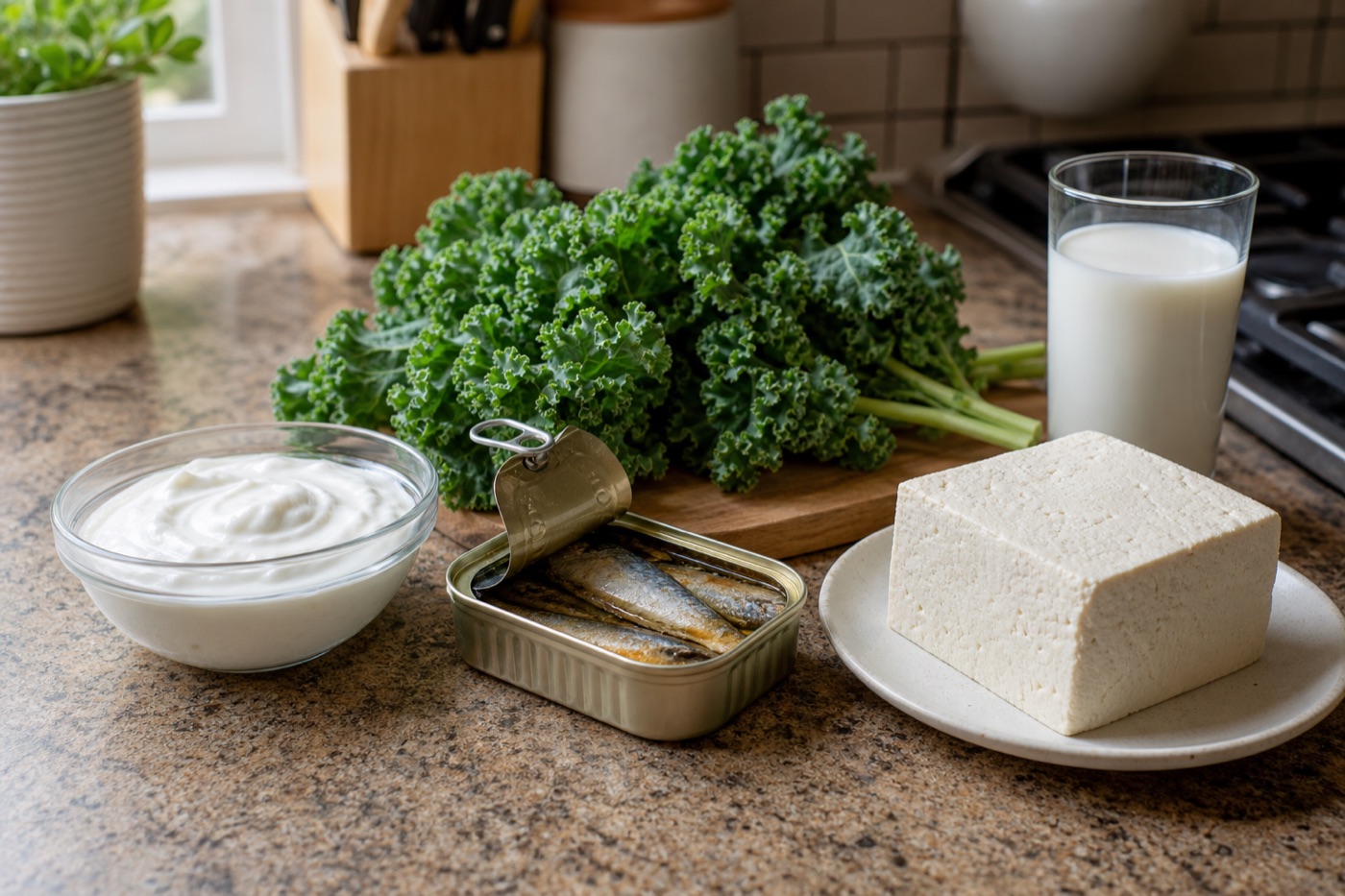
A cup (8 ounces) of plain low-fat yogurt supplies roughly 415 mg, a little more than a glass of milk at close to 300 mg. Hard cheese is concentrated as well: an ounce and a half of cheddar has nearly 300 mg. Fortified soy milk usually matches dairy milk, and orange juice with added calcium comes in near 350 mg per cup.
Fish eaten bones and all
Canned sardines bring around 325 mg in a 3-ounce serving, and canned pink salmon, with its soft edible bones mashed in, roughly 180 mg.
Plant sources
Tofu set with calcium sulfate is one of the richest plant options, at around 250 mg in half a cup of the firm kind. Cooked kale gives roughly 180 mg per cup, and cooked turnip greens close to 100 mg per half cup. Spinach looks promising on paper, but natural compounds called oxalates bind most of its calcium, so it isn’t a dependable source. Dairy-free readers will find more ideas in our calcium guide.
Vitamin D and the supporting cast
Vitamin D
Your gut needs vitamin D to absorb calcium efficiently. Few foods contain much naturally; the best are fatty fish such as salmon, trout and sardines, followed by fortified milk, plant milks and cereals, and egg yolks. Sunlight lets the skin make its own, but the amount depends on the season, where you live, your skin tone and sunscreen. Our vitamin D explainer goes into the details.
Other nutrients bones rely on
- Protein: part of the bone’s structure. Eggs, fish, poultry, dairy, beans and tofu all help.
- Magnesium: found in nuts, seeds, whole grains, beans and leafy greens.
- Vitamin K: in leafy greens such as kale, collards, spinach and broccoli.
- Potassium: plentiful in fruits and vegetables, including potatoes, bananas, beans and tomatoes.
A diet with plenty of fruits, vegetables, whole grains and protein foods covers most of these naturally.
Beyond food: movement and habits
Move it to keep it
Bones respond to load. The NIH bone resource center recommends weight-bearing exercise, such as walking, jogging, dancing, stair climbing or tennis, and muscle-strengthening exercise, such as lifting weights or using resistance bands. Balance exercises like tai chi help prevent the falls that lead to fractures in older adults.
Habits that work against bone
- Smoking is linked with lower bone density.
- Heavy drinking increases bone loss and fall risk.
- Very low-calorie diets and a very low body weight can reduce bone mass, particularly in young women.
- High sodium intake increases the amount of calcium lost in urine.
- Some medications, including long-term use of certain steroids, can affect bone. Ask your doctor whether yours might.
Moderate amounts of coffee and tea are generally fine as long as you meet your calcium needs.
What to take away
Meet your calcium target mostly from food, get enough vitamin D, include protein and plenty of produce, and pair your diet with weight-bearing and strengthening exercise. Avoid smoking and limit alcohol. If you have risk factors for osteoporosis, a history of fractures, or are approaching or past menopause, ask your doctor whether you need a bone density test and whether supplements make sense for you. Our article on nutrition during menopause covers that stage in more depth.
Common questions
What are the best foods for bone health?
Yogurt, milk and cheese, fortified plant milks and juice, calcium-set tofu, canned sardines or salmon eaten with their bones, and cooked kale or collards all supply calcium. Fatty fish and fortified foods add vitamin D, while produce, beans and nuts bring magnesium, potassium and vitamin K.
Can you build bone after 30?
Most people reach their peak bone mass by around their late 20s or early 30s. After that, good nutrition and exercise help you hold on to the bone you have and slow the loss that comes with age.
Should I take a calcium supplement?
Try to meet your needs from food first. If you can't, ask your doctor whether a supplement makes sense and how much to take, since extra calcium beyond your needs brings no added benefit and too much can cause side effects.
Sources
Ruth covers nutrition through life stages and everyday health, from feeding school-age kids to eating well after sixty.