Foods High in Potassium and Why They Matter
Potassium helps balance sodium and supports healthy blood pressure. See how much adults need and which foods have the most, from beans and potatoes to yogurt.
On this page
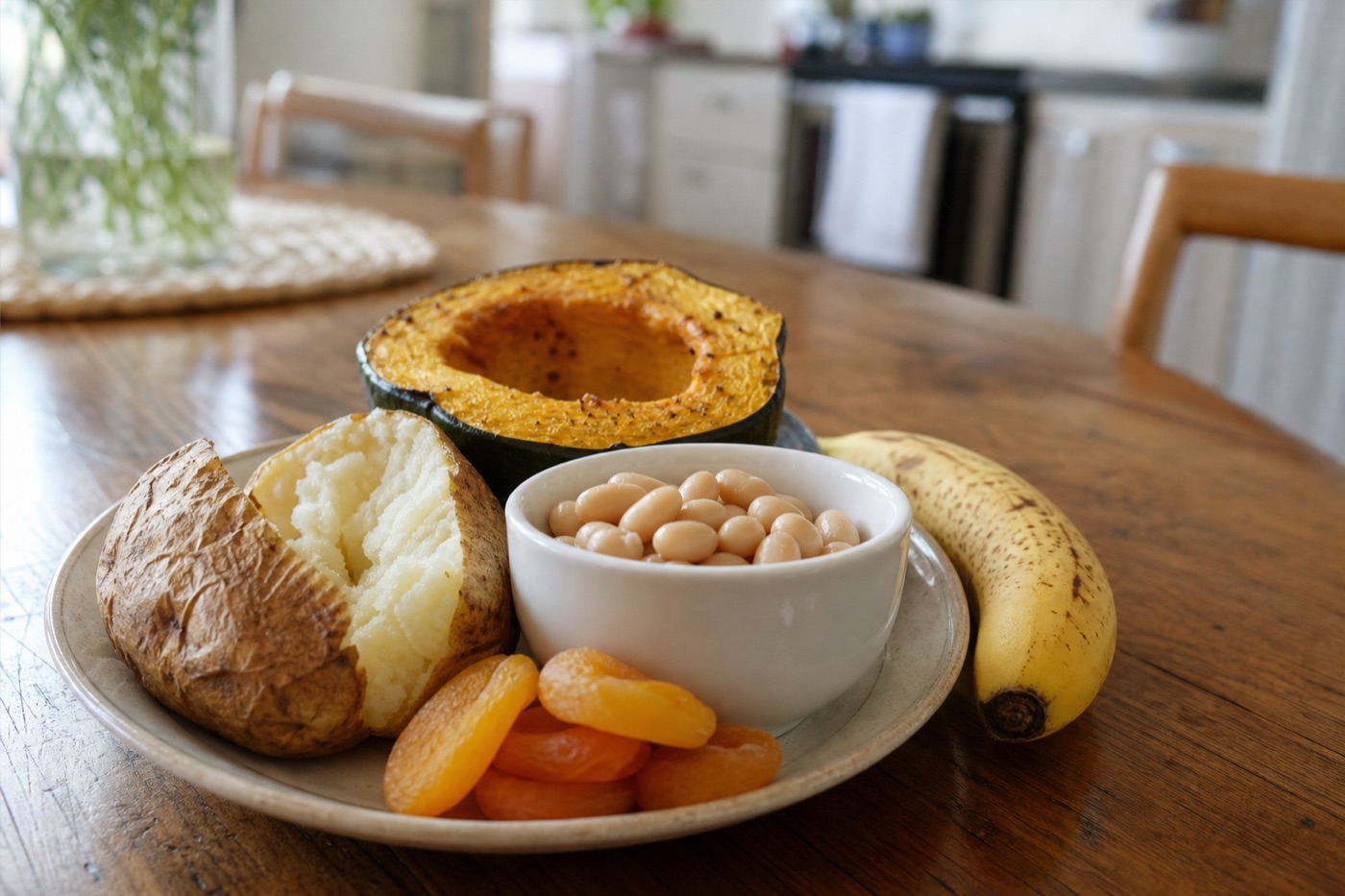
Potassium is a mineral that helps your nerves, muscles and heart work properly, and it offsets some of sodium’s effect on blood pressure. Adult women need about 2,600 milligrams a day and men about 3,400 mg, according to the NIH Office of Dietary Supplements. Beans, lentils, potatoes, winter squash, dried fruit, bananas, leafy greens, yogurt, milk and fish are among the richest everyday sources.
Why potassium matters
Every cell in your body uses potassium. It helps maintain fluid balance, carries nerve signals and keeps muscles, including the heart, contracting normally. It also helps the kidneys get rid of sodium and relaxes blood vessel walls, which is why eating patterns rich in potassium are linked with lower blood pressure, especially when sodium is kept in check too.
The DASH eating plan from the National Heart, Lung, and Blood Institute was designed with that in mind. It leans heavily on vegetables, fruit, beans and low-fat dairy, all strong potassium sources. Severe potassium deficiency from diet alone is rare. Low blood potassium, called hypokalemia, usually results from prolonged vomiting or diarrhea, kidney problems or certain diuretics rather than from what’s on your plate. Even so, the Dietary Guidelines have named potassium a nutrient of public health concern because many Americans eat less than they need.
How much you need
These are the adequate intakes set in 2019 by the National Academies and published by NIH:
| Group | Potassium per day |
|---|---|
| Women 19 and older | 2,600 mg |
| Men 19 and older | 3,400 mg |
| Pregnancy, 19 and older | 2,900 mg |
| Breastfeeding, 19 and older | 2,800 mg |
| Teen girls, 14–18 | 2,300 mg |
| Teen boys, 14–18 | 3,000 mg |
You’ll notice the Daily Value on food labels is 4,700 mg, which is higher. That figure is based on an earlier recommendation, and it serves as a fixed reference for the %DV rather than a personal target.
Foods with the most potassium
Approximate values based on NIH and USDA FoodData Central data:
| Food | Portion | Approximate potassium |
|---|---|---|
| Dried apricots | ½ cup | about 750 mg |
| Lentils, cooked | 1 cup | about 730 mg |
| Acorn squash, cooked and mashed | 1 cup | about 640 mg |
| Baked potato | 1 medium | about 600–900 mg, depending on size and skin |
| Kidney beans, canned | 1 cup | about 600 mg |
| Plain low-fat yogurt | 1 cup | roughly 500 mg or more |
| Orange juice | 1 cup | about 500 mg |
| Banana | 1 medium | about 420 mg |
| Milk, 1% | 1 cup | about 365 mg |
| Spinach, raw | 2 cups | about 330 mg |
| Salmon, cooked | 3 oz | about 325 mg |
| Tomato | 1 medium | about 290 mg |
The banana’s reputation is well earned, but you can see it isn’t alone at the top. Starchy vegetables and pulses tend to carry the most per serving.
Easy ways to add more
- Keep the skins on. A potato eaten with its skin delivers more potassium and fiber than the flesh alone. Scrub it well, bake it and eat the whole thing.
- Add a can of beans. Rinsed beans slip easily into soups, salads, tacos and pasta. Our beginner’s guide to beans and lentils has plenty of ideas.
- Lean on tomato products. Tomato sauce, paste and canned tomatoes are concentrated sources; choose no-salt-added versions when you can.
- Make yogurt or milk a daily habit. Both add potassium along with calcium and protein.
- Snack on dried fruit in small amounts. A small handful of apricots or raisins goes a long way.
- Cook winter squash in the colder months. Acorn and butternut squash roast beautifully and keep well.
Put a few of these together and the numbers climb quickly. A banana and a cup of milk at breakfast (about 785 mg), a cup of cooked lentils in a soup or salad at lunch (about 730 mg), and a baked potato with a piece of salmon at dinner (roughly 925 to 1,225 mg) add up to around 2,400 to 2,700 mg before you count snacks or other vegetables.
Potassium and sodium work as a pair
You can’t fully separate these two minerals. Diets that are high in sodium and low in potassium are hardest on blood pressure, so the most effective shift often does both at once: cooking more meals from whole foods, which naturally raises potassium, while relying less on packaged and restaurant foods, which carry most of our sodium. Our tips on how to cut back on salt cover the sodium side.
When to be careful
More potassium isn’t right for everyone. People with chronic kidney disease, and those taking certain blood pressure or heart medicines, including ACE inhibitors, angiotensin receptor blockers and potassium-sparing diuretics, can build up too much potassium in the blood, which can disturb heart rhythm. Many salt substitutes swap sodium for potassium chloride, so they can be risky in those situations. Potassium supplements shouldn’t be taken unless a doctor prescribes them. If you have kidney or heart conditions, your doctor or a registered dietitian can tell you how much is right for you.
In short
Most people benefit from more potassium, and the easiest way to get it is the same advice you hear for overall health: more vegetables, fruit, beans and dairy, and fewer heavily salted packaged foods. Bake a potato, open a can of lentils, and the numbers start to take care of themselves.
Common questions
Are bananas the best source of potassium?
They're a handy, reliable source, but not the richest. Serving for serving, lentils, beans, potatoes with the skin, winter squash and dried apricots all provide more.
Does cooking reduce potassium?
Boiling can pull some potassium out into the water, especially from cut vegetables. Steaming, roasting and eating the cooking liquid in soups keep more of it. People on potassium-restricted diets are sometimes taught to boil vegetables for exactly that reason.
Can I get too much potassium from food?
When your kidneys work normally, they remove extra potassium from food in urine, so problems are uncommon. The risk rises with kidney disease and with some medicines, which is why people in those situations may be given a specific limit by their care team.
Sources
Elliot writes about foods, labels and the grocery store, from choosing a cereal to stretching a budget without giving up vegetables.