How Many Fruits and Vegetables Do You Need a Day?
Most adults need about 1½ to 2½ cups of fruit and 2 to 4 cups of vegetables daily. See targets by age and sex, what counts as a cup and easy ways to get there.
On this page
Most adults need roughly 1½ to 2½ cups of fruit and 2 to 4 cups of vegetables a day. Where you land in that range depends on your age, sex and how active you are. For someone who eats about 2,000 calories a day, federal guidance works out to about 2 cups of fruit and 2½ cups of vegetables, and most Americans eat less than that.
Daily targets for adults
These ranges come from MyPlate and are based on the 2020–2025 edition of the Dietary Guidelines for Americans. People who are more physically active should aim for the upper end. The guidelines are revised every five years, so dietaryguidelines.gov is the place to check for the newest edition.
| Group | Fruit (cups per day) | Vegetables (cups per day) |
|---|---|---|
| Women 19–30 | 1½–2 | 2½–3 |
| Women 31–59 | 1½–2 | 2–3 |
| Women 60+ | 1½–2 | 2–3 |
| Men 19–59 | 2–2½ | 3–4 |
| Men 60+ | 2–2½ | 2½–3½ |
Children and teens need different amounts depending on age. MyPlate lists those by age group, and your child’s pediatrician can help if you have questions about what they eat.
What counts as a cup
In this context a “cup” is a cup-equivalent, and it isn’t always a literal measuring cup. Some of the examples MyPlate uses:
- 1 cup of raw or cooked vegetables, or 2 cups of raw leafy greens
- 1 cup of fresh, frozen or canned fruit
- ½ cup of dried fruit
- 1 cup of 100% fruit or vegetable juice
- 1 large banana, 1 small apple or 1 large orange
- About 32 seedless grapes or 8 large strawberries
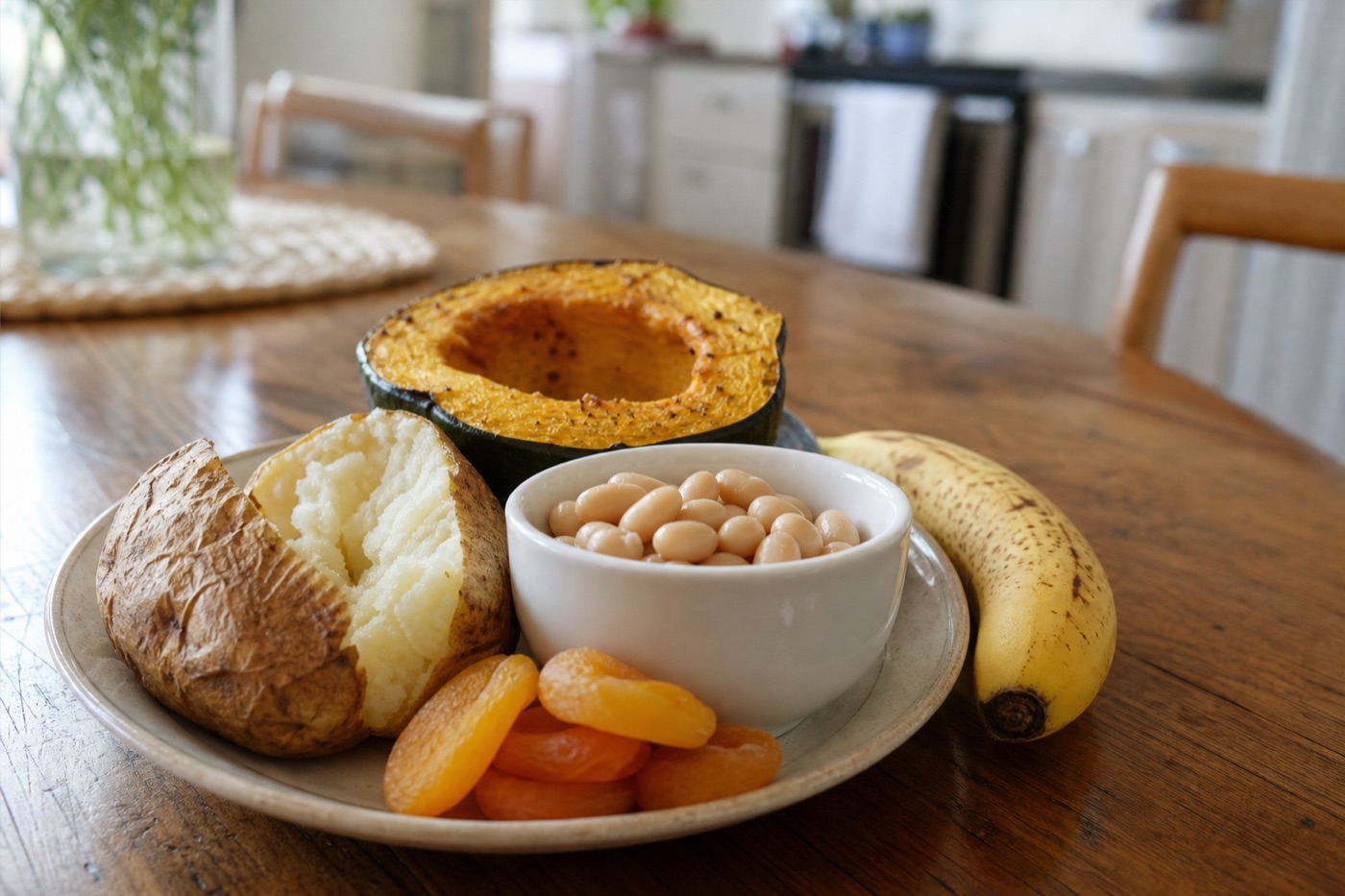
- 12 baby carrots or 1 medium baked potato
Our guide to what counts as a serving covers equivalents for the other food groups, from grains to dairy.
Variety matters as much as volume
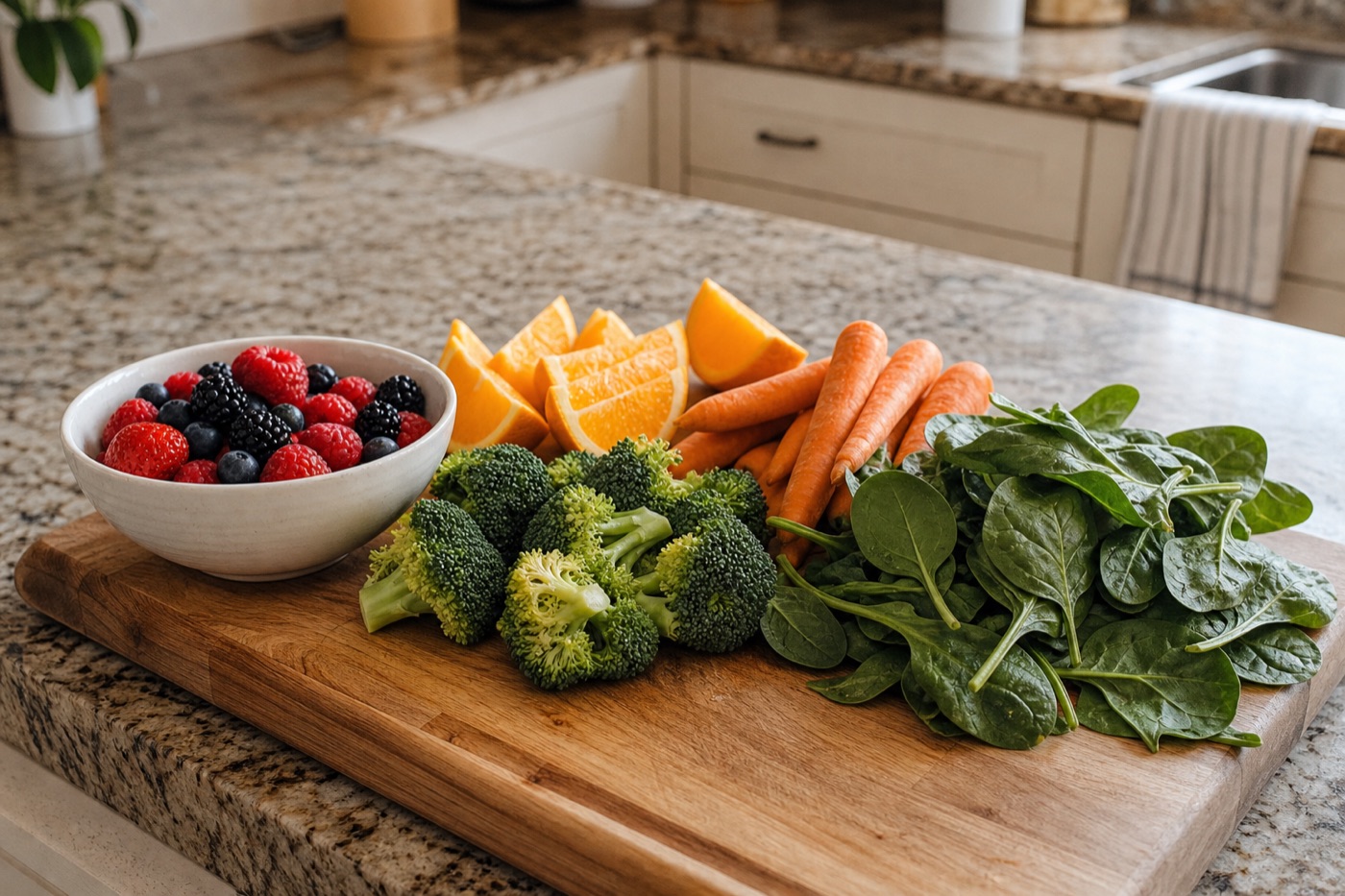
The Dietary Guidelines sort vegetables into five subgroups: dark green (spinach, broccoli, collards), red and orange (tomatoes, carrots, sweet potatoes, red peppers), beans, peas and lentils, starchy (potatoes, corn, green peas), and “other” (onions, cucumbers, cauliflower, green beans, mushrooms). Each brings a slightly different set of nutrients, so rotating through them over a week does more for you than eating three cups of the same vegetable every day. A simple habit is to include at least one dark green and one red or orange vegetable on most days, and beans a few times a week.
Fruit follows similar logic. Berries, citrus, melons, stone fruit and apples each bring something a little different, and seasonal choices are often the cheapest.
Juice, dried fruit and potatoes
Juice. One hundred percent juice counts, but it lacks most of the fiber of whole fruit, and the Dietary Guidelines recommend that at least half of your fruit come from whole fruit. For kids, the American Academy of Pediatrics advises no juice before age 1, no more than 4 ounces a day for toddlers, 4 to 6 ounces for ages 4 to 6, and 8 ounces for older children and teens.
Dried fruit. Half a cup counts as a full cup because the water has been removed. That also concentrates the calories and sugar, so small handfuls go a long way.
Potatoes. They count as a starchy vegetable. A baked or boiled potato with the skin is a solid choice; fries and chips are better thought of as an occasional side.
Fresh, frozen and canned all count
Frozen fruit and vegetables are usually frozen shortly after harvest and are every bit as useful for reaching your target. Canned options work too: look for vegetables labeled “no salt added” or “low sodium” and fruit packed in water or 100% juice instead of heavy syrup. Keeping a mix of forms in the house makes it easier, and often cheaper, to eat produce all week. Our tips on storing produce so it lasts help fresh items stretch further.
A day that adds up
An ordinary day can reach about 2 cups of fruit and 3 cups of vegetables without a single giant salad:
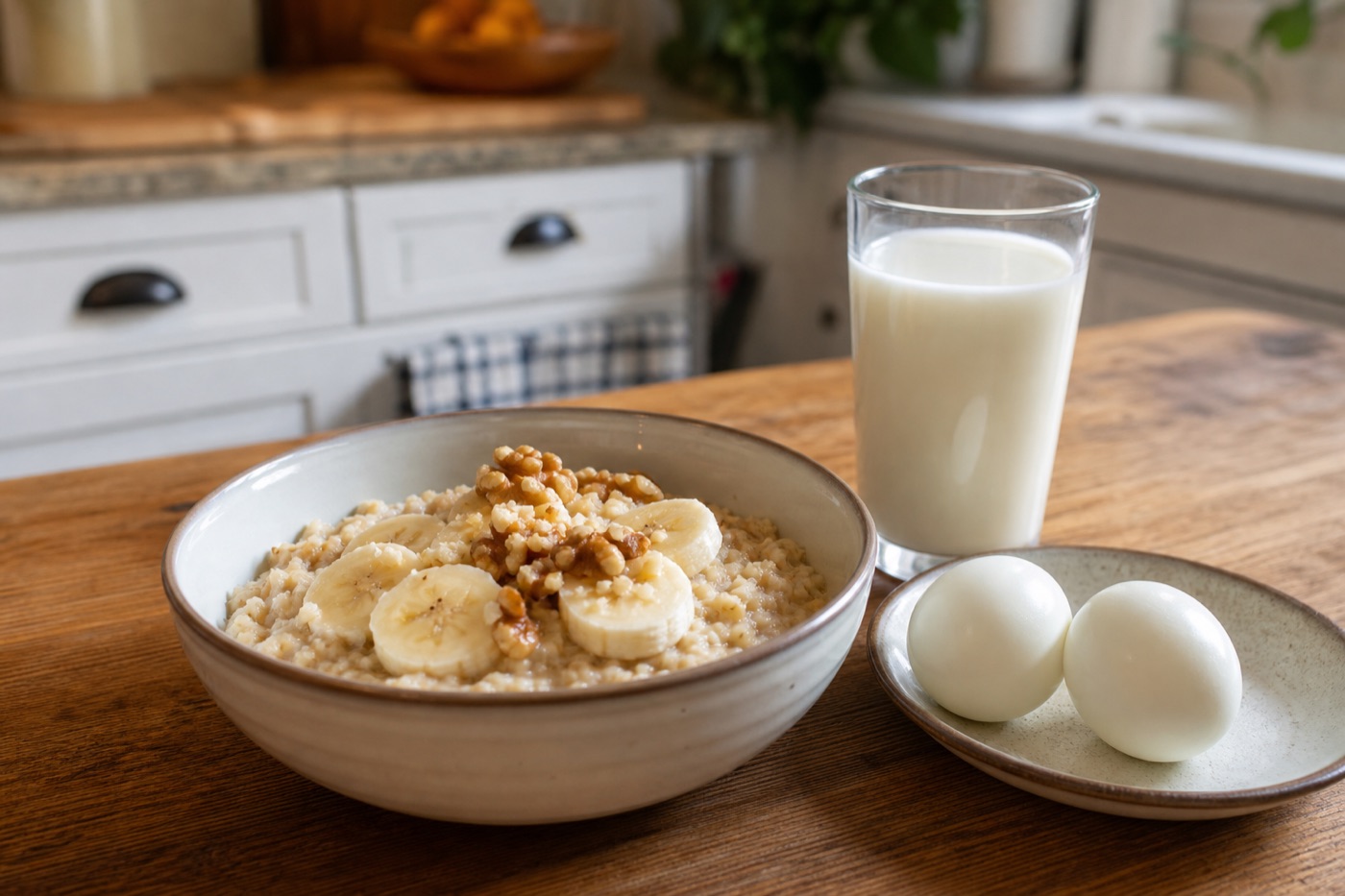
- Breakfast: ½ cup of blueberries stirred into oatmeal (½ cup fruit)
- Lunch: a sandwich piled with lettuce and tomato, plus 12 baby carrots (about 1½ cups vegetables)
- Snack: 1 small apple (1 cup fruit)
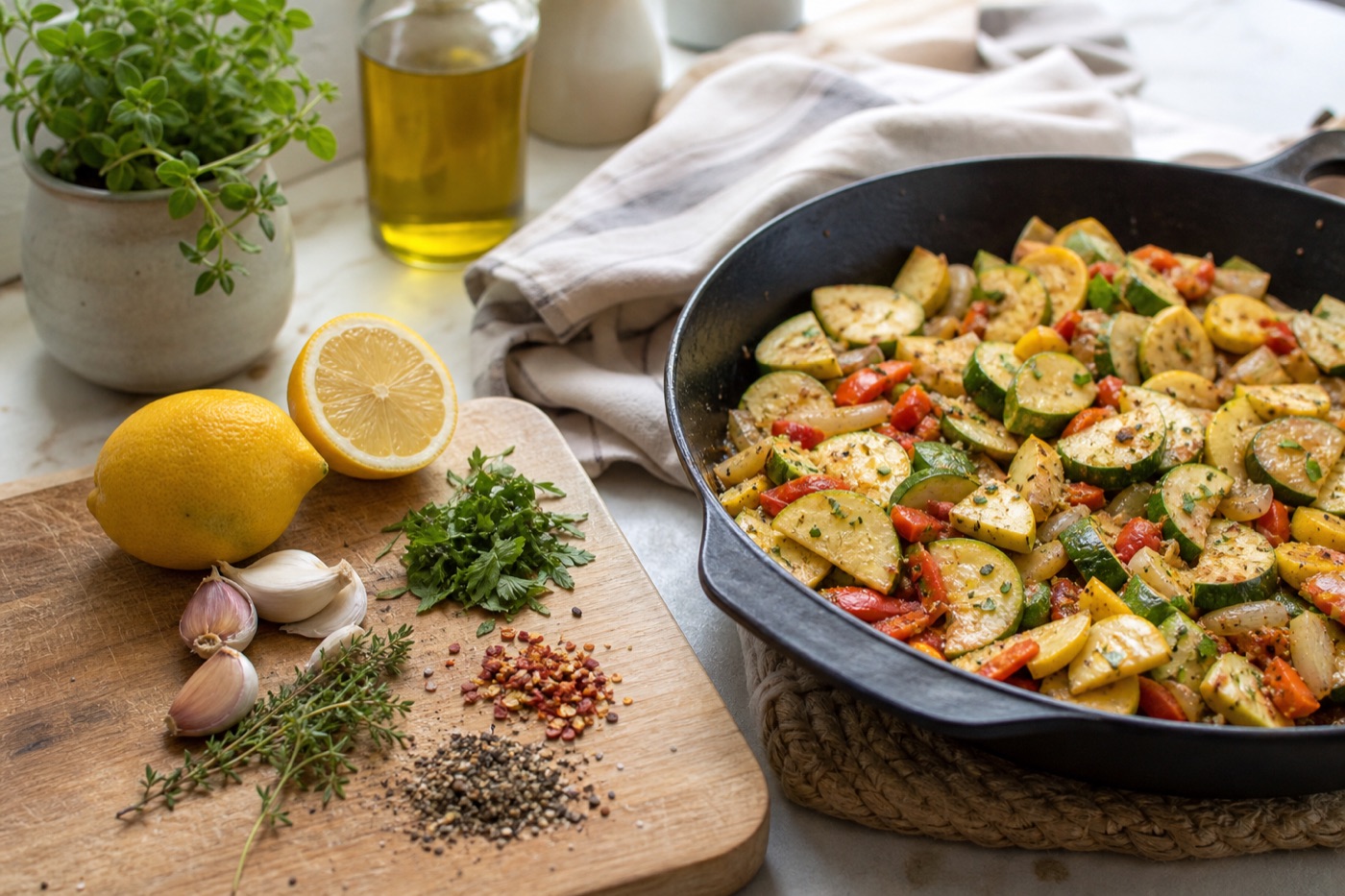
- Dinner: 1 cup of roasted broccoli and peppers and ½ cup of corn (1½ cups vegetables)
- Dessert: ½ cup of sliced peaches (½ cup fruit)
A pot of soup is another painless route; see our ideas for soups and stews that add more vegetables. If you like keeping a running tally on your phone, our calorie tracker app rankings can point you to a tool that fits.
The short version
Use the table to find your range, mix colors and forms across the week, and add one more half-cup at a time rather than overhauling every meal. Being a little closer to the target this week than last week counts as real progress.
Common questions
Do fruits and vegetables in smoothies count?
Yes. Blended produce counts toward your daily cups based on how much goes into the blender, so a cup of berries in a smoothie is still a cup of fruit. Recipes heavy on juice can add a lot of sugar without much fiber, though.
Can I eat too many vegetables?
For most healthy people it's hard to overdo vegetables. A sudden jump in fiber can cause gas or bloating, so increase gradually and drink water. People taking certain medicines, such as blood thinners, or living with kidney disease may get specific advice from their doctor.
Are potatoes a vegetable?
Yes. Federal guidance places white potatoes, corn and green peas in the starchy vegetable subgroup. Preparation matters: a baked potato eaten with its skin is a very different food from fries cooked in plenty of oil and salt.
Is fruit juice as good as whole fruit?
One hundred percent juice counts toward fruit, but it's missing most of the fiber and is easy to drink in large amounts. Federal guidance suggests getting at least half of your fruit from whole fruit.
Sources
Elliot writes about foods, labels and the grocery store, from choosing a cereal to stretching a budget without giving up vegetables.