How to Store Fruits and Vegetables So They Last
Keep the fridge at 40°F or below, separate ethylene-releasing fruit from sensitive vegetables, and wash produce right before eating. A where-to-store-it guide.
On this page
Fruits and vegetables last longest when each is stored where it does best. Most belong in the refrigerator at 40°F or below; a handful, such as bananas, tomatoes, whole melons, potatoes, onions and winter squash, do better outside it. Fruits that release ethylene gas should be kept away from vegetables that wilt or yellow quickly. Wash produce right before you eat it rather than before storing, and refrigerate anything cut within two hours.
Fridge basics
- Temperature. FDA recommends keeping the refrigerator at 40°F or below. An inexpensive appliance thermometer takes the guesswork out.
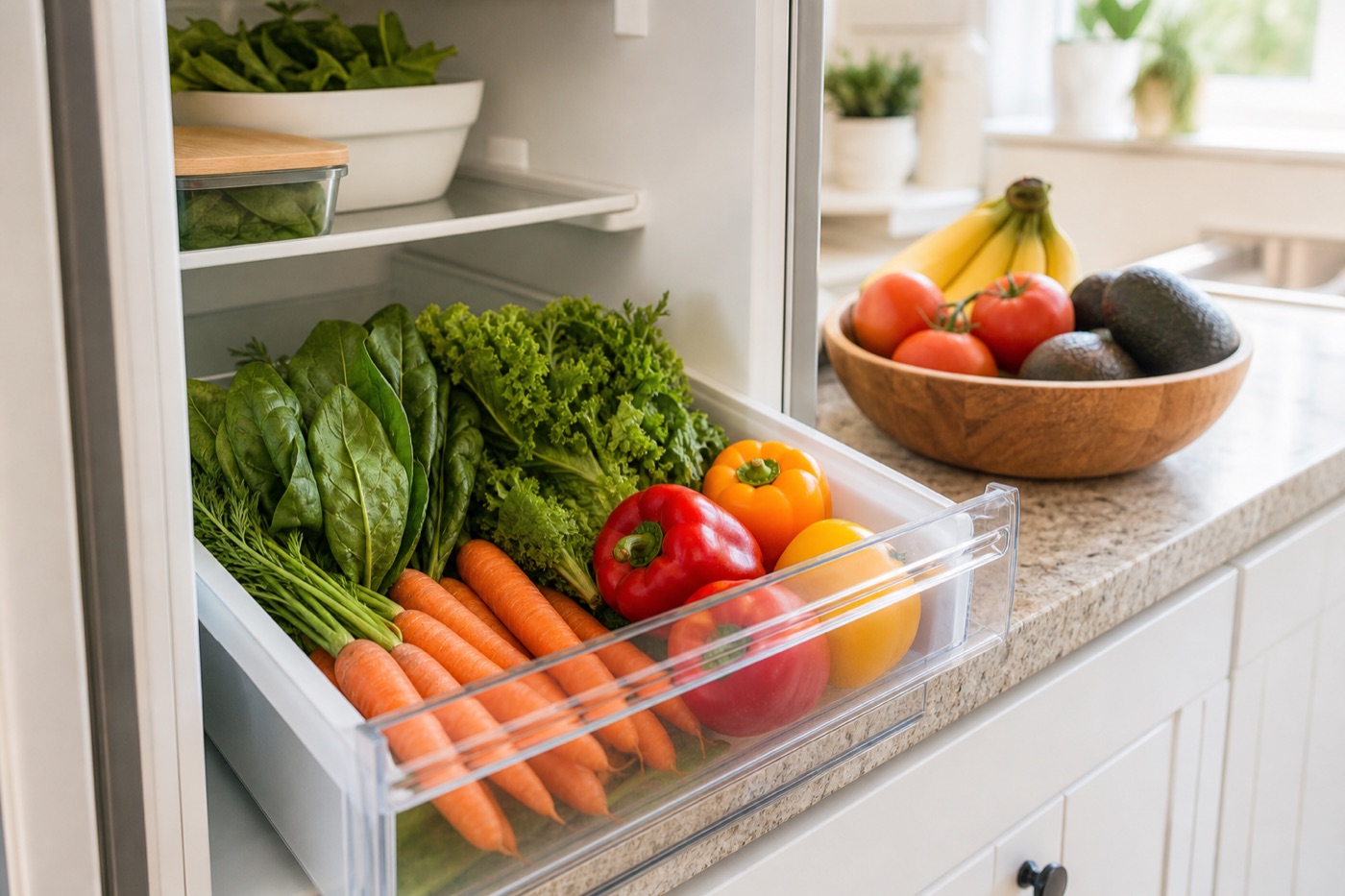
- Crisper drawers. If yours have adjustable vents, use a high-humidity drawer (vent closed) for produce that wilts, such as leafy greens, herbs, broccoli and carrots, and a low-humidity drawer (vent open) for produce that tends to rot, such as apples, pears and stone fruit.
- Airflow. Packing the fridge tight creates warm pockets. Leave a little room for cold air to circulate.
- Separation. Store raw meat, poultry and seafood in sealed containers on the bottom shelf so their juices can’t drip onto produce.
Where to store what
| In the refrigerator | On the counter | In a cool, dark, dry spot |
|---|---|---|
| Berries, grapes, cherries | Bananas | Potatoes |
| Leafy greens and lettuce | Tomatoes | Onions, kept apart from potatoes |
| Herbs other than basil | Whole melons, until cut | Garlic |
| Broccoli, cauliflower, cabbage | Avocados, peaches, pears and plums, until ripe | Winter squash |
| Carrots, celery, radishes | Basil, stems in water | Sweet potatoes |
| Peppers, cucumbers, zucchini | Citrus, for a week or so | |
| Corn, green beans, asparagus | ||
| Apples, for longest life | ||
| Anything cut or peeled |
Once counter fruits like avocados and peaches are ripe, moving them to the fridge slows further ripening and buys a few more days.
The ethylene effect
Some fruits give off ethylene, a natural gas that speeds ripening. Strong producers include apples, bananas, avocados, tomatoes, pears, peaches, plums, cantaloupe and kiwi. Vegetables that are sensitive to it include leafy greens, broccoli, cabbage, Brussels sprouts, cucumbers, carrots and green beans; around ethylene they yellow, wilt or turn bitter faster.
Keep the two groups in separate drawers or areas. You can also use ethylene on purpose: put a hard avocado or peach in a paper bag with a banana, and it will ripen sooner.
Prep habits that help
- Wait to wash berries. Moisture speeds mold, so rinse them just before eating. Pick out any moldy berry as soon as you see it.
- Wrap your greens. Line a container with a paper towel, add dry greens, and close the lid. The towel absorbs excess moisture.
- Treat herbs like flowers. Trim the stems, stand them in a glass of water and cover loosely with a bag in the fridge. Basil prefers the counter.
- Remove leafy tops. Cut the greens off carrots, beets and radishes before storing, since the leaves draw moisture from the roots.
- Leave produce whole until needed. Cutting exposes more surface and shortens storage life.
Cut produce: the two-hour rule
Once fruits and vegetables are cut, peeled or cooked, FDA advises refrigerating them within 2 hours, or within 1 hour if the room or outdoor temperature is above 90°F. Store cut produce in covered containers and use it within a few days.
Freeze what you can’t eat in time
Your freezer, kept at 0°F, can rescue produce before it spoils:
- Bananas: peel, slice and freeze for smoothies, oatmeal and baking.
- Berries and grapes: spread on a tray to freeze individually, then transfer to a bag.
- Leafy greens: freeze spinach or kale for soups, stews and smoothies; the texture won’t suit salads afterward.
- Most vegetables: blanch briefly in boiling water, cool in ice water and dry before freezing to help keep color and texture.
- Herbs: chop and freeze in ice-cube trays with a little oil or water.
For more ways to use up what you buy, see our guide to reducing food waste at home.
Rescue tired produce, and know when to let go
Limp celery, carrots and lettuce often perk up after a soak in ice water. Soft herbs become pesto or sauce, wrinkly peppers roast beautifully, and overripe fruit turns into smoothies and muffins.
Mold is a different matter. USDA’s Food Safety and Inspection Service says firm, low-moisture produce such as cabbage, bell peppers and carrots can be saved by cutting away at least an inch around and below the moldy spot. Soft produce with high moisture, like cucumbers, peaches and tomatoes, should be thrown out, because mold can spread below the surface. Anything slimy or off-smelling goes in the trash or compost.
The quick routine
When you get home from the store, sort produce into three places: fridge, counter and cool cupboard. Keep ethylene producers apart from delicate vegetables, wash just before eating, and freeze anything you won’t get to. Produce that lasts is produce you actually eat, which makes reaching your daily fruits and vegetables a lot easier.
Common questions
Should tomatoes go in the fridge?
Whole tomatoes keep their best flavor and texture on the counter until they're ripe. Once fully ripe, the fridge can buy you a couple of extra days; let them warm up a bit before eating. Cut tomatoes always belong in the refrigerator.
Do I need a special produce wash?
No. FDA advises rinsing fruits and vegetables under plain running water and scrubbing firm items such as melons and potatoes with a clean brush. Soap, detergent and commercial produce washes aren't recommended.
Why do bananas turn black in the fridge?
Cold damages the peel and darkens it, although the fruit inside is usually fine. Let bananas ripen on the counter, then move ripe ones to the fridge if you need a few more days.
Sources
Ruth covers nutrition through life stages and everyday health, from feeding school-age kids to eating well after sixty.