Nuts and Seeds: Nutrition and How Much to Eat
A typical portion of nuts or seeds is about 1 ounce, a small handful, with roughly 160 to 200 calories plus protein, fiber and healthy fats. Compare types here.
On this page
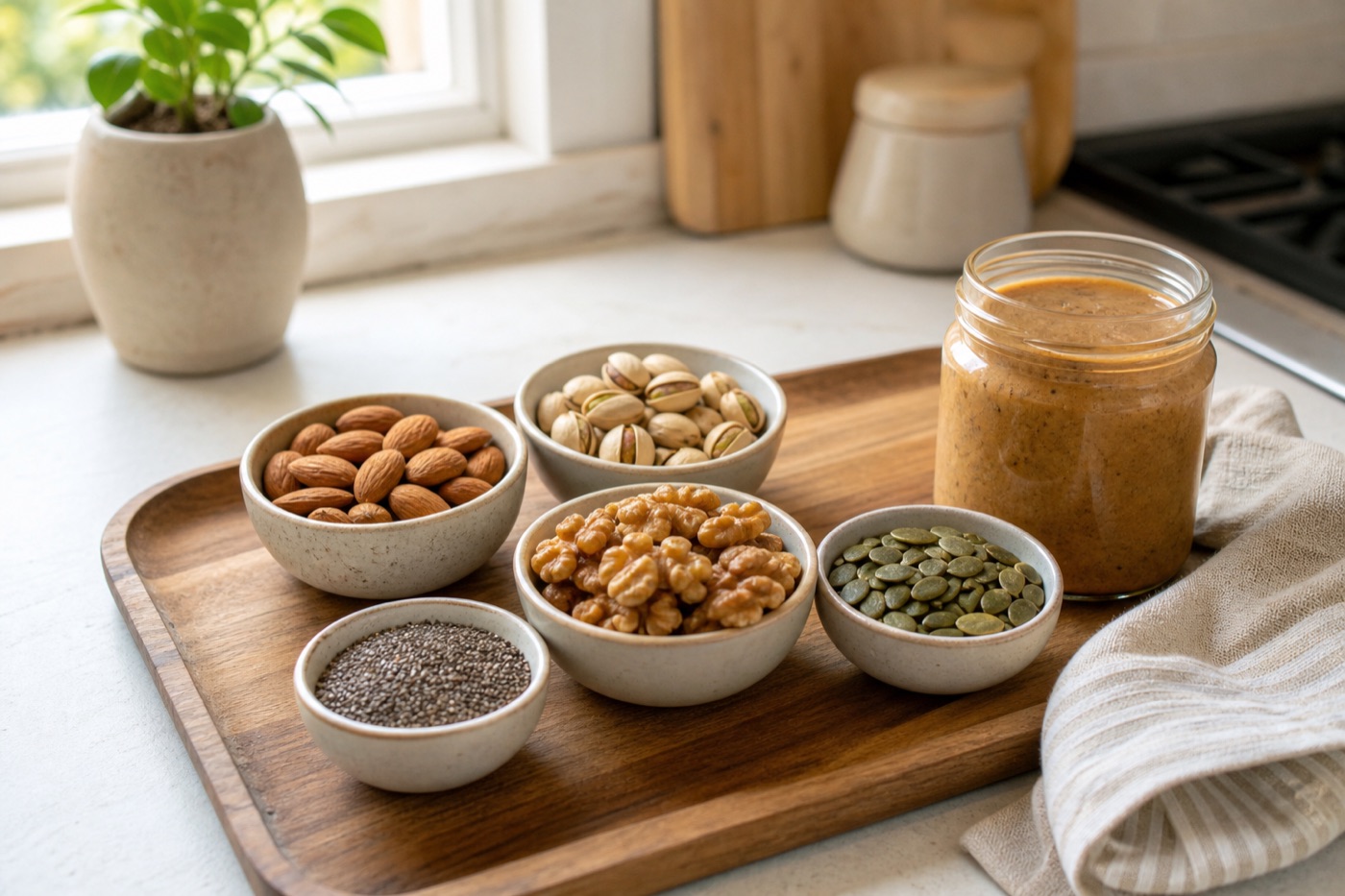
A typical portion of nuts or seeds is about 1 ounce, which is a small handful, or about 2 tablespoons of nut or seed butter. That portion supplies roughly 160 to 200 calories, mostly from unsaturated fat, along with protein, fiber, vitamin E and minerals like magnesium. Eaten in sensible amounts, and preferably unsalted or lightly salted, they’re one of the easiest healthy additions to any day.
What the official guidance says
Federal guidance treats nuts and seeds as part of the protein foods group. In MyPlate terms, ½ ounce of nuts or seeds, or 1 tablespoon of nut butter, counts as 1 ounce-equivalent of protein. The 2020–2025 Dietary Guidelines suggest about 5 ounce-equivalents a week from nuts, seeds and soy products combined for someone eating 2,000 calories a day.
FDA also allows a qualified health claim for nuts: scientific evidence suggests, but does not prove, that eating 1.5 ounces a day of most nuts as part of a diet low in saturated fat and cholesterol may reduce the risk of heart disease.
What’s inside, ounce for ounce
Most nuts and seeds are rich in monounsaturated and polyunsaturated fats, the kinds associated with heart health. Walnuts, chia seeds and flaxseeds stand out for ALA, a plant omega-3. Nuts and seeds also bring plant protein, fiber, vitamin E, magnesium and, depending on the type, zinc, iron and selenium.
Per-ounce comparison
Approximate values based on USDA FoodData Central:
| Nut or seed | About how many in 1 oz | Calories | Protein | Fiber |
|---|---|---|---|---|
| Almonds | 23 | about 165 | about 6 g | about 3.5 g |
| Pistachios, shelled | 49 | about 160 | about 6 g | about 3 g |
| Peanuts | 28 | about 165 | about 7 g | about 2.5 g |
| Cashews | 18 | about 155 | about 5 g | about 1 g |
| Walnuts | 14 halves | about 185 | about 4 g | about 2 g |
| Pecans | 19 halves | about 195 | about 2.5 g | about 2.5–3 g |
| Pumpkin seeds, hulled | about ¼ cup | about 160 | about 8–9 g | about 2 g |
| Sunflower seeds, hulled | about ¼ cup | about 165 | about 5–6 g | about 3 g |
| Chia seeds | about 2½ tbsp | about 140 | about 5 g | about 10 g |
Peanuts are technically legumes, but nutritionally they behave like nuts and are grouped with them.
What a portion looks like
An ounce is smaller than most people pour. Think of a modest handful that fits in a cupped palm, or roughly ¼ cup of shelled nuts. Two tablespoons of nut butter is roughly the size of a golf ball. A few tricks help:
- Portion a large bag into small containers when you get home.
- Eat from a bowl, not the bag.
- Choose in-shell pistachios or peanuts, which slow you down.
- Use nuts as a topping on oatmeal, yogurt, salads or roasted vegetables rather than a stand-alone snack.
For snack pairings that include nuts, see what makes a healthy snack.
Seeds worth knowing
- Chia seeds absorb liquid and form a gel. Stir them into overnight oats, yogurt or smoothies, or make a simple pudding with milk.
- Flaxseeds are best eaten ground, since whole seeds can pass through undigested. Keep ground flax in the refrigerator, where it stays fresh longer.
- Pumpkin seeds, also called pepitas, are good sources of magnesium and zinc. Toast them for salads and soups.
- Sunflower seeds and sunflower seed butter offer a peanut-free option for lunches.
- Sesame seeds and tahini add flavor to dressings, hummus and stir-fries.
- Hemp seeds, sold shelled as hemp hearts, are mild and high in protein.
Reading labels: salted, roasted, coated
- Raw, dry-roasted or oil-roasted: the nutrition is similar; oil roasting adds a little fat.
- Salted: check the sodium, and look for unsalted or lightly salted options.
- Honey-roasted, candied or chocolate-covered: these carry added sugar and are closer to a treat.
- Nut butters: the best ingredient lists are short, often just nuts and maybe salt. Some brands add sugar and other oils. Natural nut butters may separate; stir and refrigerate them.
- Trail mix: look at how much of the bag is candy versus nuts and dried fruit.
Safety notes
Allergies. Peanuts, tree nuts and sesame are among the nine major food allergens in the U.S. Anyone with a known allergy should follow their allergist’s guidance and read labels carefully.
Young children. Whole nuts and seeds are a choking hazard for children under 4, according to the American Academy of Pediatrics. Nut butters spread thinly or ground nuts mixed into foods are safer forms. Introducing peanut-containing foods early can lower the risk of peanut allergy for many babies, but talk with your pediatrician first, especially if your baby has severe eczema or an egg allergy.
Brazil nuts. They’re extraordinarily high in selenium. NIH’s Office of Dietary Supplements notes that one ounce, about 6 to 8 nuts, contains more than the adult upper limit of 400 micrograms. Enjoy them one or two at a time, not by the handful.
Nuts and seeds are also a key part of meatless eating; our guide to plant protein foods shows how they fit with beans, tofu and grains.
A handful, not a bag
Nuts and seeds deliver a lot of nutrition in a small package, which is exactly why portions matter. Keep a few varieties on hand, measure an ounce until it feels familiar, and favor plain or lightly salted versions most of the time.
Common questions
Do nuts make you gain weight?
Nuts are calorie-dense, so large amounts add up fast. In moderate portions they fit into many healthy eating patterns, and their protein, fat and fiber make them filling. Measuring out a portion instead of eating from the bag keeps things in check.
Are raw nuts healthier than roasted?
The difference is small. Dry-roasted nuts are nutritionally very similar to raw ones, and oil-roasted nuts add only a little fat. Salt and sugary coatings make a much bigger difference than the roasting itself.
Is peanut butter as good as whole peanuts?
It offers similar protein and fats. Choose one whose ingredients are just peanuts, or peanuts and salt, and keep an eye on the portion: 2 tablespoons comes to about 190 calories.
Sources
Naomi edits Nutrition for Everybody and writes the app rankings. She cares most about advice that still works on a Tuesday night with a tired family and a half-empty fridge.