Soups and Stews: An Easy Way to Eat More Vegetables
One pot of soup or stew can hold several kinds of vegetables at once. Here's a basic method, flavor combinations, sodium tips and how to store leftovers safely.
On this page
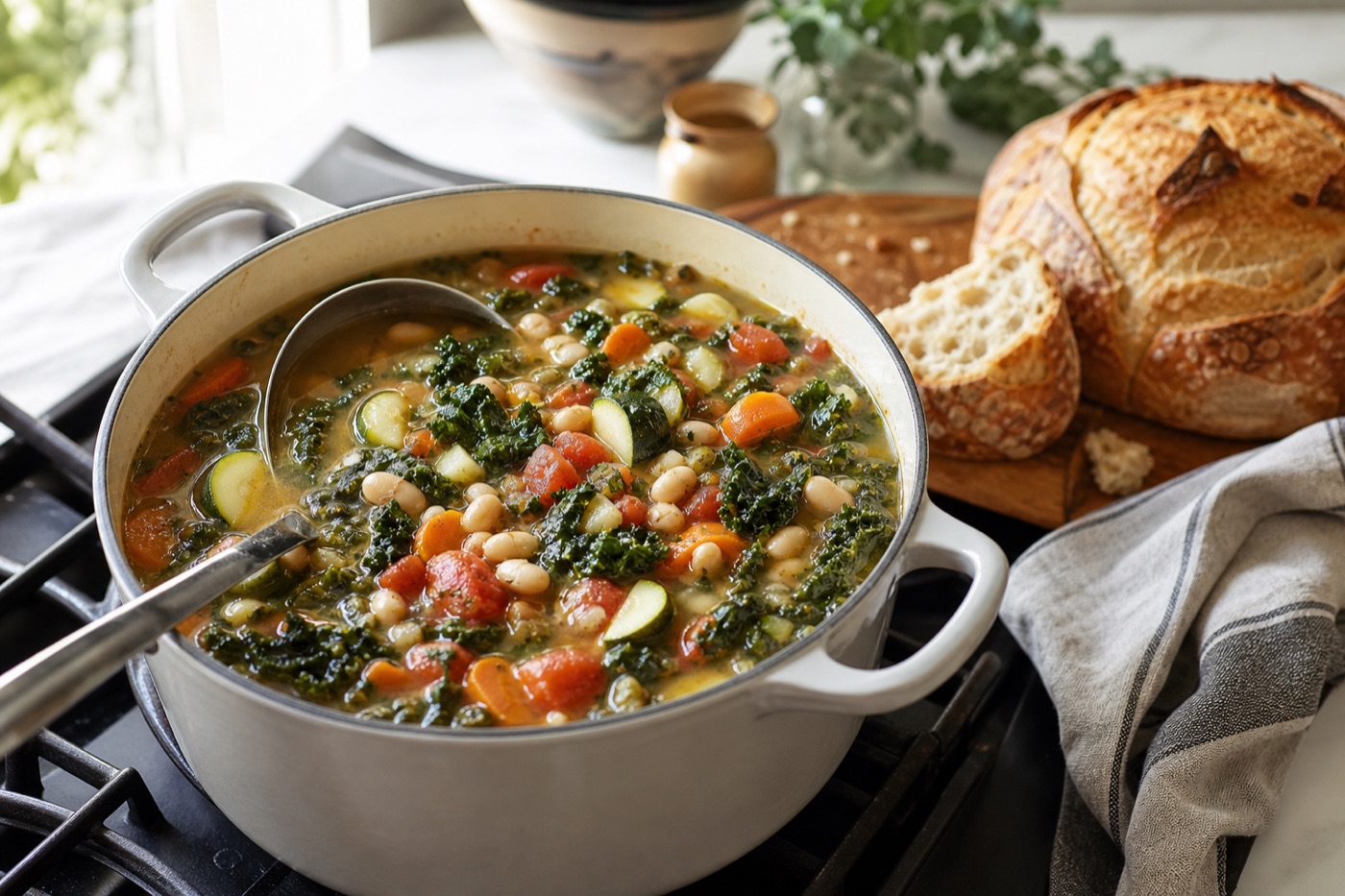
Soups and stews make it easy to eat more vegetables because one pot can hold several kinds at once, cooked until tender and well seasoned. Start with onions and garlic, add whatever vegetables you have, whether fresh, frozen or canned, plus beans or a little meat, then simmer in broth or tomatoes. A big batch covers several meals, and many soups taste even better the next day.
Why the pot does the work
Soup solves several of the usual obstacles to eating vegetables. Cooked vegetables soften and soak up flavor, which helps people who don’t love raw salads. Frozen and canned vegetables work perfectly, so you’re never stuck waiting for a trip to the store. And because everything simmers together, a handful of spinach or a diced zucchini disappears into the pot without anyone noticing.
In MyPlate terms, a cup of cooked vegetables counts as a cup from the vegetable group, and 2 cups of raw leafy greens count as one. A pot loaded with produce can put a real dent in the day’s target.
A basic method
- Start with aromatics. Warm a tablespoon or two of oil over medium heat and cook diced onion, carrot and celery, or onion and peppers, until soft, about 5 to 8 minutes.
- Bloom the flavor. Stir in garlic, spices and a spoonful of tomato paste, and cook for about a minute until fragrant.
- Add liquid. Pour in low-sodium broth, water, canned tomatoes or a mix, enough to cover everything by an inch or two.
- Add sturdy vegetables first. Potatoes, winter squash, carrots, cabbage and green beans need the most time.
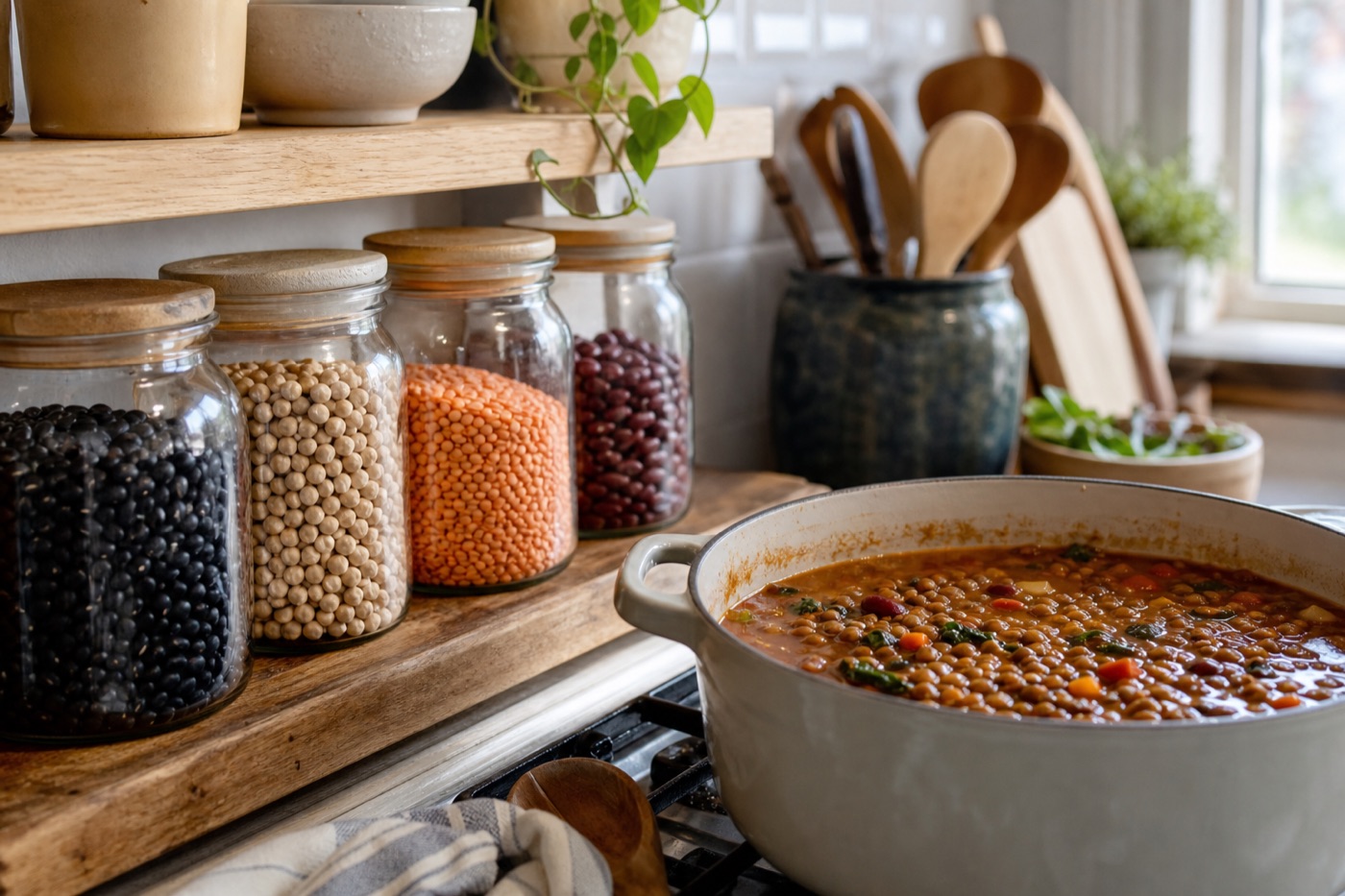
- Add protein. Rinsed canned beans, dry lentils, which cook right in the pot, diced chicken, or lean ground meat browned at the start.
- Finish with quick-cooking vegetables. Zucchini, spinach, kale, peas and corn go in for the last 5 to 10 minutes.
- Season at the end. Taste first, then add salt sparingly, black pepper, a splash of vinegar or lemon juice, and fresh herbs.
Combinations to try
| Style | Vegetables | Protein | Finish with |
|---|---|---|---|
| Minestrone-style | carrots, celery, zucchini, tomatoes, green beans, spinach | white beans | basil and a little grated Parmesan |
| Black bean soup | onion, bell peppers, corn, tomatoes | black beans | cumin, lime and cilantro |
| Red lentil soup | onion, carrots, spinach | red lentils | curry powder and lemon |
| Chicken vegetable | carrots, celery, peas, potatoes, kale | chicken | thyme and parsley |
| Beef and barley stew | mushrooms, carrots, onions, parsnips | lean beef and barley | black pepper and fresh thyme |
| Turkey chili | peppers, onions, tomatoes, zucchini | ground turkey and kidney beans | chili powder and oregano |
A 15-ounce can of beans adds about 1½ cups of beans to the pot, and a 10-ounce bag of fresh spinach cooks down to a surprisingly small amount, so don’t be shy with greens.
Keeping sodium in check
Broth, bouillon and canned soups can be some of the saltiest items in the kitchen. A few ways to keep the pot lighter:
- Choose broth labeled “low sodium,” which means 140 mg or less per serving, or dilute regular broth with water.
- Use no-salt-added canned tomatoes and beans, or rinse regular canned beans.
- Build flavor with aromatics, herbs, spices, a parmesan rind or a splash of acid instead of extra salt.
- Add salt at the end, when you can taste how much the soup really needs.
Our guide to cutting back on salt has more ideas.
Making a bowl filling
Vegetable soup on its own can be light. To turn it into a meal, add beans or lentils, which bring protein and fiber, and a whole grain such as barley, farro or brown rice. Pasta and grains keep soaking up liquid in the fridge, so if you’re planning leftovers, cook them separately and add them to each bowl. Top with a spoonful of yogurt, a sprinkle of cheese or toasted seeds, and serve with whole-grain bread. For more on pulses, see our beginner’s guide to beans and lentils.
Cooling, storing and reheating safely
USDA’s Food Safety and Inspection Service offers clear guidance for leftovers:
- Cool it quickly. Don’t leave soup out for more than 2 hours. Divide a big pot into shallow containers so it cools fast in the fridge.
- Refrigerate and eat within 3 to 4 days.
- Freeze for longer storage. Food kept at 0°F stays safe indefinitely, though quality is best within a few months.
- Reheat thoroughly. Bring soups and stews to a rolling boil, or to 165°F on a food thermometer.
- Thaw safely in the refrigerator, in cold water or in the microwave, never on the counter.
Single-serving containers make soup especially handy if you live alone; our guide to cooking healthy meals for one has more on that.
Make a pot this week
Pick one combination from the table, use whatever vegetables are already in your fridge or freezer, and cook a big batch. Eat some tonight, pack some for lunch and freeze the rest. It’s one of the simplest ways to make vegetables a regular part of the week without thinking about it at every meal.
Common questions
Can I use frozen vegetables in soup?
Yes, and they're one of the easiest options. Add them straight from the freezer near the end of cooking so they keep some texture; there's no need to thaw them first.
How do I make soup creamy without cream?
Blend part of the pot with an immersion blender, or purée a can of white beans, a cooked potato or some cooked cauliflower and stir it back in. A spoonful of plain yogurt on each bowl adds richness too.
Is canned soup a good shortcut?
It can be, especially if you pick a lower-sodium version. Stretch a can with a cup of frozen vegetables and some rinsed beans to add fiber and make it more filling.
Sources
Naomi edits Nutrition for Everybody and writes the app rankings. She cares most about advice that still works on a Tuesday night with a tired family and a half-empty fridge.