Cooking Healthy Meals for One
Cooking for one gets easier when you buy small, cook versatile components once, freeze single portions and keep a few quick meals that scale down well.
On this page
Cooking healthy meals for one works best when you stop thinking in single recipes and start thinking in building blocks. Buy small amounts of fresh food and stock up on frozen, cook a few versatile ingredients at once, freeze single portions, and keep a short list of dinners that are quick to make for one person. The result is less waste, less boredom and fewer nights of cereal for dinner.
Shopping for a household of one
Most packages are sized for families, so a little strategy helps:
- Buy loose produce. Pick up two carrots, one onion or a single sweet potato instead of a whole bag.
- Use the salad bar or deli counter for small amounts of chopped vegetables, cooked chicken or beans when you only need a few spoonfuls.
- Go frozen. Frozen spinach, peas, broccoli, berries and fish fillets let you take out exactly what you need.
- Choose smaller cans and cartons, or plan a second meal around the rest of a large one.
- Buy grains and legumes in bulk bins, where you can scoop just a cup.
Stagger fresh produce by how fast it spoils. Eat delicate items like berries and leafy greens early in the week, and save sturdy ones like cabbage, carrots, apples and squash for later. See how to keep produce fresh longer for which items belong in the crisper and which on the counter.
Cook components, not just recipes
Instead of four different recipes a week, make three or four basics once and combine them differently each night.
Cook once:
- A pot of a whole grain (brown rice, quinoa, farro)
- A tray of roasted vegetables (peppers, onions, zucchini, broccoli)
- One protein (roasted chicken thighs, simmered lentils or a tray of baked tofu)
- One sauce (yogurt with garlic and lemon, or a simple peanut-lime dressing)
Eat it three ways:
- Grain bowl with roasted vegetables, protein and sauce
- Wrap or quesadilla with the protein, vegetables and a little cheese
- Quick soup: broth, leftover vegetables and protein, a handful of greens
This approach keeps meals balanced, too. MyPlate’s advice to fill half your plate with fruits and vegetables is easy to follow when a tray of roasted vegetables is already waiting.
Make the freezer your sous-chef
A freezer turns “too much” into “dinner later.” The USDA Food Safety and Inspection Service notes that food held at 0°F stays safe indefinitely, though flavor and texture slowly decline, so freeze with a plan:
- Portion soups, stews, chili and cooked grains into single servings before freezing.
- Freeze sliced bread and take out a slice or two at a time.
- Peel and freeze overripe bananas for smoothies and oatmeal.
- Freeze cooked beans in their liquid in 1/2-cup or 1-cup portions.
- Label every container with what it is and the date.
- Thaw in the refrigerator overnight, not on the counter.
Five meals that scale down well
These need little planning and suit a single serving. Protein estimates are approximate, based on USDA FoodData Central.
| Meal | What you need | Protein (about) |
|---|---|---|
| Veggie omelet | 2 eggs, spinach, tomato, a sprinkle of cheese, whole-grain toast | 20 g |
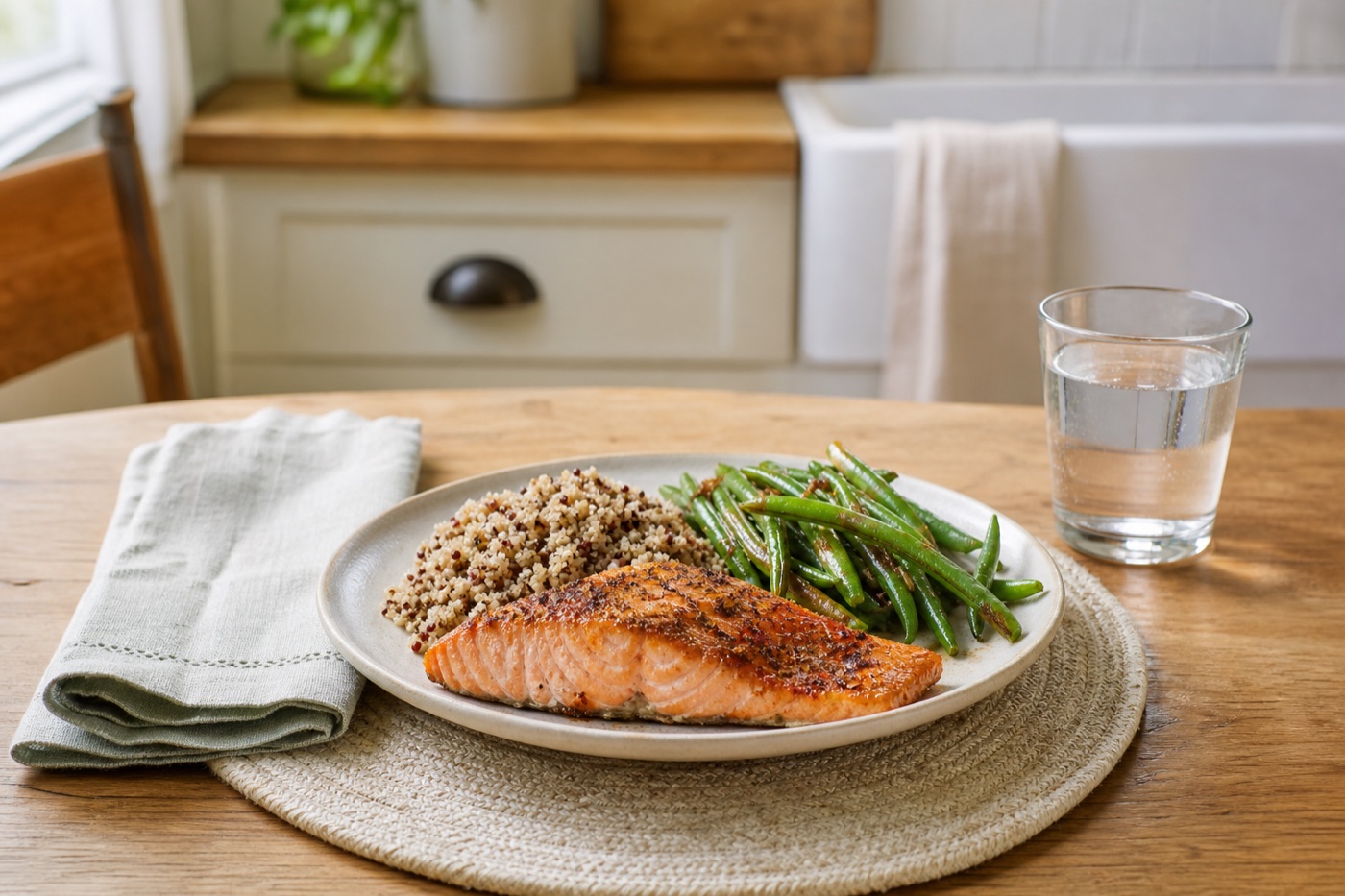
| Sheet-pan salmon | 4 oz salmon fillet, broccoli and a small potato, olive oil, lemon | 25 g |
| Bean and rice burrito | 1/2 cup black beans, 1/2 cup rice, salsa, lettuce, whole-wheat tortilla | 14 g |
| Stuffed baked potato | 1 medium potato, 1/2 cup cottage cheese, steamed broccoli | 17 g |
| Quick stir-fry | 3 oz chicken or tofu, frozen stir-fry vegetables, brown rice | 15–30 g |
A baked potato or sweet potato cooks in the microwave in a few minutes, which makes it one of the fastest bases for a meal for one.
Keep it enjoyable
Eating alone can slide into eating standing up, in front of a screen or straight from the pot. Setting a place at the table, using a real plate and taking a few minutes to enjoy the food can make meals feel worth cooking. Try one new recipe or ingredient a week so the rotation doesn’t get stale, and invite a friend over now and then; cooking for two is a nice change of pace.
The right equipment helps too. A quarter-size sheet pan, an 8-inch skillet, a small saucepan and a set of single-portion freezer containers make small batches feel natural instead of awkward. Some people who cook for one also team up with a friend or neighbor to swap a few portions of soup or casserole each week, which adds variety without extra work.
Leftover safety basics
Leftovers are the backbone of cooking for one, so handle them carefully:
- Get cooked food into the fridge within 2 hours of cooking.
- Eat what you’ve chilled within three to four days; freeze anything you won’t reach by then.
- Reheat leftovers to 165°F.
- Store food in shallow containers so it cools quickly.
Planning helps you use what you cook. Our weekly dinner planning routine works for one person as well as a family, and our tips for reducing food waste at home cover what to do with odds and ends.
A good place to start
This week, cook one grain, one tray of vegetables and one protein, then mix them into three different meals. Freeze anything you won’t eat in a few days, and keep two or three no-fuss dinners in your back pocket. Cooking for one gets easier and more enjoyable once you have a rhythm.
Common questions
How do I cook for one without wasting food?
Buy loose produce and small packages, lean on frozen fruits and vegetables, and cook a few versatile components you can mix into different meals. Freeze single portions of anything you won't eat within a few days.
Can I just halve a recipe?
Most savory recipes halve easily, though cooking times may be shorter and a smaller pan works better. Baked goods are trickier, so it's often easier to make the full batch and freeze the extras.
How long can I keep frozen leftovers?
Food kept at 0°F stays safe indefinitely, according to the USDA Food Safety and Inspection Service, but quality fades over time. Label containers with the date and aim to use soups, stews and cooked grains within a few months.
Sources
Naomi edits Nutrition for Everybody and writes the app rankings. She cares most about advice that still works on a Tuesday night with a tired family and a half-empty fridge.