How to Get Enough Calcium, With or Without Dairy
Most adults need 1,000 to 1,200 mg of calcium a day. See how much dairy provides and the best nondairy sources, from fortified soy milk to tofu and greens.
On this page
Most adults need 1,000 milligrams of calcium a day, rising to 1,200 mg for women over 50 and for everyone over 70, according to the NIH Office of Dietary Supplements. About three servings of milk, yogurt or cheese get many people most of the way there. If you don’t eat dairy, calcium-fortified soy milk, tofu made with calcium, canned fish with soft bones and certain leafy greens can fill the gap.
How much you need
| Age | Calcium per day |
|---|---|
| 1–3 | 700 mg |
| 4–8 | 1,000 mg |
| 9–18 | 1,300 mg |
| 19–50 | 1,000 mg |
| Men 51–70 | 1,000 mg |
| Women 51–70 | 1,200 mg |
| 71 and older | 1,200 mg |
Needs peak in the tween and teen years, when the skeleton is growing fastest. Pregnancy and breastfeeding don’t change the amount for adults; the recommendation stays at the level for your age.
Where to get it
From dairy
Approximate values based on NIH and USDA FoodData Central data:
| Food | Portion | Approximate calcium |
|---|---|---|
| Plain low-fat yogurt | 8 oz | about 415 mg |
| Part-skim mozzarella | 1½ oz | about 330 mg |
| Cheddar cheese | 1½ oz | about 305 mg |
| Milk, any fat level | 1 cup | about 300 mg |
| Cottage cheese | 1 cup | about 140 mg |
Strained yogurts, often sold as Greek-style, usually carry somewhat less calcium than regular yogurt, so check the label if you rely on them. Skim and whole milk have about the same calcium; the fat content doesn’t change it much.
Without dairy
| Food | Portion | Approximate calcium |
|---|---|---|
| Calcium-fortified orange juice | 1 cup | about 350 mg |
| Canned sardines with bones | 3 oz | about 325 mg |
| Calcium-fortified soy milk | 1 cup | about 300 mg |
| Firm tofu made with calcium sulfate | ½ cup | about 250 mg, varies widely |
| Cooked collard greens | 1 cup | roughly 250–350 mg |
| Canned pink salmon with bones | 3 oz | about 180 mg |
| Cooked bok choy | 1 cup | about 160 mg |
| Almonds | 1 oz | about 75 mg |
Fortified plant beverages are made from soy, almond, oat and other bases, and their calcium content varies by product. The added calcium can settle at the bottom of the carton, so give it a good shake before pouring. Turnip greens, kale and broccoli also contribute smaller amounts.
Help your body absorb it
- Pair it with vitamin D. Your body needs vitamin D to absorb calcium well. Our guide on how to get enough vitamin D covers the best sources.
- Choose the right greens. Spinach is high in calcium on paper, but compounds called oxalates bind most of it. Kale, bok choy, collards and broccoli are low in oxalates, so more of their calcium is usable.
- Spread it out. Your body absorbs calcium more efficiently in moderate amounts, so a little at each meal works better than one big dose.
If lactose is the issue
Lactose intolerance doesn’t always mean giving up dairy. According to NIDDK, many people with lactose intolerance can handle some lactose, especially in smaller portions or with meals. A few options:
- Lactose-free milk has the same calcium as regular milk.
- Yogurt with live cultures is often easier to digest than milk.
- Hard, aged cheeses such as cheddar and Swiss contain very little lactose.
- Smaller servings of milk spread across the day may sit better than a large glass at once.
If dairy causes ongoing digestive trouble, talk with a doctor, since other conditions can cause similar symptoms.
A day of calcium, two ways
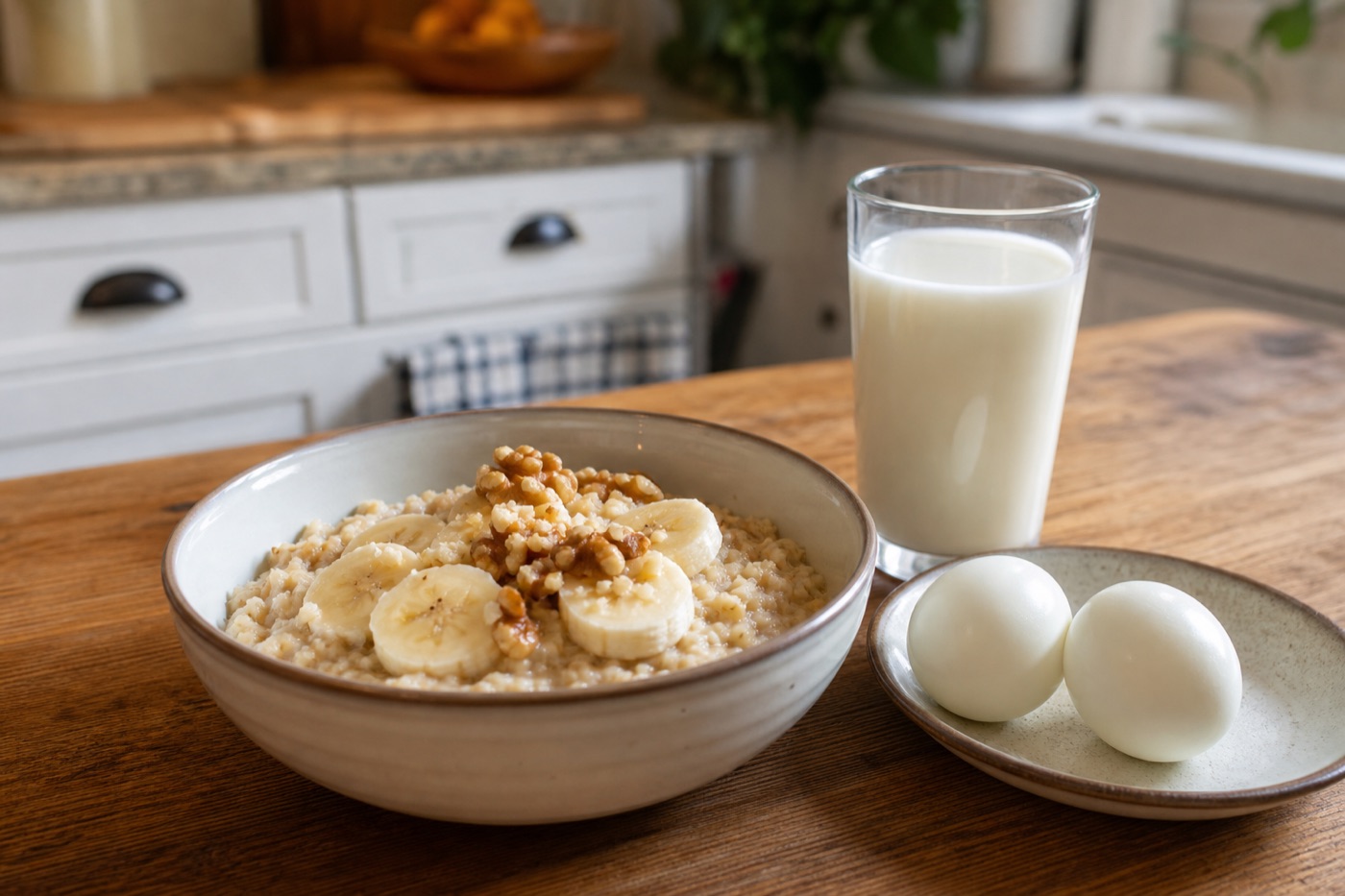
With dairy: a cup of milk with breakfast (about 300 mg), a cup of plain yogurt at lunch (about 415 mg for 8 ounces), and 1½ ounces of cheese in a dinner casserole (about 300 mg), totaling roughly 1,000 mg.
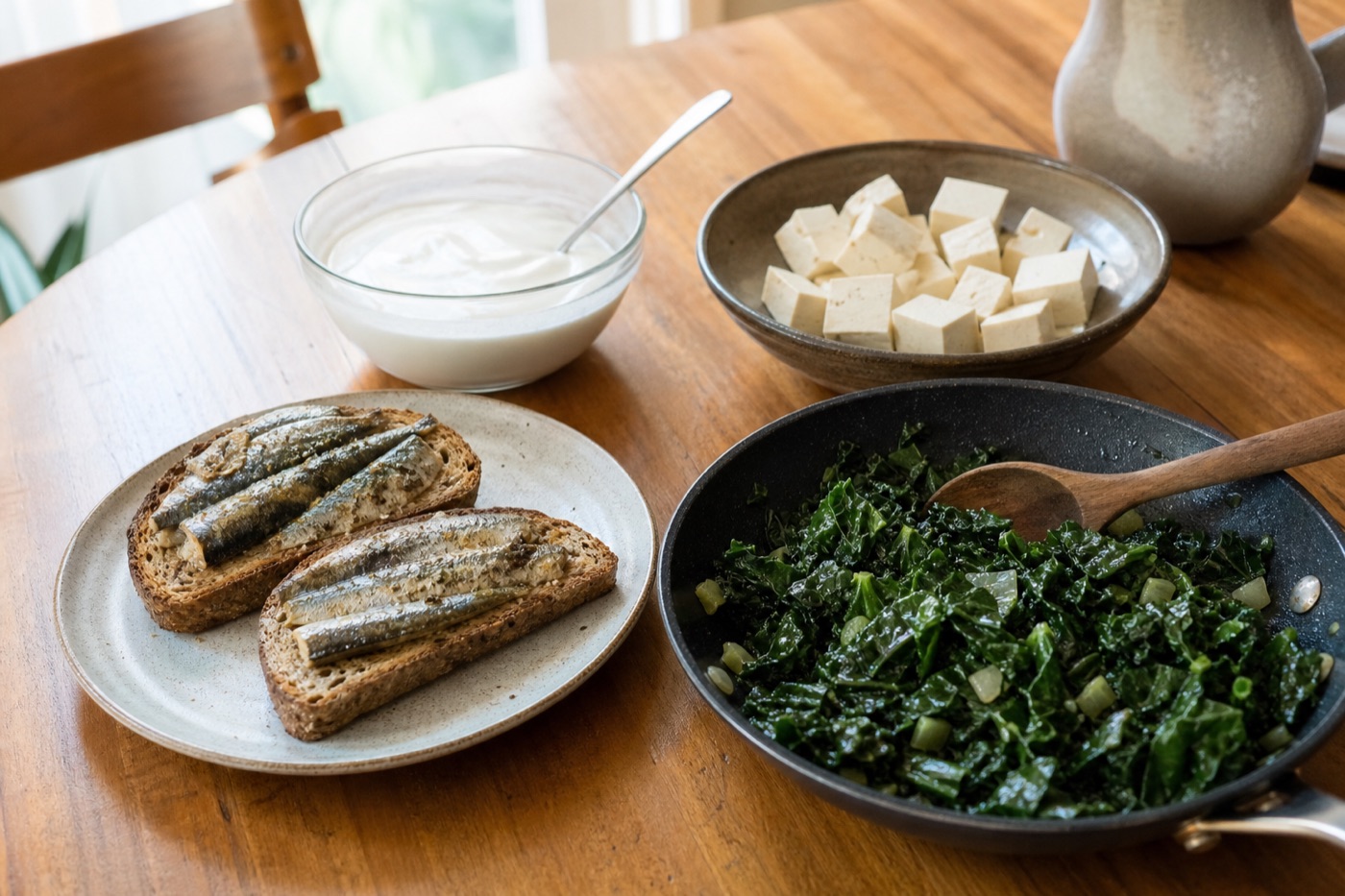
Without dairy: a cup of fortified soy milk in oatmeal (about 300 mg), a sandwich made with canned salmon and its soft bones (about 180 mg), a tofu and bok choy stir-fry for dinner (about 250 mg plus 160 mg), and a small handful of almonds (about 75 mg), totaling close to 1,000 mg.
Supplements: food first
Food is the preferred way to get calcium, and many people can meet their needs without pills. If you can’t, your doctor may suggest a supplement. Calcium carbonate is best taken with food, while calcium citrate can be taken with or without it. Supplements can cause gas or constipation, and too much may raise the risk of kidney stones. The upper limit for adults is 2,500 mg a day through age 50 and 2,000 mg after that, counting food and supplements together. If you have a history of kidney stones or take other medications, check with your doctor first.
Calcium is only part of the bone-health picture; our guide to eating for strong bones covers the rest.
Three a day, in whatever form works
Aim for about three calcium-rich foods a day, whether that’s milk and cheese or soy milk, tofu and greens. Add vitamin D, spread the servings out, and you’ll be close to your target without much effort.
Common questions
Is calcium from plant foods absorbed as well as calcium from dairy?
Some is and some isn't. Calcium from low-oxalate greens such as kale and bok choy is absorbed well, while most of the calcium in spinach is bound up and poorly absorbed. Fortified foods and tofu made with calcium are dependable choices.
How can I tell if tofu contains calcium?
Read the ingredient list for calcium sulfate or calcium chloride, which are used to set the tofu, and check the calcium %DV on the label. The amount varies a great deal from one product to another.
Can I get too much calcium?
It's hard to overdo it with food alone, but supplements can push you past the upper limit of 2,000 to 2,500 mg a day for adults. Very high intakes can cause constipation and may raise the risk of kidney stones, so ask your doctor before adding a supplement.
Sources
Naomi edits Nutrition for Everybody and writes the app rankings. She cares most about advice that still works on a Tuesday night with a tired family and a half-empty fridge.