Nutrition During Menopause
Around menopause, bone and heart health become priorities. Focus on calcium, vitamin D, protein, fiber and unsaturated fats, and keep an eye on alcohol.
On this page
Menopause doesn’t call for a special diet, but it does shift your priorities. Falling estrogen speeds up bone loss and changes how your body handles fat and cholesterol, so calcium, vitamin D, protein, fiber and heart-friendly fats deserve more attention. Calorie needs often drop slowly with age, which makes nutrient-rich foods and regular strength training especially useful.
What changes around menopause
Menopause is defined as 12 months in a row without a menstrual period, and the years leading up to it are called perimenopause. As estrogen levels fall, several things can change:
- Bones. Bone loss speeds up in the years around and after menopause, raising the risk of osteoporosis.
- Heart. LDL cholesterol often rises, and heart disease risk increases.
- Body composition. Fat tends to collect more around the abdomen, and muscle mass gradually declines with age.
- Symptoms. Hot flashes, night sweats, sleep problems and mood changes are common and vary widely.
- Iron. Once periods stop, iron needs drop.
Nutrient targets for women over 50
These figures are from the NIH Office of Dietary Supplements and the Dietary Reference Intakes for women 51 and older:
| Nutrient | Daily target | Where to find it |
|---|---|---|
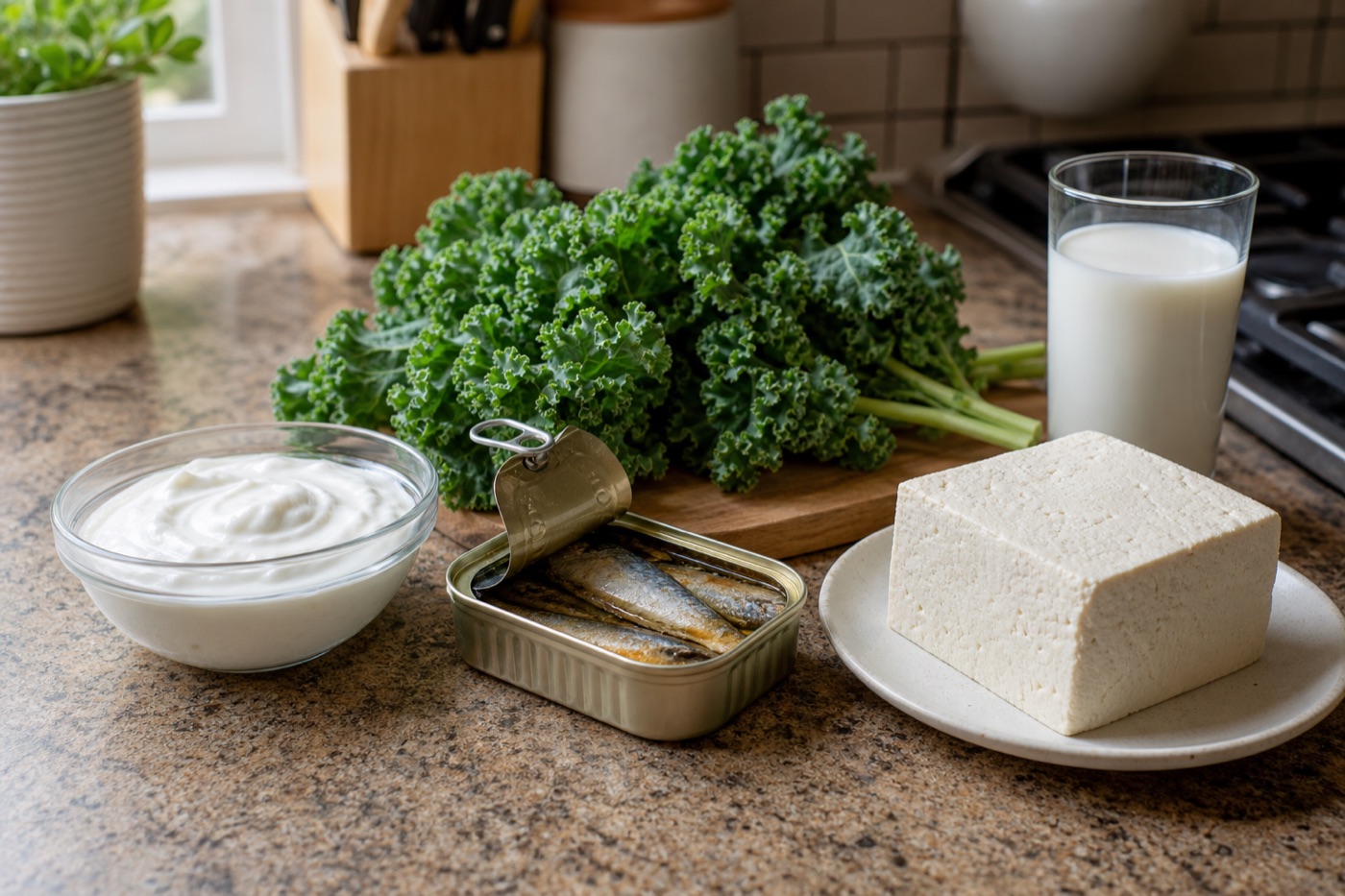
| Calcium | 1,200 mg | Milk, yogurt, cheese, fortified plant milks, calcium-set tofu, canned salmon or sardines with bones |
| Vitamin D | 600 IU (15 mcg) through 70; 800 IU (20 mcg) after | Fatty fish, fortified milk and cereals, egg yolks |
| Protein | 46 g (RDA), or 0.8 g per kg of body weight | Fish, poultry, eggs, dairy, beans, lentils, tofu, nuts |
| Fiber | About 21 g | Beans, whole grains, vegetables, fruits, nuts, seeds |
| Iron | 8 mg (down from 18 mg before menopause) | Lean meat, beans, fortified cereals, leafy greens |
| Vitamin B12 | 2.4 mcg | Fortified foods, fish, meat, eggs, dairy |
Because iron needs fall after menopause, don’t take a high-iron supplement unless your doctor recommends it.
Bones and heart: the two big priorities
Protecting your bones
Calcium and vitamin D work together: calcium builds and maintains bone, and vitamin D helps you absorb it. Spread calcium-rich foods across the day; for example, yogurt at breakfast, a cheese or bean dish at lunch and a glass of milk or fortified soy milk with dinner. Weight-bearing and muscle-strengthening exercise matter just as much as food for bone strength, according to the NIH Osteoporosis and Related Bone Diseases National Resource Center.
Our guides to eating for strong bones and getting enough calcium, with or without dairy go deeper.
Looking after your heart
Heart disease is a leading cause of death for women, and risk climbs after menopause. The same eating pattern that the American Heart Association recommends for everyone applies here:
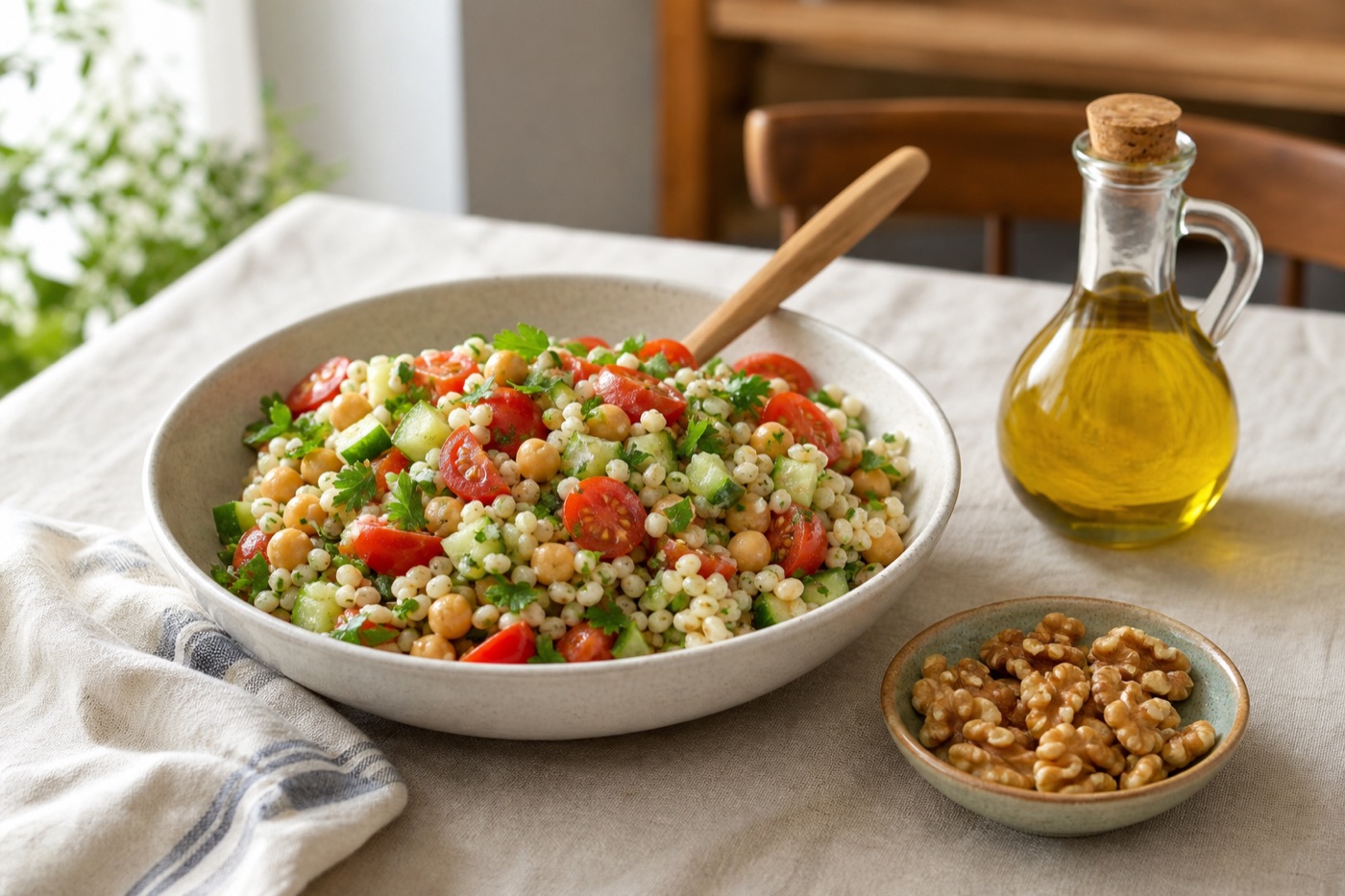
- Plenty of vegetables, fruits, whole grains, beans and nuts
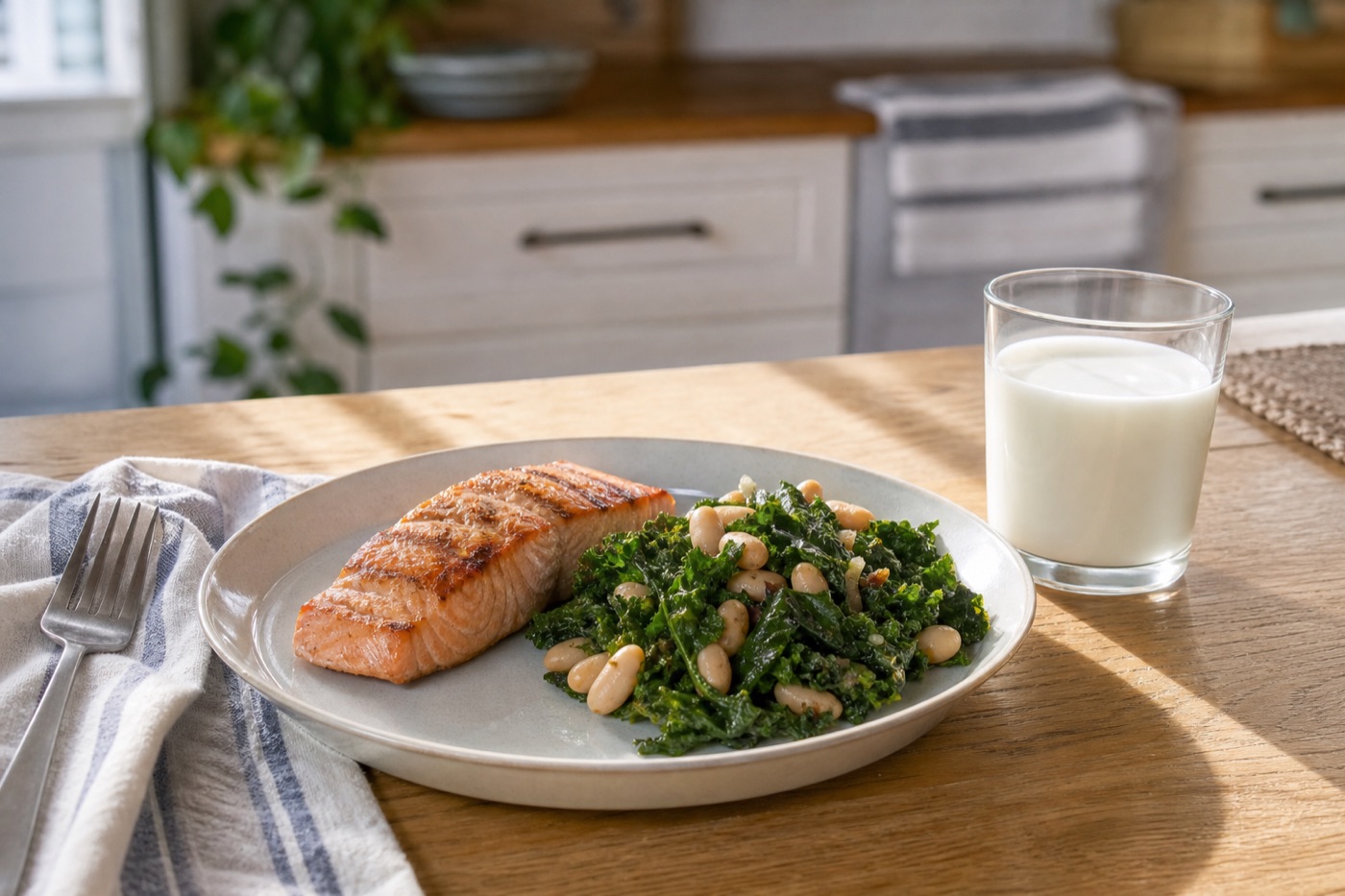
- Fish, especially fatty fish, at least twice a week
- Unsaturated oils such as olive and canola instead of butter
- Less sodium, saturated fat and added sugar
For more, see our guide to eating for a healthy heart.
Hot flashes, sleep and food
Some women notice that certain things seem to set off hot flashes, such as alcohol, caffeine, spicy food or hot drinks. Research hasn’t shown that avoiding triggers works for everyone, but paying attention to your own patterns costs nothing.
Soy foods and plant estrogens get a lot of attention. The Menopause Society’s position statement on nonhormone therapies reviewed soy products and a range of herbal supplements and did not find enough evidence to recommend them for hot flashes. Soy foods such as tofu, edamame and soy milk are still nutritious protein sources; just don’t count on them as a treatment. Be cautious with herbal and “menopause support” supplements, which can interact with medicines and aren’t reviewed by the FDA for effectiveness before they’re sold.
Alcohol can worsen sleep and night sweats for some women, and caffeine late in the day can make insomnia harder to manage.
Weight, muscle and appetite
Many women notice weight changes in midlife. Calorie needs tend to decline gradually as muscle mass and activity decrease, so eating the same way you did at 35 may lead to slow weight gain.
Rather than restrictive dieting, which can cost you muscle and bone, focus on:
- Protein at every meal, such as eggs or yogurt at breakfast, beans or fish at lunch, and poultry, tofu or lentils at dinner
- Strength training at least two days a week to preserve muscle
- Fiber-rich foods that are filling for relatively few calories
- Mindful portions of rich foods and alcohol
A day built on these ideas might look like this:
- Breakfast: plain Greek yogurt with berries and a spoonful of ground flaxseed
- Lunch: lentil soup, a slice of whole-grain bread and a green salad with olive oil dressing
- Snack: a glass of fortified soy milk or milk with an apple
- Dinner: baked salmon, roasted broccoli and a scoop of quinoa
That day includes calcium-rich foods twice and protein at every meal, and it comfortably clears half of a typical fiber target. To reach 1,200 mg of calcium, add one or two more sources, such as a slice of cheese at lunch or a cup of fortified soy milk with dinner.
The bottom line
During menopause, aim for 1,200 milligrams of calcium a day, enough vitamin D and protein, plenty of fiber, and heart-friendly fats, and pair your eating with regular strength and weight-bearing exercise. Treat food as support for long-term health rather than a cure for symptoms. Talk to your doctor or a registered dietitian about your symptoms, bone density testing, supplements and treatment options; effective help is available.
Common questions
How much calcium do I need after menopause?
The NIH Office of Dietary Supplements sets the Recommended Dietary Allowance at 1,200 milligrams a day for women 51 and older. Food is the best place to start; ask your doctor before adding a supplement.
Can certain foods reduce hot flashes?
Evidence is limited. The Menopause Society's review of nonhormone options did not find enough support to recommend soy foods or herbal supplements for hot flashes. If you're bothered by symptoms, talk to your doctor about treatments shown to work.
Why do I gain weight around the middle during menopause?
Falling estrogen tends to shift where the body stores fat, toward the abdomen, and gradual muscle loss with age lowers calorie needs. Regular strength training and enough protein help preserve muscle.
Sources
Elliot writes about foods, labels and the grocery store, from choosing a cereal to stretching a budget without giving up vegetables.