Healthy Foods That Cost Less
Dried beans, oats, eggs, frozen vegetables, canned fish and in-season produce are some of the cheapest nutritious foods. Here's how to shop and cook for less.
On this page
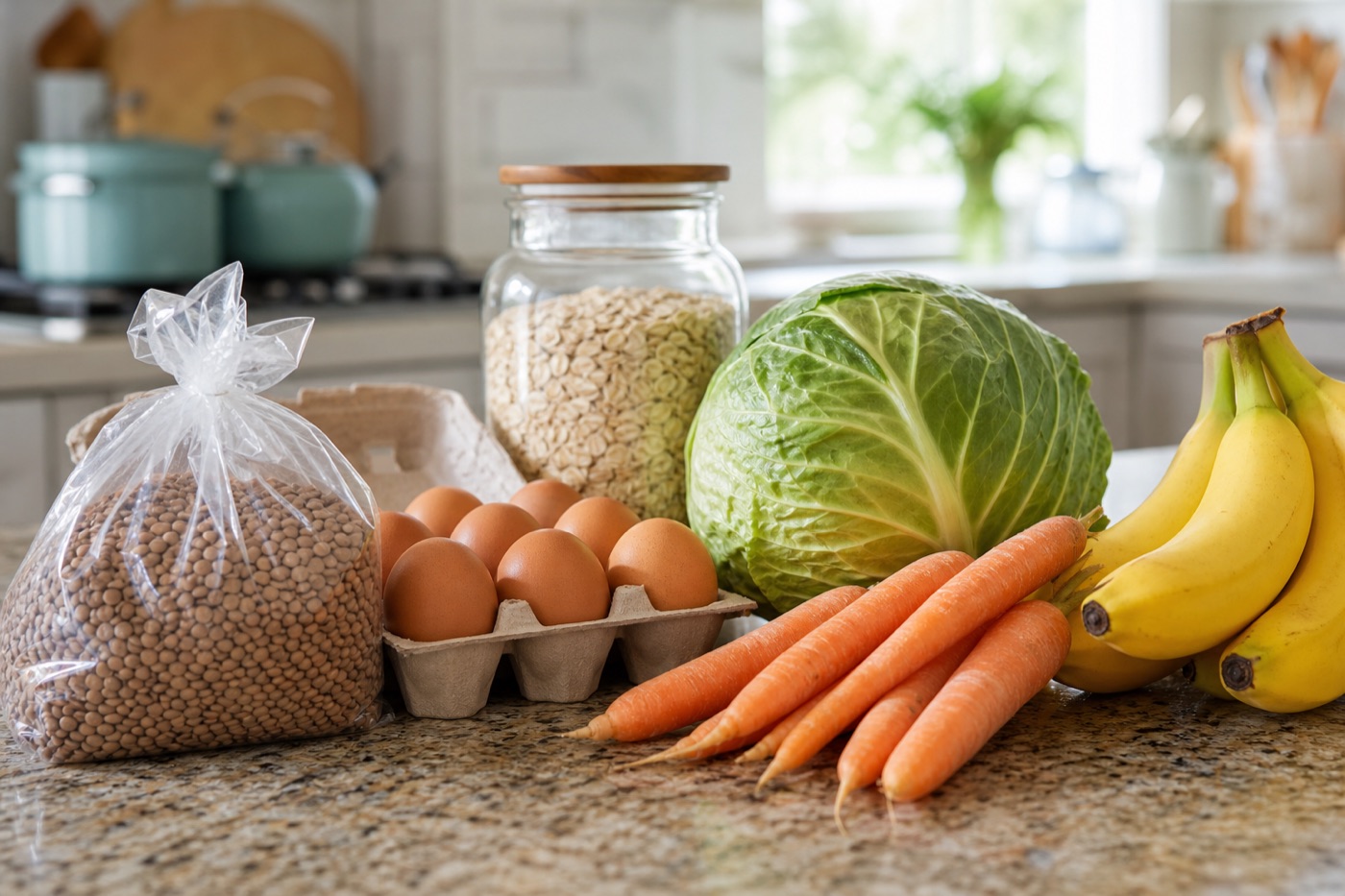
Some of the most nutritious foods in the grocery store are also among the cheapest: dried beans and lentils, oats, eggs, frozen vegetables, canned fish, bananas, carrots, cabbage and potatoes. Building meals around staples like these, and comparing unit prices as you shop, lets you eat well without paying extra for packaging, convenience or a famous label.
Why cheap and healthy overlap more than you’d think
A big share of what you pay at the register covers processing: washing, cutting, seasoning, packaging and marketing. Basic whole foods skip most of those steps. A bag of dried lentils or a canister of plain oats is about as close to the farm as food gets, and it is priced that way.
The same goes for produce that ships and stores well. Cabbage, carrots, onions, potatoes, apples and bananas stay inexpensive most of the year because they are grown in huge volumes and keep for weeks. Frozen and canned fruits and vegetables add another layer of savings, since they don’t spoil before you get to them.
Budget all-stars by food group
Prices vary from town to town and month to month, so use this as a shortlist to compare at your own store rather than a fixed price guide.
Protein foods
- Dried beans, split peas and lentils
- Canned beans, rinsed to cut the sodium
- Eggs
- Canned tuna, salmon and sardines
- Peanut butter
- Whole chickens or bone-in thighs, which usually cost less per pound than boneless cuts
Grains
- Rolled or steel-cut oats
- Brown rice and other whole grains in larger bags
- Whole-wheat pasta
- Plain popcorn kernels
Vegetables
- Cabbage, carrots, onions, potatoes and sweet potatoes
- Frozen spinach, broccoli, peas, green beans and mixed vegetables
- Canned tomatoes and tomato paste
Fruit
- Bananas, apples and oranges, especially in season
- Frozen berries for oatmeal and smoothies
- Canned fruit packed in water or juice
Dairy
- Milk
- Plain yogurt in large tubs, sweetened at home with fruit
What these foods give you per serving
Inexpensive doesn’t mean empty. Here is what a single serving offers, using approximate values from USDA FoodData Central:
| Food | Serving | Standout nutrition (about) |
|---|---|---|
| Lentils, cooked | 1 cup | 18 g protein, 16 g fiber |
| Egg | 1 large | 6 g protein for roughly 70 calories |
| Rolled oats, dry | 1/2 cup | 5 g protein, 4 g fiber |
| Potato, baked with skin | 1 medium | 4 g fiber, over 900 mg potassium |
| Green cabbage, shredded raw | 1 cup | 2 g fiber, about a third of the Daily Value for vitamin C |
| Sardines, canned | 1 can (3.75 oz) | 23 g protein, plus calcium from the soft bones |
| Banana | 1 medium | 420 mg potassium |
Shopping moves that stretch a dollar
- Read the unit price. The small shelf tag shows the cost per ounce or per pound, which is the fairest way to compare package sizes.
- Try the store’s own label. Generic oats, rice, frozen vegetables and canned beans are often very similar to name-brand versions and cost less.
- Buy whole and cut at home. A whole melon, a block of cheese or a head of lettuce usually costs less per pound than the pre-cut version.
- Lean on frozen and canned. They last for months, so less money ends up in the trash.
- Follow the seasons. Produce at its peak tends to be cheaper and tastier, whether that’s summer corn or winter citrus.
- Build meals around the sales. Glance at the weekly flyer before writing your list and plan a couple of dinners around the deals.
- Shop with a list after you’ve eaten. Both make impulse buys less likely.
Cooking habits that save money
Cook beans from dry. A one-pound bag of dried beans makes roughly six cups cooked, about what you’d get from three or four cans. Cook a big pot, then freeze portions in a little of their liquid.
Stretch meat with plants. Replace half the ground meat in chili, tacos or pasta sauce with lentils or beans. The dish stays hearty and the cost drops.
Plan your leftovers. Roast a whole chicken on the weekend, use the extra meat in wraps or soup, and simmer the bones into stock.
Use every bit. Broccoli stems, wilted greens and soft tomatoes all work in soups, stir-fries and sauces. Our guide to reducing food waste at home has more ideas for odds and ends.
Keep basics on hand. A shelf of oats, rice, canned beans and tomatoes means a quick dinner is always possible without a pricey takeout order. See our list of healthy pantry staples for a fuller checklist, and our guide to beans and lentils for easy ways to cook them.
Where to find more help
If money is tight, you don’t have to figure it out alone. SNAP helps households buy groceries. WIC supports pregnant and postpartum women, infants and children under 5 with specific healthy foods. School meal programs serve breakfast and lunch to many students, and local food banks and pantries can fill gaps between paychecks. The MyPlate website also has free recipes, many of them built around low-cost ingredients.
Where to start
Eating well on a budget mostly comes down to a few habits: build meals around inexpensive staples such as beans, oats, eggs and frozen vegetables, compare unit prices, and cook in batches so food gets eaten instead of tossed. On your next trip, swap one convenience item on your list for its plain, whole-food version and see how far it goes.
Common questions
Are frozen vegetables as healthy as fresh?
Frozen vegetables are usually picked and frozen soon after harvest, so they keep most of their nutrients. Choose plain ones without sauces or added salt, and they make a solid, low-waste stand-in for fresh.
Is canned food a healthy choice?
Canned beans, tomatoes, fish and fruit can all fit a healthy diet and are often very affordable. Look for no-salt-added vegetables and beans, and fruit packed in water or juice rather than heavy syrup.
What is the cheapest healthy source of protein?
Dried beans and lentils are usually the least expensive protein per serving, with eggs, canned fish, peanut butter and canned beans close behind. Prices shift by region and season, so compare unit prices where you shop.
Can I use SNAP benefits for fresh produce?
Yes. SNAP covers fruits, vegetables, beans, grains, dairy, meat and fish, and many farmers markets accept it. Some markets also run programs that stretch benefits further on produce, so it is worth asking at yours.
Sources
Ruth covers nutrition through life stages and everyday health, from feeding school-age kids to eating well after sixty.