What to Eat Before and After Exercise
Before exercise, eat easy carbs with some protein one to four hours ahead; afterward, pair carbs and protein within a couple of hours. Timing and snack ideas.
On this page
Before exercise, eat something with easy-to-digest carbohydrates and a little protein, timed so your stomach feels comfortable: a full meal three to four hours ahead, or a light snack one hour before. Afterward, have a meal or snack with both carbohydrates and protein within a couple of hours, and drink fluids to replace what you sweated out. For a brisk walk or a short workout, your normal meals are usually enough.
Do you need a special plan?
It depends on what you’re doing. A 30-minute walk, a yoga class or an easy bike ride rarely needs special fueling; regular, balanced meals cover it. Timing starts to matter more when sessions are long (more than about an hour), intense, or back-to-back, or when you exercise first thing in the morning or right after work when your last meal was hours ago.
The goals are simple. Before: have enough energy without an upset stomach. After: refill energy stores, give muscles protein to repair, and rehydrate.
Before: match the food to the timing
The closer you are to exercise, the smaller and simpler the food should be. Fat, fiber and large portions take longer to digest and can cause cramping or sluggishness during hard effort.
| Time before exercise | What to aim for | Examples |
|---|---|---|
| 3–4 hours | A regular balanced meal with carbs, protein, some fat and fiber | Chicken, rice and vegetables; whole-wheat pasta with turkey meat sauce; a bean burrito |
| 1–2 hours | A smaller meal or snack, mostly carbs with a little protein | Oatmeal made with milk; yogurt with fruit; half a turkey sandwich |
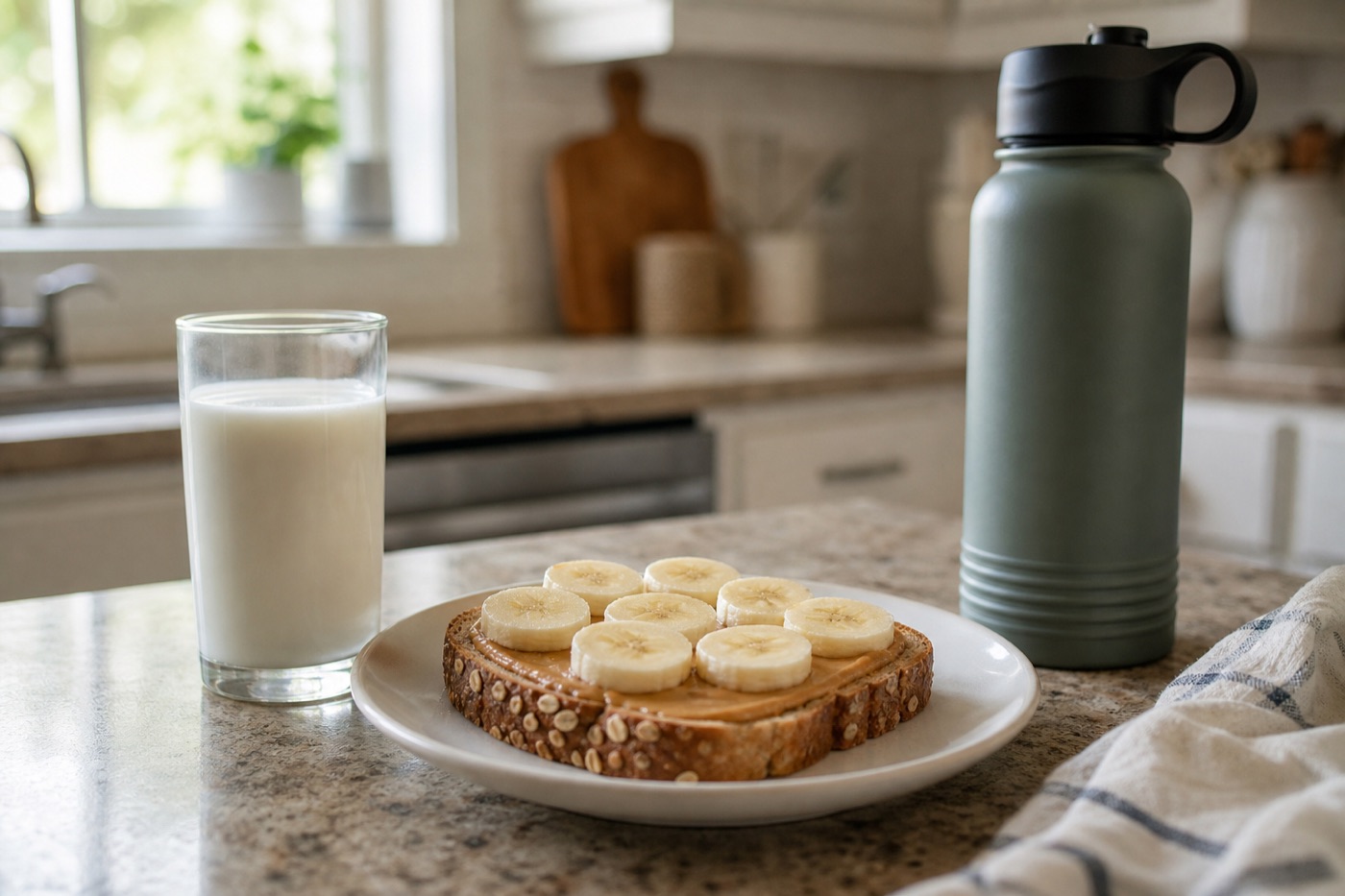
| Under 1 hour | A small, easy-to-digest carbohydrate | A banana; a handful of crackers; applesauce; a small glass of juice |
| Early morning | Whatever sits well, even something small | Half a banana or a slice of toast with honey |
Try new foods on training days, not on the morning of a race or big game. Everyone’s stomach is different, and you’ll learn what works for you.
During: only for longer sessions
For most workouts under an hour, water is all you need. For continuous endurance activity lasting longer than an hour, such as a long run, ride or hike, many people benefit from some carbohydrate along the way: a sports drink, a banana, a few dried fruits or a small sandwich. Heavy sweaters exercising in heat may also need to replace sodium, which sports drinks and salty snacks provide.
After: refuel and repair
Muscles use stored carbohydrate (glycogen) for fuel and need protein to rebuild after work. A post-exercise meal or snack that includes both covers each job. Approximate protein values from USDA FoodData Central:
- Low-fat chocolate milk, 1 cup: about 8 g protein, plus carbohydrate
- Plain Greek yogurt, 6 oz, with fruit and a little granola: about 18–20 g protein
- Turkey sandwich on whole-grain bread with vegetables: about 20 g protein
- Two eggs with whole-grain toast and fruit: about 16 g protein
- Rice and black beans with salsa (1 cup beans, 1/2 cup rice): about 17 g protein
- Smoothie with 1 cup milk, a banana and 2 tbsp peanut butter: about 16–17 g protein
Within a couple of hours is a reasonable target. If you finish a workout and dinner is an hour away, dinner is your recovery meal. If you’re vegetarian or vegan, our guide to plant protein foods lists strong options. If you want to see how your training meals add up over a week, our calorie tracker app rankings compare phone tools that log food and activity.
Fluids: before, during and after
Thirst is a reasonable guide for most people. MedlinePlus lists dark yellow urine among the signs of dehydration, while pale yellow usually means you’re drinking enough. A few practical habits:
- Drink water through the day, not just at the gym.
- Sip during longer workouts, especially in heat.
- Afterward, drink water and include fluid-rich foods such as fruit, soup or milk.
Plain water is the best choice for everyday exercise. Sports drinks are designed for longer, sweatier sessions and add sugar you don’t need for a short workout.
Special situations
- Diabetes. Exercise affects blood sugar, and insulin or certain medications can make lows more likely. Ask your doctor or a diabetes care team how to plan food around activity.
- Teens and young athletes. Growing bodies need plenty of energy. Skipping meals before practice is a common reason for fatigue; a pediatrician or sports dietitian can help with individual needs.
- Weight goals. You don’t have to “earn” or “burn off” food. Eating enough around workouts supports the energy to keep exercising.
- Steady energy all day. What you eat across the day matters as much as the pre-workout snack. See our guide to foods for steady energy, and our article on what makes a healthy snack for portable ideas.
Putting it together
For everyday workouts, regular meals and water are plenty. For longer or harder sessions, eat a balanced meal a few hours ahead or a small carb snack closer in, add carbs during efforts past an hour, and follow up with carbs plus protein and fluids afterward. Experiment on regular training days and keep what makes you feel strong.
Common questions
Is it OK to exercise on an empty stomach?
For a short, easy workout, many people feel fine without eating first. For longer or harder sessions, a small carbohydrate snack beforehand usually helps performance, and people with diabetes should follow their doctor's advice about eating before activity.
How soon after a workout should I eat?
Eating a meal or snack with carbohydrates and protein within a couple of hours is a sensible target. If your next regular meal falls in that window, that meal does the job.
Do I need protein shakes after exercising?
Most people can meet their protein needs with ordinary food. Milk, yogurt, eggs, beans or a sandwich with lean meat work just as well; a shake is simply a convenient option, not a requirement.
Sources
Ruth covers nutrition through life stages and everyday health, from feeding school-age kids to eating well after sixty.