How to Read an Ingredient List
Ingredients are listed by weight, heaviest first. Learn what the first few reveal, how to spot split-up sugars, and how to read allergen and additive terms.
On this page
An ingredient list tells you what’s in a food in order of weight, from most to least. That means the first few ingredients make up most of what you’re eating. Read the top of the list, watch for sugars or sodium sources split into several names, and check the allergen statement, and you’ll know more than any claim on the front of the box can tell you.
Order is the whole point
FDA requires ingredients to be listed in descending order of predominance by weight. If whole wheat flour comes first, there’s more of it than anything else in the package. If sugar comes first in a cereal, sugar is the main ingredient by weight. Water counts too, which is why it leads the list in many soups, drinks and sauces.
Ingredients that make up 2% or less of a product may be grouped at the end after a phrase like “contains 2% or less of.” That’s a useful marker: everything after it is a minor player, often salt, spices, vitamins or preservatives.
What the first three ingredients tell you
The top three usually describe the food better than its name does. A few generic examples:
- A whole-grain cracker might start with whole wheat flour, sunflower oil and sesame seeds. Mostly whole grain, as promised.
- A fruit-flavored snack might start with corn syrup, sugar and fruit juice concentrate. Despite the fruit on the package, it’s mostly sweetener.
- A jarred pasta sauce might begin with tomato puree, diced tomatoes and onions, a good sign that vegetables make up most of the jar.
Watch for split ingredients
A recipe can use several types of sugar, such as cane sugar, brown rice syrup and honey, and list each one separately. Each lands lower on the list than a single combined “sugar” would, even though together they might outweigh the first ingredient. That’s legal and common. Add them up in your head, or skip straight to the Added Sugars line on the Nutrition Facts panel. Our guide to the names for added sugar helps you recognize them.
Sodium can work the same way. Salt, sea salt, soy sauce, baking soda, monosodium glutamate and various “sodium” compounds all contribute. The sodium number on the panel gives you the total.
Allergens: the “Contains” line
U.S. law recognizes nine major food allergens:
- Milk
- Eggs
- Fish
- Crustacean shellfish, such as shrimp, crab and lobster
- Tree nuts
- Peanuts
- Wheat
- Soybeans
- Sesame, added to the list in 2023
Packaged foods must name these either inside the ingredient list, as in “whey (milk),” or in a “Contains” statement right after it. Phrases such as “may contain” or “made in a facility that also processes” are voluntary advisory statements; FDA expects them to be truthful, but they aren’t required. If you or your child has a food allergy, an allergist can help you decide how to handle those warnings.
Decoding common additive terms
| You’ll see | What it does | Examples |
|---|---|---|
| Enriched flour | Refined flour with some B vitamins and iron added back | enriched wheat flour |
| Emulsifiers | Keep oil and water from separating | soy lecithin, mono- and diglycerides |
| Thickeners and gums | Add body and keep textures smooth | xanthan gum, guar gum, pectin |
| Preservatives | Slow spoilage, mold or rancidity | potassium sorbate, sodium benzoate, tocopherols |
| Leaveners | Help baked goods rise | baking soda, yeast |
| Natural flavor | Flavoring derived from plant or animal sources | listed simply as “natural flavor” |
| Color additives | Add or restore color | beet juice, paprika extract, Red 40 |
Whether you want to limit any of these is a personal choice. For most foods, though, the bigger nutritional story lives in the main ingredients at the top of the list, not the small additions at the bottom.
Short isn’t always better, and long isn’t always worse
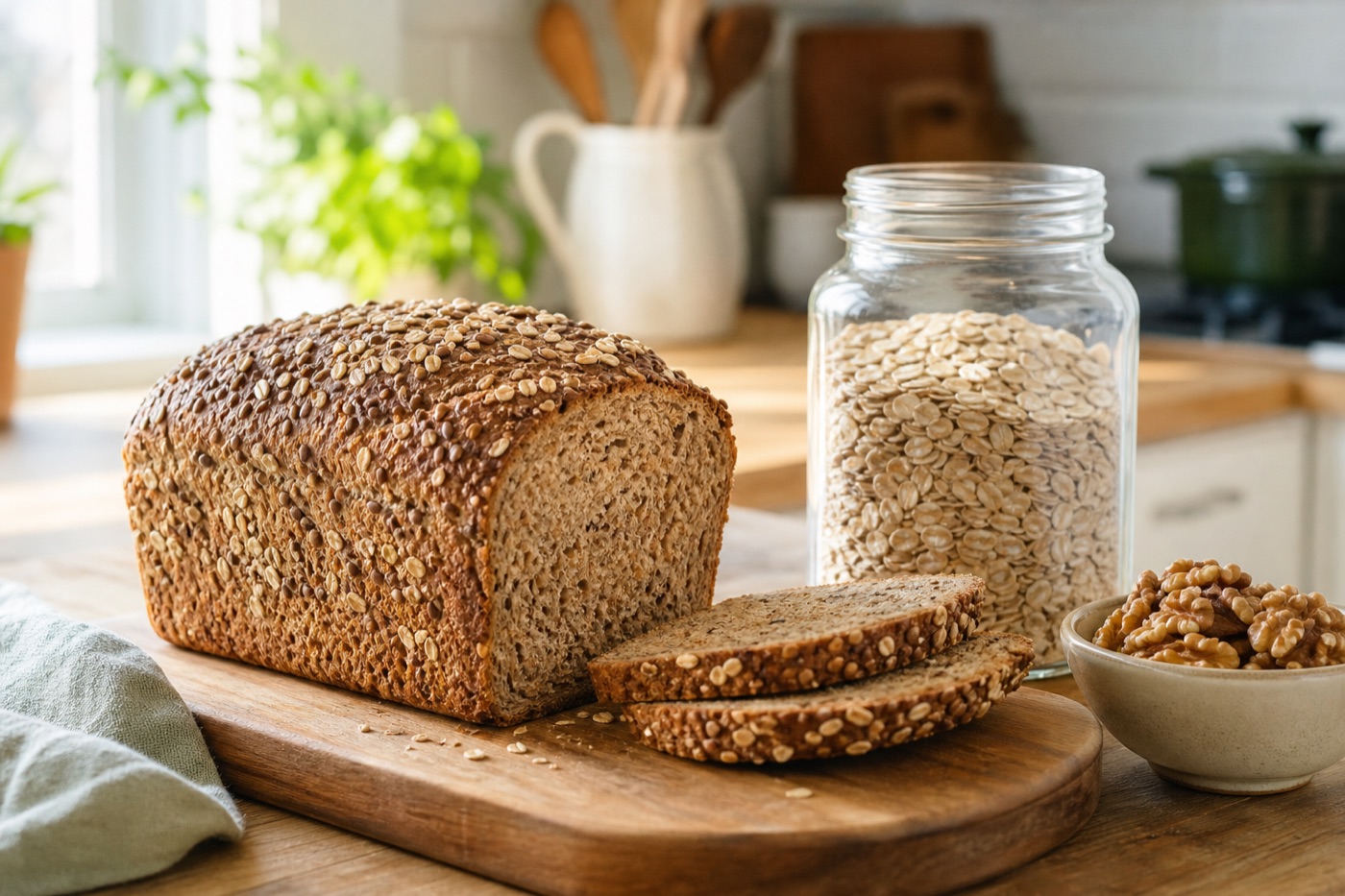
A short list can be nothing but sugar, oil and refined flour. A long one might belong to a hearty multigrain bread with several seeds and whole grains. Instead of counting ingredients, use the list to answer specific questions: Is the grain whole? Where does sugar rank? Are vegetables, beans, nuts or milk near the top? For grains in particular, our guide on telling if a food is really whole grain explains which words to look for.
A 30-second routine
- Read the first three ingredients and ask whether they match what you expected.
- Look for whole foods near the top: whole grains, vegetables, fruit, beans, nuts, milk, meat or fish.
- Count the sugars and sodium sources, wherever they appear.
- Check the allergen statement if anyone in your household needs to.
- Flip to the Nutrition Facts panel for the actual amounts.
Make it a habit
The ingredient list is the plain-language summary of a food, printed in a size that’s easy to skip. Give it a quick look on the items you buy most often, and after a few trips you’ll know which ones deserve a regular spot in your cart.
Common questions
Does "natural" on the front mean the ingredients are natural?
Not necessarily in the way many shoppers assume. FDA has a long-standing policy on the word but no formal rule defining it, and the term says nothing about nutrition or how processed a food is. The ingredient list is a more reliable guide.
Why is water the first ingredient in some foods?
Because there is more water by weight than anything else in the recipe. That's normal for soups, sauces, drinks and many canned foods, and it doesn't mean the product is watered down.
Are ingredients I can't pronounce harmful?
Not by default. Many long names are vitamins, such as thiamine mononitrate or ascorbic acid, or familiar substances listed by their chemical names. Ingredients added to U.S. foods must be approved or generally recognized as safe for their intended use.
Sources
Elliot writes about foods, labels and the grocery store, from choosing a cereal to stretching a budget without giving up vegetables.