What Counts as a Serving? Cups, Ounces and Everyday Measures
A label's serving size isn't advice, and MyPlate counts cups and ounce-equivalents. See what one serving is in each food group and how to eyeball portions.
On this page
What counts as a serving depends on who’s doing the counting. On a Nutrition Facts label, the serving size is a standardized amount based on how much people typically eat at one time, and it is not a recommendation. In federal food guidance, portions are measured in cup-equivalents and ounce-equivalents, which show how much a food contributes to each food group.
Three terms that get mixed up
- Serving size is the amount on the label that every number below it refers to. FDA sets it based on amounts people customarily eat, which is why some serving sizes grew when the label was redesigned. A serving of ice cream on the current label is ⅔ cup instead of the old ½ cup, and a serving of soda is 12 ounces instead of 8.
- Portion is whatever you actually put on your plate or pour in your glass. It can be smaller or larger than the label’s serving size.
- Equivalents are MyPlate’s units for adding up food groups across a day: cup-equivalents for fruit, vegetables and dairy, and ounce-equivalents for grains and protein foods.
Keeping those apart solves a lot of confusion. A label might call 1 cup of cereal a serving, while MyPlate counts that same cup of flakes as 1 ounce-equivalent of grains.
Food group equivalents at a glance
| Food group | One unit | Examples that count as one unit |
|---|---|---|
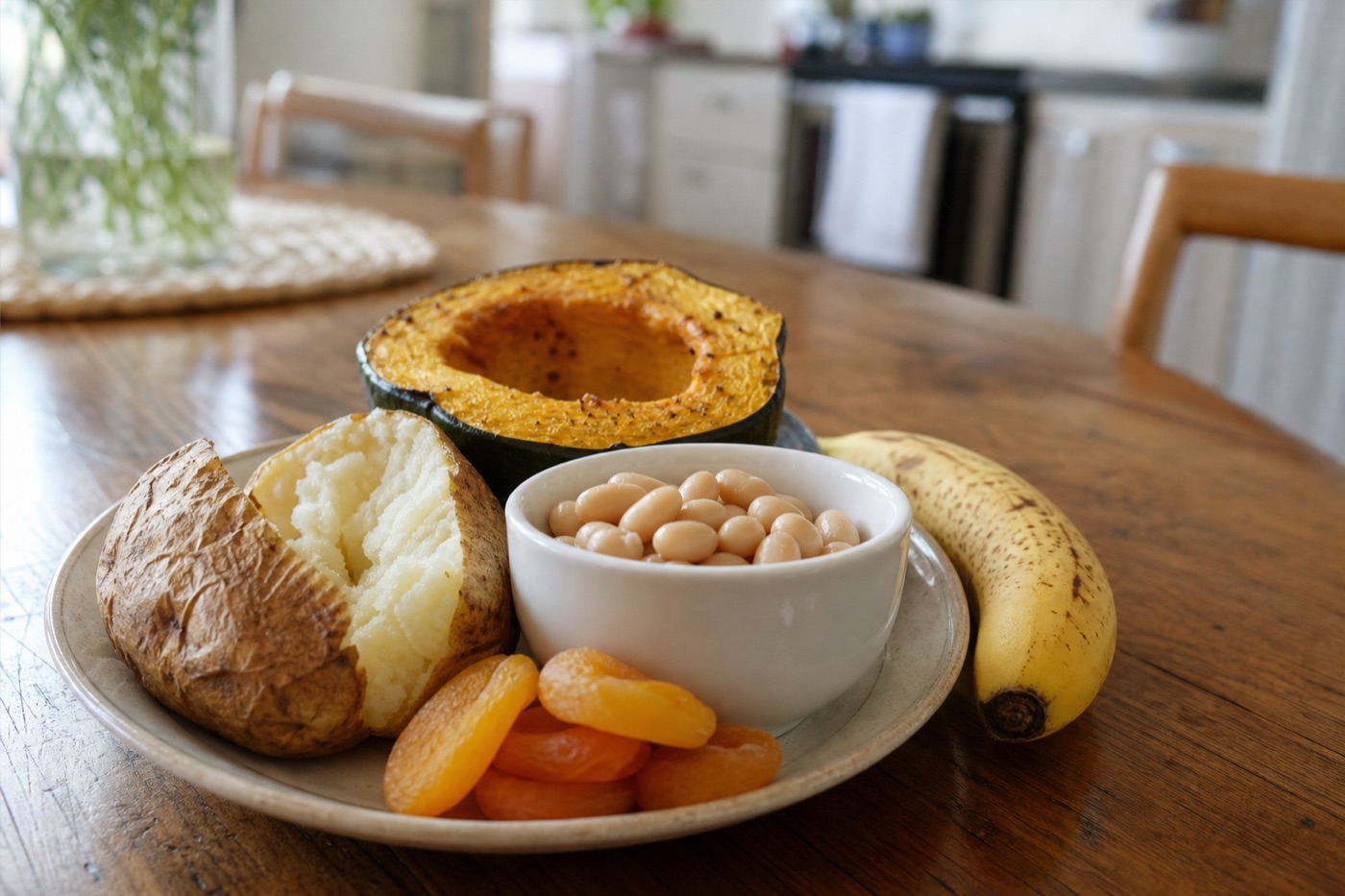
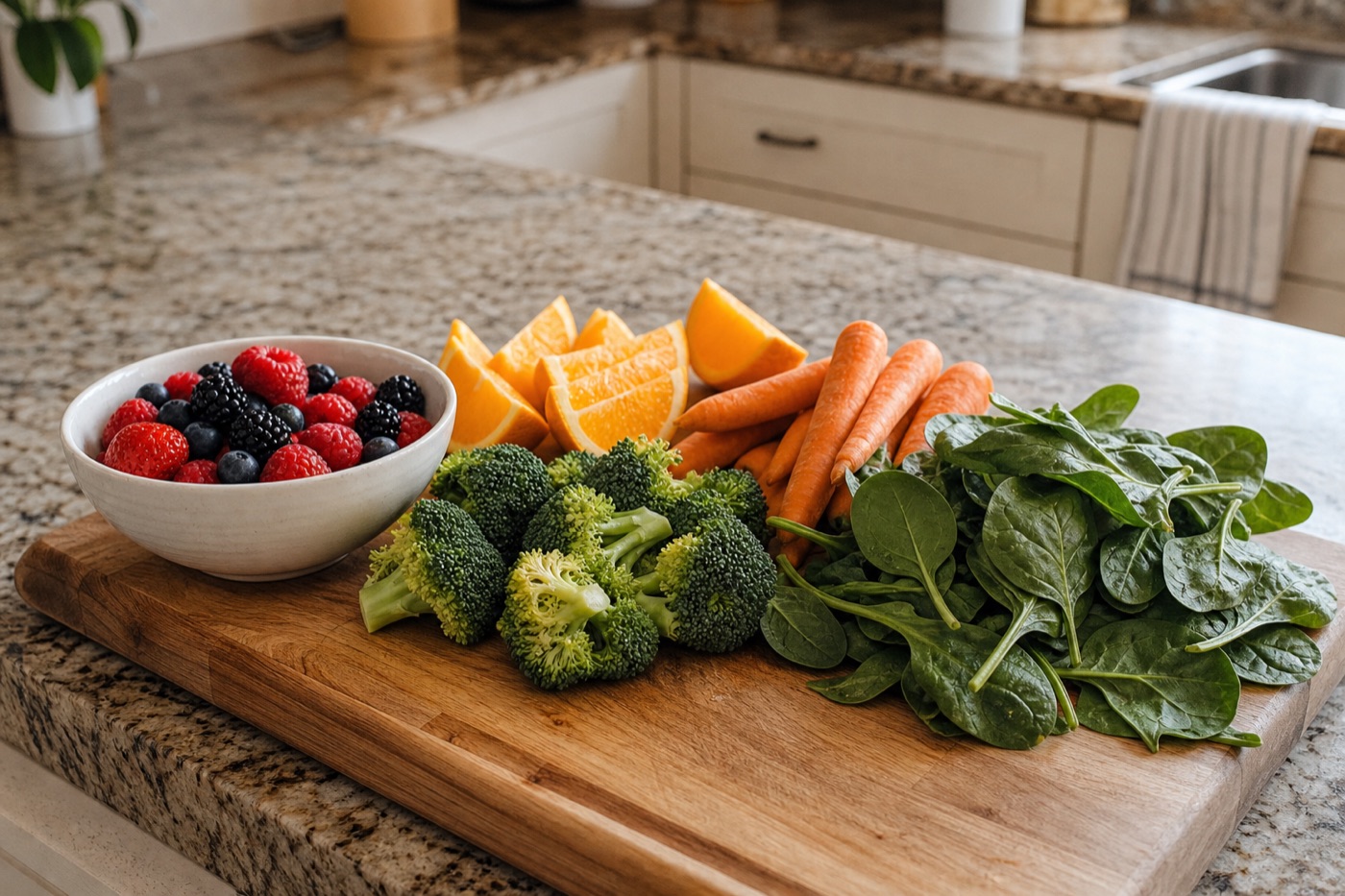
| Fruit | 1 cup | 1 cup fresh, frozen or canned fruit; ½ cup dried fruit; 1 cup 100% juice; 1 large banana |
| Vegetables | 1 cup | 1 cup raw or cooked vegetables; 2 cups raw leafy greens; 1 cup vegetable juice |
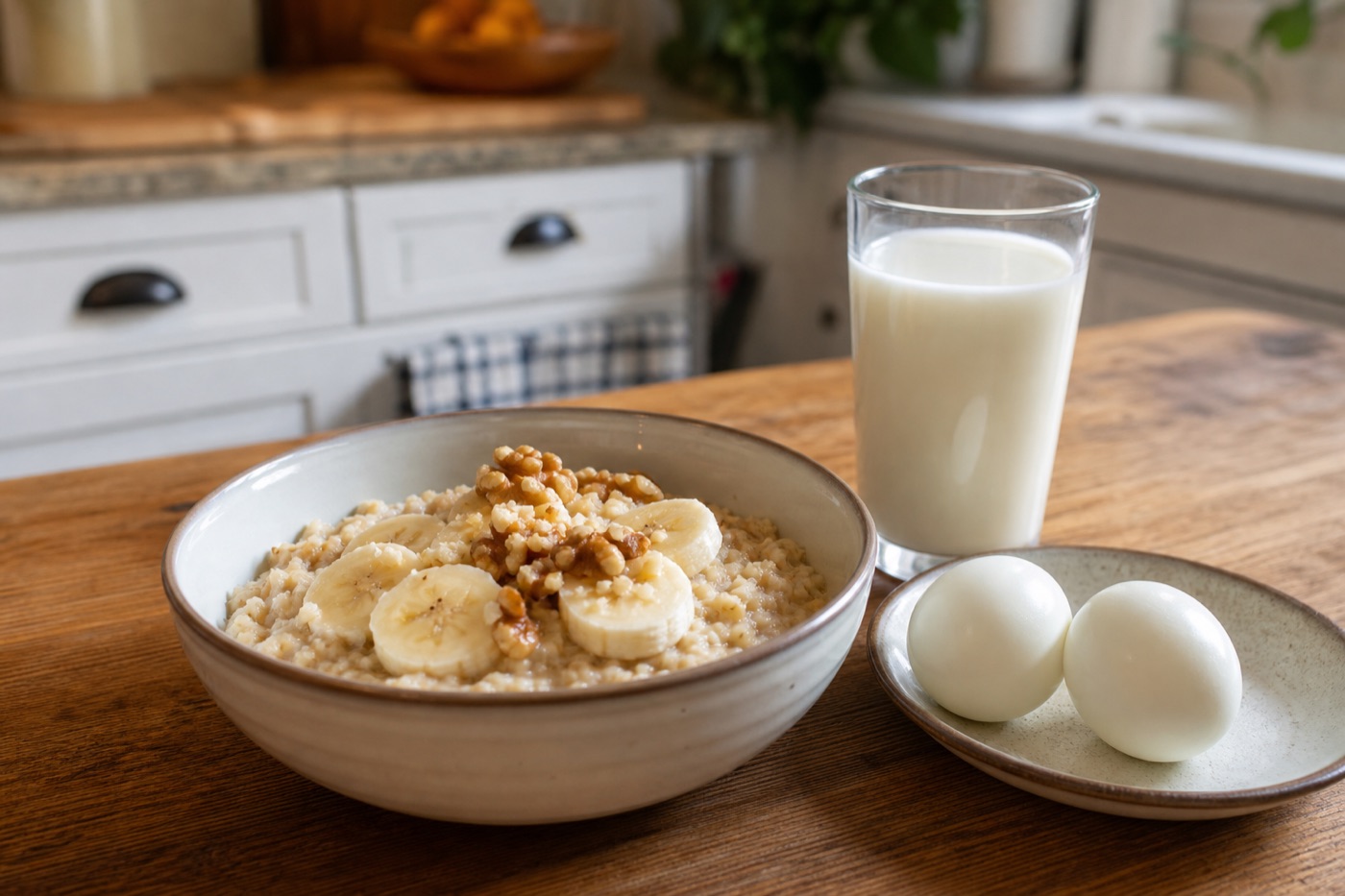
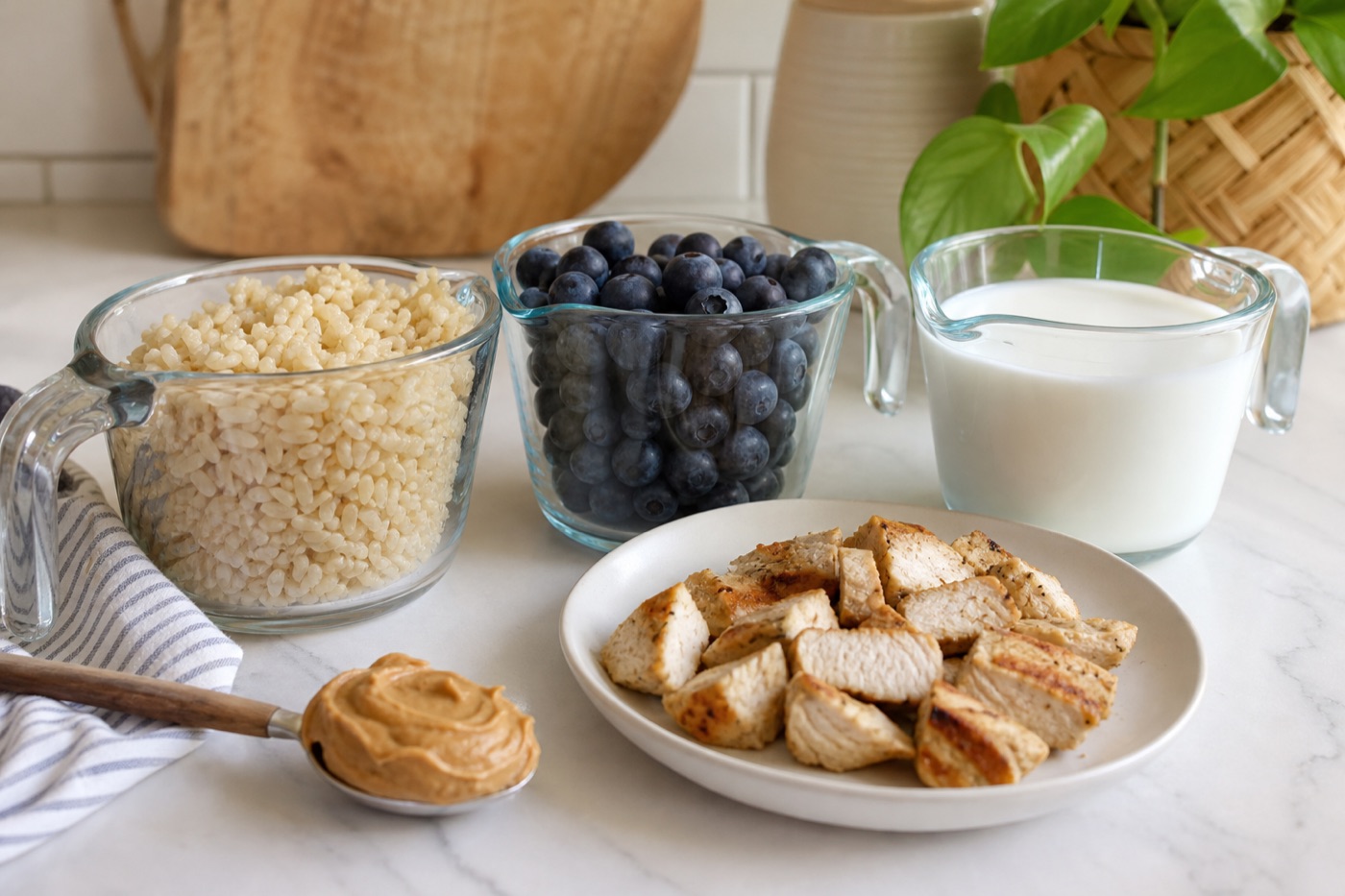
| Grains | 1 ounce-equivalent | 1 slice of bread; 1 cup flaked cereal; ½ cup cooked rice, pasta or oatmeal; one 6-inch tortilla |
| Protein foods | 1 ounce-equivalent | 1 oz cooked meat, poultry or fish; 1 egg; ¼ cup cooked beans or tofu; 1 tbsp peanut butter; ½ oz nuts or seeds |
| Dairy | 1 cup | 1 cup milk, yogurt or fortified soy milk; 1½ oz natural cheese; 2 oz processed cheese |
To see how many cups of produce you need each day, check our guide to how many fruits and vegetables you need.
Reading the serving line on a package
Start at the top of the Nutrition Facts panel, before you look at calories:
- Servings per container. A bag of chips or a pint of ice cream can hold several servings. If you eat the whole thing, multiply the numbers.
- The serving size itself. It’s given in a household measure, such as cups, pieces or slices, and in grams. Grams are more precise for foods like nuts, cheese and cereal, where a “cup” can vary.
- Dual columns. Some packages that could be eaten in one sitting or spread over several now show two columns, one per serving and one for the whole package.
- Single-serving rules. Packages that hold between one and two servings, such as a 20-ounce bottle of soda, must be labeled as one serving, because people usually finish them at once.
The % Daily Value explained shows how to use the rest of the panel once you know the serving.
Eyeballing portions without measuring
These are rough kitchen rules of thumb, not exact measurements, but they’re handy when you’re eating out or cooking without tools:
- 3 ounces of cooked meat, chicken or fish: about the size of a deck of cards
- 1 cup of cereal, fruit or cooked vegetables: about the size of a baseball
- ½ cup of cooked rice or pasta: about half a baseball
- 2 tablespoons of peanut butter: about the size of a ping-pong ball
- 1 teaspoon of oil or butter: about the tip of your thumb
- A small apple: about the size of a tennis ball
Hands and plates differ, so treat these as a starting point.
Measure for a few days, then trust your eye
Spending a few days measuring your usual portions is one of the most useful things you can do. Pour your normal bowl of cereal, then tip it into a measuring cup. Scoop rice the way you always do, and weigh the chicken breast you’d normally cook. You may find your everyday bowl holds more than one label serving, or that your pour of oil is closer to two tablespoons than one. After that, your eye gets much better at estimating. Some people like to log those measurements as they go; if that appeals to you, our calorie tracker app rankings compare the options.
Putting it together: one dinner, counted
Here’s how a simple spaghetti dinner adds up in MyPlate terms:
- 1 cup of cooked whole-wheat spaghetti: 2 ounce-equivalents of grains
- ½ cup of tomato sauce: about ½ cup from the red and orange vegetable subgroup
- 3 ounces of turkey meatballs: 3 ounce-equivalents of protein foods
- 2 cups of salad greens on the side: 1 cup of vegetables
- 1 cup of milk: 1 cup of dairy
That one plate covers four food groups, and none of it needed a scale once you knew what the units mean.
The takeaway
Treat the label’s serving size as a reference point for reading the numbers, and use MyPlate’s cups and ounce-equivalents to see how a meal fits your day. Measure a few times to calibrate, then let simple visual cues do the rest.
Common questions
Is the serving size on the label how much I should eat?
No. FDA bases label serving sizes on how much people typically eat at one time, so they describe common habits rather than advice. How much you need depends on your age, body size, activity level and health.
How many ounces of protein is a chicken breast?
It depends on the breast. Many weigh well over 3 ounces once cooked, so one breast can count as several ounce-equivalents of protein. A kitchen scale settles the question in seconds.
Do I need a food scale?
Not necessarily. Measuring cups and spoons handle most foods, and visual comparisons are fine for daily life. A scale is handiest for foods that pack unevenly, such as cereal, nuts, cheese and meat.
Sources
Ruth covers nutrition through life stages and everyday health, from feeding school-age kids to eating well after sixty.