Nutrition for Teenagers
Teens need more calcium, iron, protein and energy than at almost any other age. Learn the key nutrients, everyday meal habits and red flags to watch for.

On this page
Teenagers need more energy and more of several nutrients than at almost any other time in life, because their bodies are growing fast. The priorities are regular meals from all the food groups, plenty of calcium for bones, enough iron and protein, water as the everyday drink, and a relaxed, supportive attitude toward food. Calorie needs vary widely with growth, sex and activity, so appetite is a better guide than any single number.
Why needs jump in the teen years
Adolescence brings a growth spurt in height, muscle and bone. A large share of adult bone mass is built during these years, which makes calcium and vitamin D especially important. Iron needs rise too: boys need it for growing muscle and blood volume, and girls need more once menstrual periods begin.
Growth also explains why teens can seem hungry all the time. Eating more during a growth spurt is normal, and the goal is to make sure much of that food is nourishing.
Key nutrients and how much
These are the Recommended Dietary Allowances from the Dietary Reference Intakes; the figures for minerals and vitamin D are published by the NIH Office of Dietary Supplements.
| Nutrient | Ages 9–13 | Girls 14–18 | Boys 14–18 | Where to find it |
|---|---|---|---|---|
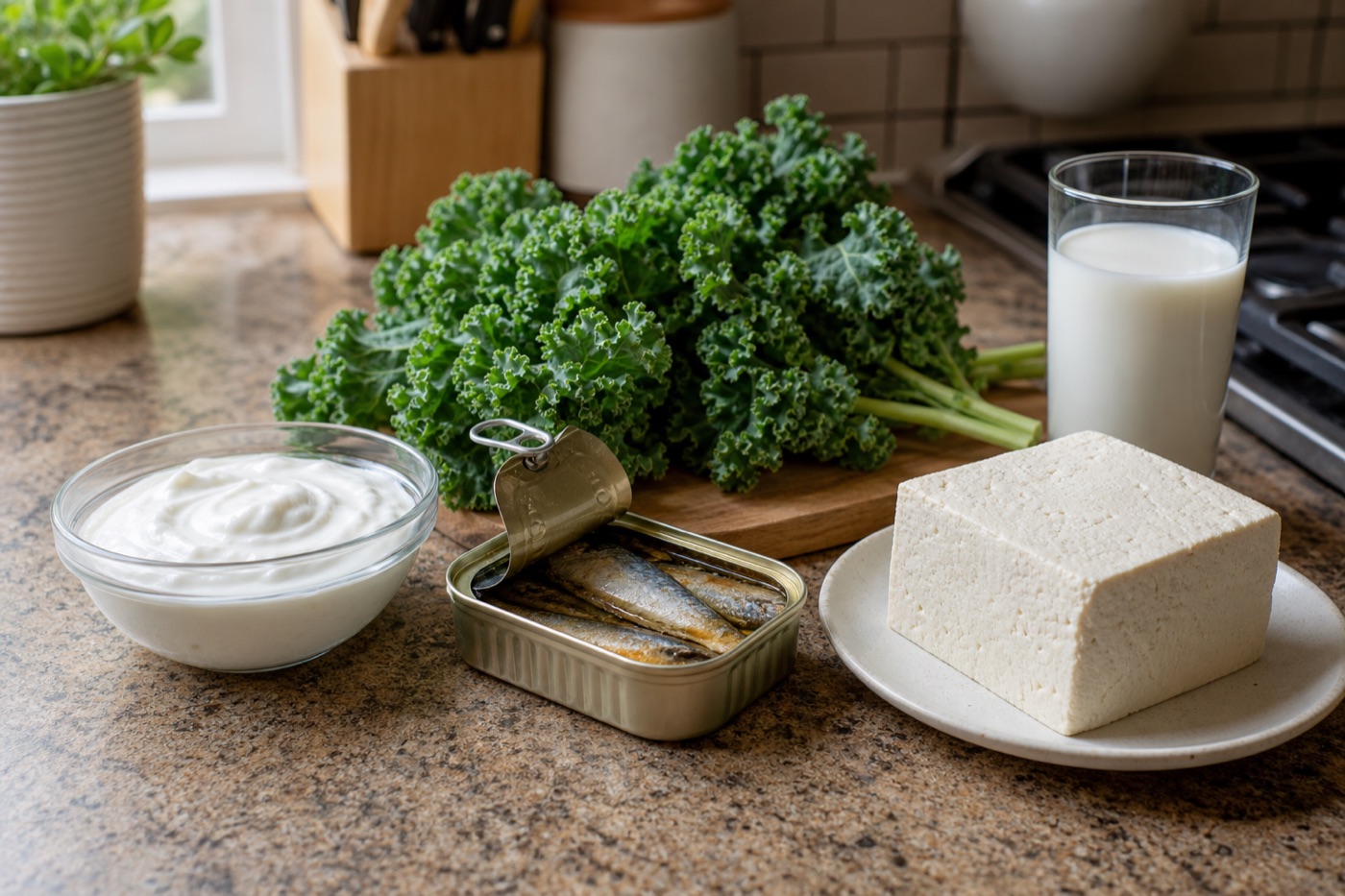
| Calcium | 1,300 mg | 1,300 mg | 1,300 mg | Milk, yogurt, cheese, fortified soy milk, calcium-set tofu |
| Iron | 8 mg | 15 mg | 11 mg | Lean meat, beans, lentils, fortified cereals, spinach |
| Vitamin D | 600 IU | 600 IU | 600 IU | Fortified milk, salmon, eggs, fortified cereals |
| Protein | 34 g | 46 g | 52 g | Meat, poultry, fish, eggs, dairy, beans, tofu, nuts |
Most teens eating a varied diet get enough protein. Calcium, vitamin D and iron are the ones that more often fall short, especially when teens swap milk for soda or skip meals.
Meals on a busy schedule
School, sports, jobs and late nights can push meals aside. A few habits help:
- Don’t skip breakfast. Even something quick, like a whole-grain waffle with peanut butter and a banana, or yogurt with cereal, fuels the morning. Our guide to building a balanced breakfast has more ideas.
- Pack lunch or check the school menu. School meals must meet federal nutrition standards, and packing from home works well too.
- Plan an after-school meal. Many teens are starving by 3 p.m. A sandwich, leftovers, a bowl of cereal with milk, or a quesadilla with beans is a mini-meal, not a snack.
- Keep grab-and-go foods visible. Fruit, cheese sticks, yogurt, hummus and whole-grain crackers make the easy choice a good one.
Teens who can cook a few things for themselves are far less dependent on vending machines and takeout. Good starter skills include scrambling eggs, making a bean and cheese quesadilla, cooking pasta and tossing it with tomato sauce and frozen vegetables, blending a fruit and yogurt smoothie, microwaving a bowl of oatmeal, and assembling a grain bowl from leftovers.
Sports, energy and drinks
Active teens burn a lot of energy. Athletes need regular meals with carbohydrates for fuel, protein for repair, and plenty of fluids. Eating something a few hours before practice and a snack with carbs and protein afterward helps; see our guide on what to eat before and after exercise.
Water should be the main drink. The American Academy of Pediatrics advises that energy drinks are not appropriate for children and adolescents, and that sports drinks are only needed for long, intense activity, not for everyday use. Sugary sodas and coffee drinks can crowd out milk and add a lot of added sugar.
Diets, body image and red flags
The teen years are a common time for dieting and body image worries to start. Teens shouldn’t follow restrictive or weight-loss diets without guidance from a pediatrician.
Watch for signs that may point to disordered eating:
- Skipping meals regularly or eating in secret
- Strict rules about “good” and “bad” foods, or cutting out whole food groups suddenly
- Rapid weight change, or missed periods in girls
- Excessive exercise or distress when a workout is missed
- Frequent trips to the bathroom right after meals
If you notice these, talk with your teen’s pediatrician soon. Eating disorders are serious but treatable, and early help makes a difference.
Many teens become vegetarian or vegan for ethical, environmental or health reasons. That can work well with planning; our guide to plant protein foods is a good starting point.
How parents can help
- Eat together when you can, even a few times a week.
- Stock the kitchen with fruit, vegetables, whole grains, dairy or fortified alternatives, and easy protein foods.
- Teach a few basic recipes so your teen can feed themselves well.
- Avoid comments about weight or body shape, your own included. Focus on how food helps with energy, sports, school and mood.
- Let teens have a say in planning meals and shopping.
The takeaway for families
Teens need plenty of food, and particularly calcium, iron, vitamin D and protein, to support rapid growth. Help them eat regular meals including breakfast, keep water as the default drink, and steer clear of energy drinks and restrictive diets. For specific concerns about growth, weight, sports nutrition or eating habits, your teen’s pediatrician or a registered dietitian is the right next stop.
Common questions
How much calcium does a teenager need?
The NIH Office of Dietary Supplements sets the Recommended Dietary Allowance at 1,300 milligrams a day for ages 9 to 18, more than adults need. Milk, yogurt, cheese, fortified plant milks and calcium-set tofu are good sources.
Are energy drinks safe for teens?
No. Pediatricians at the American Academy of Pediatrics say these stimulant-laden drinks have no place in kids' or teens' diets. For thirst and for most practices and games, plain water is the better pick.
Should my teenager be on a diet?
Teens shouldn't restrict food or follow a weight-loss diet without guidance from their pediatrician. If weight is a concern, a doctor or registered dietitian can suggest changes that support growth and a healthy relationship with food.
Is it OK for a teen to be vegetarian?
Yes, a vegetarian diet can meet a teen's needs with some planning. Pay attention to protein, iron, calcium, zinc and vitamin B12, and check in with a pediatrician or dietitian if the diet is very limited.
Sources
Naomi edits Nutrition for Everybody and writes the app rankings. She cares most about advice that still works on a Tuesday night with a tired family and a half-empty fridge.