How to Get Kids to Eat More Vegetables
Kids eat more vegetables when they see them often, help cook them and feel no pressure at the table. Practical, age-by-age ways to make vegetables normal.
On this page
Kids eat more vegetables when the vegetables keep showing up, in small portions and without pressure, and when kids have a hand in choosing and preparing them. Repeated, low-key exposure works better than bribes, rules or battles at the table. Expect progress to be slow, and count a lick, a sniff or a single bite as a step forward.
Why so many kids say no
Turning down vegetables is extremely common, and it isn’t a sign that you’ve done anything wrong. Wariness of new foods tends to be strongest in the toddler and preschool years, and many children are sensitive to bitter flavors found in vegetables like broccoli, Brussels sprouts and leafy greens. Texture plays a role too: slimy, stringy or mixed textures put off plenty of kids.
The good news is that tastes are learned. Familiarity is one of the strongest predictors of whether a child will eat a food, which is why the most effective strategies are about exposure rather than persuasion.
Keep offering, skip the pressure
Pediatric guidance from the American Academy of Pediatrics emphasizes a calm, repetitive approach. Children may need to see and try a food many times before they accept it.
Pressure tends to backfire. Coaxing, “three more bites” deals and clean-plate rules can make children dig in harder, and rewarding vegetables with dessert sends the message that vegetables are the price you pay for the good stuff.
A helpful way to think about mealtimes is to split the jobs. As the parent, you decide what food is served, when and where. Your child decides whether to eat it and how much. That division takes the fight out of dinner and lets kids listen to their own hunger.
Tactics that tend to work
- Serve a tiny portion. A single green bean or one floret is less overwhelming than a heap.
- Pair new with familiar. Put a new vegetable on the plate next to foods your child already likes.
- Offer vegetables first. A plate of cut-up raw vegetables while dinner finishes cooking catches kids when they’re hungriest.
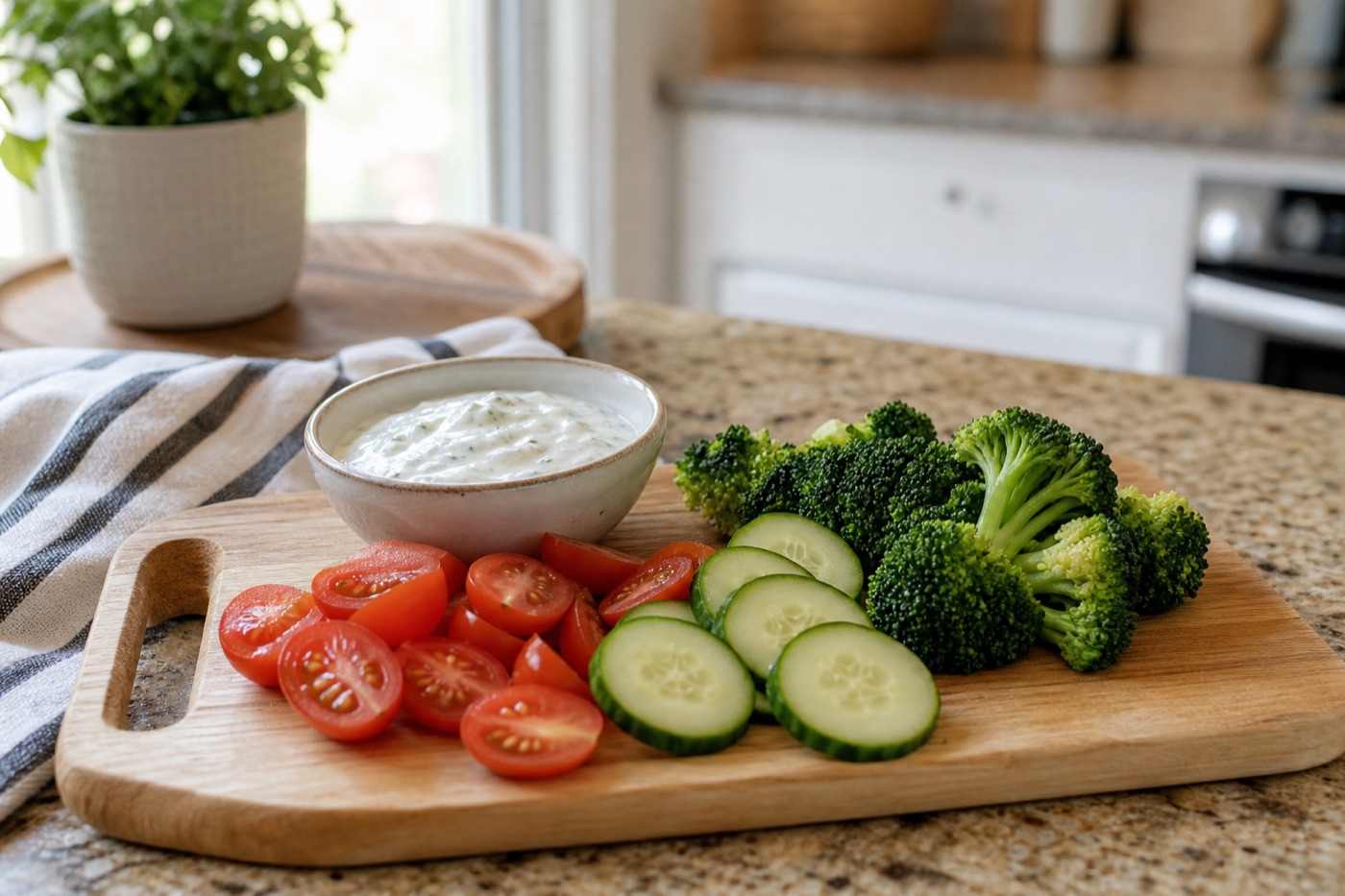
- Add a dip. Hummus, yogurt-based ranch or a little cheese sauce makes raw vegetables more inviting.
- Try different forms. A child who rejects steamed carrots may like them raw, roasted with a little oil, or grated into a muffin.
- Eat vegetables yourself. Kids watch what adults eat, and seeing you enjoy something counts.
- Use fun names and shapes, like “trees” for broccoli or cucumber “coins,” without turning every meal into a show.
- Grow something. Even a pot of cherry tomatoes or herbs on a windowsill builds curiosity.
- Let them choose at the store. Ask your child to pick one vegetable for the family to try this week.
- Mix them in. Add vegetables to foods kids already love, such as soups, pasta sauce, tacos and pizza. Our guide to soups and stews for more vegetables has easy starting points.
Give them a job in the kitchen
Children are more likely to taste something they helped make. Match the task to your child’s age and skills, and supervise closely around knives and heat.
| Age | Kitchen jobs to try |
|---|---|
| 2–3 years | Wash produce in a bowl of water, tear lettuce, carry unbreakable items to the table |
| 4–5 years | Mash potatoes or avocado, snap green beans, stir cold ingredients, arrange vegetables on a pizza |
| 6–8 years | Measure ingredients, peel with a vegetable peeler, crack eggs, toss a salad |
| 9–12 years | Chop with a kid-safe or small knife under supervision, follow a simple recipe, roast a tray of vegetables |
How much are we aiming for?
Vegetable needs depend on a child’s age, sex and activity level. MyPlate gives daily amounts in cups for each age group, and its MyPlate Plan tool can show the numbers for your child. Remember that kids’ portions are smaller than adults’, and that a mix of fresh, frozen and canned vegetables all count. For a broader look at daily amounts, see our article on how many fruits and vegetables you need a day.
Don’t panic if your child eats almost no vegetables one week and plenty the next. Appetite in children varies a lot from day to day, and it’s the pattern over weeks that matters.
When to check in with your pediatrician
Most picky eating is a normal phase. Talk to your child’s pediatrician if your child accepts only a very small number of foods, is losing weight or falling off their growth curve, often gags, chokes or vomits during meals, or becomes very distressed about food. Those patterns can benefit from an evaluation and sometimes from feeding therapy.
For more on feeding children as they grow, see our guide to healthy eating for school-age kids.
Keep it low-key
Put vegetables on the table often, in small portions, next to foods your child likes, and let your child decide how much to eat. Bring kids into shopping, growing and cooking, model the habit yourself, and skip the bribes. It’s a long game, but repeated calm exposure is what turns “yuck” into “maybe” and eventually into “more, please.”
Common questions
How many times should I offer a vegetable my child refuses?
Keep offering it, calmly and in small amounts, over weeks and months. Many children need to see and taste a new food a lot of times before they accept it, so an early refusal isn't the final answer.
Should I hide vegetables in other foods?
Blending vegetables into sauces, muffins or smoothies adds nutrition and is fine to do. Serve visible vegetables too, though, so your child keeps getting familiar with how they look and taste on their own.
Is it OK to reward kids with dessert for eating vegetables?
It usually backfires. Using dessert as a prize teaches children that vegetables are a chore and sweets are the real goal. Offer dessert, if you serve it, regardless of what was eaten.
When should I worry about picky eating?
Talk to your pediatrician if your child eats very few foods, is losing weight or not growing as expected, gags or chokes often, or if mealtimes cause serious distress. These can point to issues that benefit from professional help.
Sources
Elliot writes about foods, labels and the grocery store, from choosing a cereal to stretching a budget without giving up vegetables.